How Does Air Pressure Affect Weather? — Reading Comprehension
Rate this|
1
Premium Resource
Present
Present in classroom. No work saved
Assign
Classroom with student accounts, Track progress
Quick Play
No student accounts, assign with a link
Grades
3
4
5
19
PRINT+DIGITAL RESOURCE
This learning resource is available in interactive and printable formats. The interactive worksheet can be played online and assigned to students. The Printable PDF version can be downloaded and printed for completion by hand.
This audio-integrated reading passage delves into the science behind how air pressure influences weather patterns. It defines key terms like air pressure and atmospheric pressure and explains the fundamental difference between high-pressure and low-pressure systems. Students will learn that high-pressure systems are associated with clear, fair weather, while low-pressure systems bring clouds and precipitation. The passage also highlights the role of the barometer as a tool for meteorologists to forecast weather. It connects the concept of wind to the movement of air from high to low-pressure areas. This content aligns with the NGSS disciplinary core concept of ESS2.D Weather and Climate, focusing on how air mass interactions lead to changes in weather conditions. The passage uses simple language and a clear structure to make the information accessible to a middle school audience.
CONTENT PREVIEW
Expand content preview
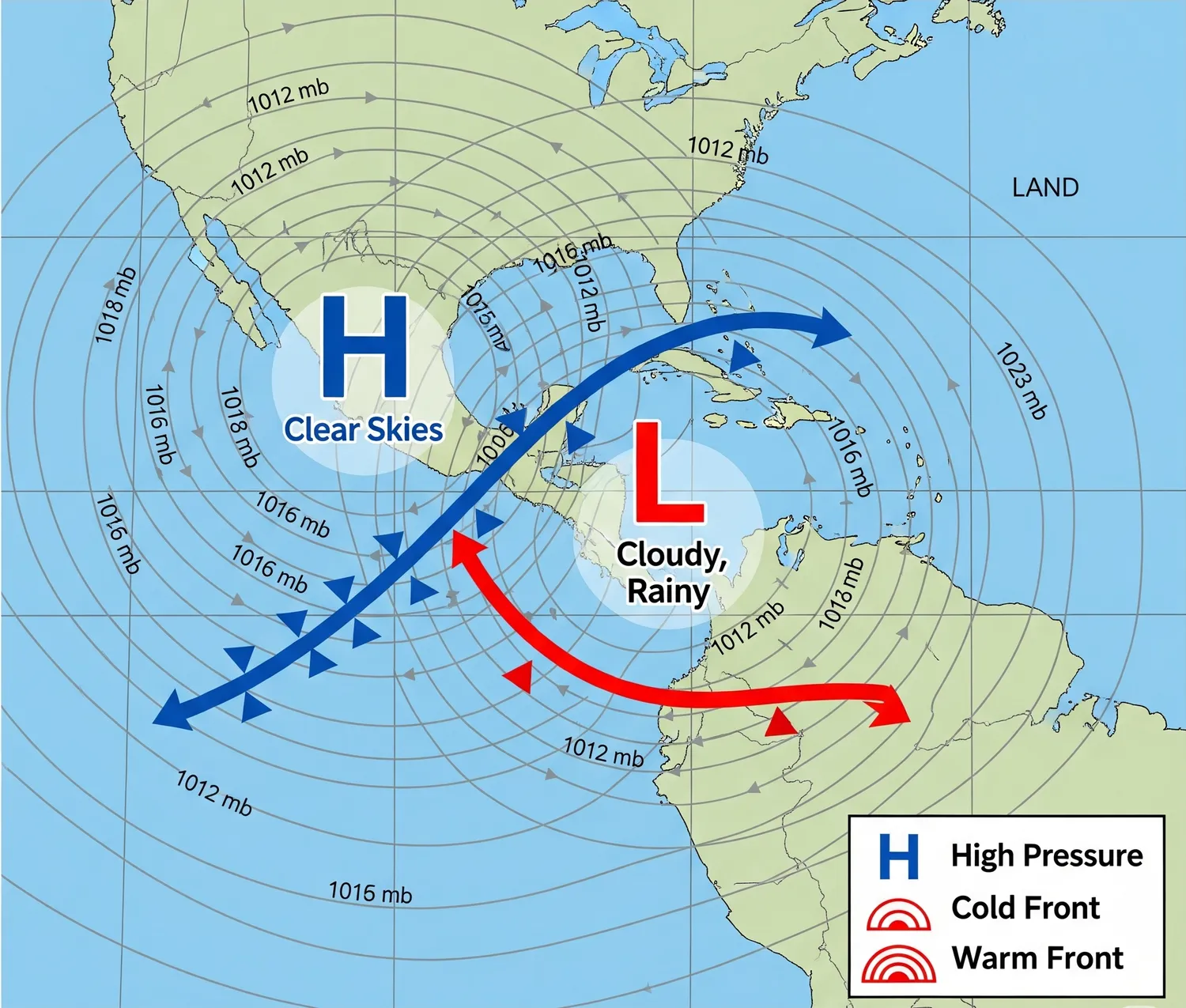
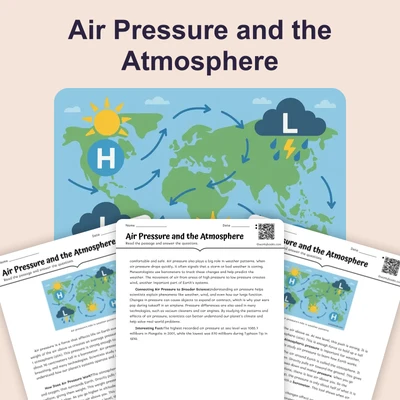
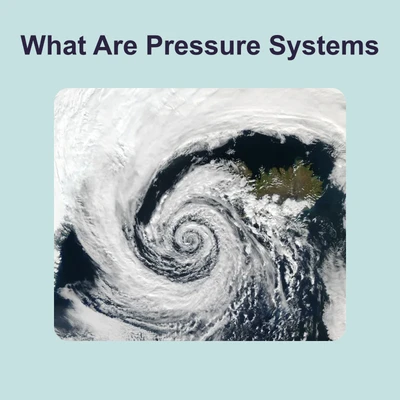
A weather map shows how high and low-pressure systems affect weather.
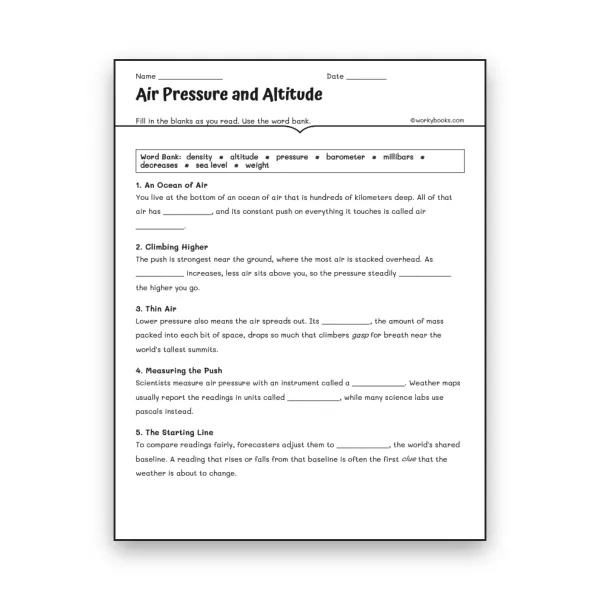
What Is Air Pressure? Air pressure is the weight of the air pressing down on everything around us. Even though air seems invisible, it is made of tiny particles. The air above us stretches for miles and pushes down on Earth all the time!
High Pressure and Sunny Skies When air is packed tightly together, it creates a high pressure system. In high pressure, the air sinks down toward the ground. As it sinks, it spreads out and warms up. Warm air can hold more water, so clouds disappear and the sky becomes clear. This is why high pressure usually means sunny, calm weather. On weather maps, high pressure is shown with a big 'H'.
Low Pressure and Stormy Weather When air is lighter and rises up, it forms a low pressure system. As the air rises, it cools down. Cool air can’t hold as much moisture, so water vapor turns into clouds and rain. That’s why low pressure often brings cloudy, rainy, or even stormy weather. On maps, low pressure is shown with an 'L'.
How Air Pressure Creates Wind Air always moves from high pressure areas to low pressure areas, just like air rushing out of a balloon. This movement creates wind. The bigger the difference between high and low pressure, the stronger and faster the wind blows.
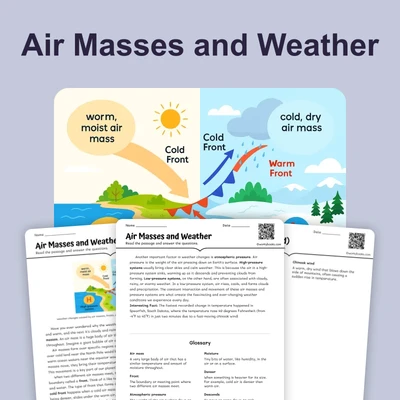
Fronts and Weather Changes A front is where a high pressure air mass meets a low pressure air mass. When this happens, the weather can change quickly. Sometimes, strong storms can form at fronts.
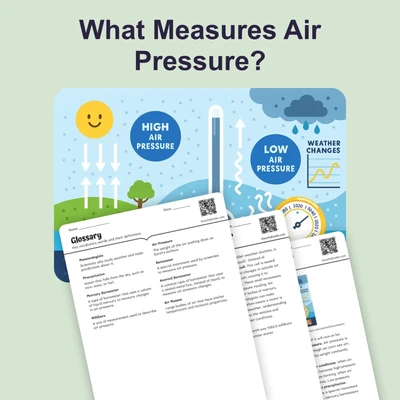
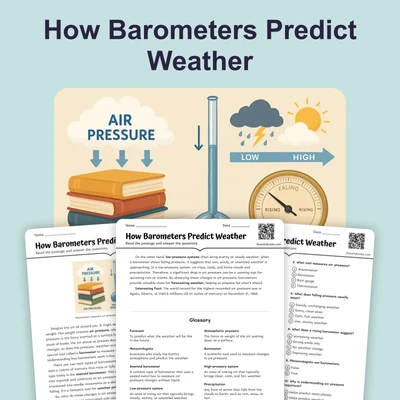
Measuring Air Pressure Scientists use a tool called a barometer to measure air pressure. If the pressure is falling, a storm may be coming. If it’s rising, nice weather is ahead. This helps experts make a forecast—a prediction of what the weather will be.
Air Pressure in Everyday Life When you climb a mountain, there is less air above you, so the air pressure is lower. That’s why your ears might pop!
Air Pressure: The Weather Mood Ring Air pressure systems are like weather mood rings—high pressure means happy sunny weather, low pressure means gloomy stormy weather, and wind blows between them like gossip spreading!
Interesting Fact: Did you know the highest air pressure ever recorded on Earth was in Siberia, Russia, in 1968?
Air moves high to low pressureClouds movingSun shinesRain falls
What happens at a front?
Air masses meetIt always snowsThe sun setsMountains form
Rising air pressure usually means...
Storm is comingNice weather aheadEarthquakeLoud noise
High pressure brings cloudy weather. True or false?
TrueFalse
What is a forecast?
A weather predictionA type of windA weather mapA rainstorm
Perfect For:
👩🏫 Teachers
• Reading comprehension practice
• Auto-graded assessments
• Literacy skill development
👨👩👧👦 Parents
• Reading practice at home
• Comprehension improvement
• Educational reading time
🏠 Homeschoolers
• Reading curriculum support
• Independent reading practice
• Progress monitoring
Reading Features:
📖
Reading Passage
Engaging fiction or nonfiction text
❓
Comprehension Quiz
Auto-graded questions
📊
Instant Feedback
Immediate results and scoring
📄
Printable Version
Download for offline reading
🔊
Read Aloud
Voice-over with word highlighting
Reviews & Ratings
No reviews yet. Be the first to share your experience!
Related Content
Tools and Technology in Earth Science
This middle school science reading passage explores the wide range of tools and technologies used in Earth science, from...
MS-ESS2-2MS-ESS3-2MS-ETS1-1MS-PS4-3
Scientific Inquiry in Earth Science
This passage explores scientific inquiry in Earth science for grades 6-8, aligned with NGSS standards MS-ESS1-4, MS-ESS2...
MS-ESS1-4MS-ESS2-1MS-ESS3-5SEP
What Is Earth Science?
This engaging middle school science passage introduces students to the field of Earth science, aligning with NGSS standa...
MS-ESS1MS-ESS2MS-ESS3SEP
Earth: Our Home in Space
This engaging Grade 4-5 science passage, aligned to NGSS, introduces students to Earth's special place in the solar syst...
Earth's Spheres
This middle school science passage introduces students to Earth's four major spheres: the geosphere, hydrosphere, atmosp...
MS-ESS2-4MS-ESS2-6
What Is Space Weather and How Does It Affect the Earth?
This NGSS-aligned science passage for middle school explains what space weather is and how it affects Earth. Students le...
MS-ESS2-2
Earth's Energy Balance
This engaging, NGSS-aligned science passage for grades 6–8 explores Earth's energy balance, a key process that keeps our...
MS-ESS2-6
Earth's Rotation
This middle school science passage, aligned with NGSS standard MS-ESS1-1, focuses on Earth's rotation—how Earth spins on...
MS-ESS1-1
Earth's Interior
This comprehensive passage for grades 6-8 explores Earth's layered interior, including the crust, mantle, outer core, an...
MS-ESS2-1MS-ESS2-2
Facts About Earth
This engaging science reading passage introduces Grade 4 and 5 students to Earth, our home planet. Aligned with NGSS sta...
Meteorite Impacts on Earth
This engaging science reading passage for Grades 4-5 explores meteorite impacts on Earth, aligning with NGSS standards. ...
Venus: Earth's Twin?
This comprehensive science passage for grades 6-8 examines Venus—often called Earth's twin—by exploring its similarities...
MS-ESS1-2MS-ESS1-3
Earth Changes Over Millions of Years
This engaging, audio-integrated science passage for Grade 4-5 students explores how Earth has changed over millions of y...
Earth's Moon Facts
This engaging science passage, 'The Moon: Earth's Companion,' is designed for Grade 4-5 students and aligns with NGSS ge...
Earth's Quick and Slow Changes
In 'Earth's Quick and Slow Changes,' students categorize 12 Earth events by their speed of occurrence, enhancing underst...
Earth: Our Home Planet
This comprehensive science passage for grades 6-8 explores Earth’s unique characteristics and the interconnected systems...
MS-ESS1-2
Earth's Revolution
This middle school science passage explores the science behind Earth's revolution around the Sun, closely aligned with N...
MS-ESS1-1
Earth's Seasons
This comprehensive reading passage for grades 6-8 explains why Earth has seasons, revealing the scientific mechanisms be...
MS-ESS1-1
Earth's Place in the Universe
This reading passage explains Earth's place in the universe, supporting NGSS 1-ESS1-1. It describes how Earth is one of ...
1-ESS1-1
Aphelion and Perihelion
This engaging reading passage, 'Aphelion and Perihelion,' delves into the fascinating aspects of Earth's elliptical orbi...
MS-ESS1-1: DEVELOP AND USE A MODEL OF THE EARTH-SUN-MOON SYSTEM TO DESCRIBE THE CYCLIC PATTERNS OF LUNAR PHASESECLIPSES OF THE SUN AND MOONAND SEASONS.