How Energy Flows Through Earth’s Systems
Interactive passage with audio narration, comprehension questions, and printable PDF.
By completing this purchase you agree to our Terms of Use and Privacy Policy. Your subscription renews automatically until you cancel. You can cancel anytime from your account settings. All sales are final and non-refundable. Digital content is available for download in your account immediately upon purchase.
What's included
How Energy Flows Through Earth’s Systems preview and details
About this printable How Energy Flows Through Earth’s Systems science reading passage, NGSS-aligned (Grades 6-8)
Sample passage and quiz from How Energy Flows Through Earth’s Systems
Reading passage and comprehension quiz preview
How Energy Flows Through Earth’s Systems
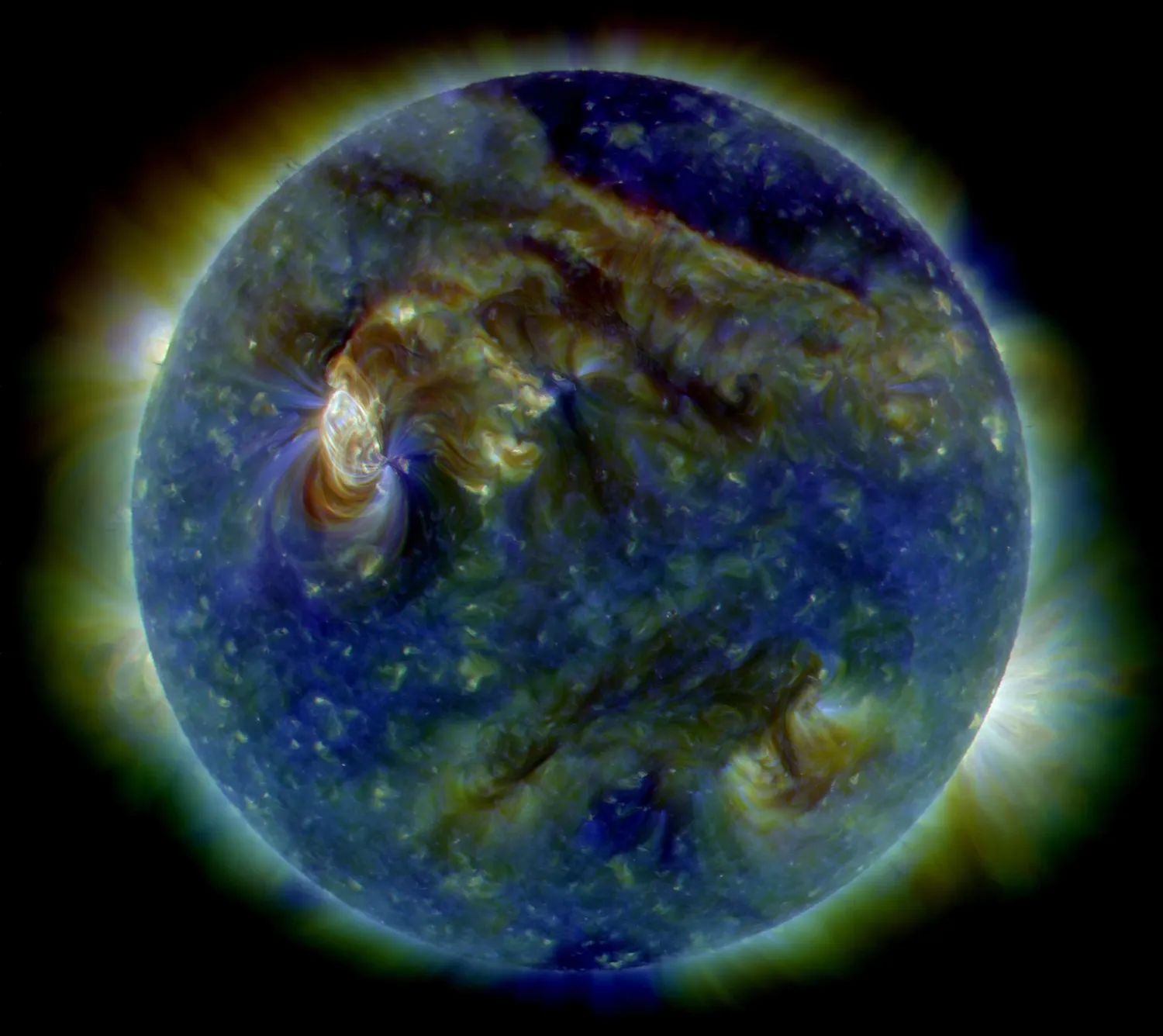
Energy moves through Earth in three main ways: conduction, convection, and radiation. "Sun - August 1, 2010" by NASA/SDO/AIA / Wikimedia Commons (Public domain).
Earth is constantly moving and changing because of energy. Two main sources of energy drive these changes: solar radiation from the Sun and internal heat from deep inside Earth. Solar radiation is energy from the Sun that travels through space and reaches Earth's surface. This energy powers weather, ocean currents, and the water cycle. Meanwhile, internal heat is energy stored deep within Earth that causes geological activity like earthquakes and volcanic eruptions. Understanding how energy moves through Earth's systems helps explain why our planet is so dynamic.
Energy moves through Earth in three main ways: conduction, convection, and radiation. Conduction is the transfer of heat through direct contact between materials. When you touch a hot pan, heat moves from the pan to your hand through conduction. In Earth, conduction happens when heat moves through solid rock layers. However, rock is not a good conductor, so this process is slow. Conduction is most important in Earth's rigid outer layer, called the lithosphere, where heat slowly moves from hot areas to cooler ones.
Convection is the transfer of heat through the movement of fluids, which include liquids and gases. This process is like boiling water in a pot. Hot water rises to the top while cooler water sinks to the bottom, creating a circular motion called a convection current. In Earth's mantle, the layer between the crust and core, rock behaves like a very thick fluid over long periods of time. Hot rock near the core slowly rises toward the surface, cools, and then sinks back down. These mantle convection currents are powerful enough to move Earth's tectonic plates, causing earthquakes, volcanic activity, and mountain formation. Convection is the primary way heat escapes from Earth's interior.
Radiation is the transfer of energy through electromagnetic waves that can travel through empty space. Unlike conduction and convection, radiation does not require matter to transfer energy. The Sun's energy reaches Earth through radiation, traveling 93 million miles through the vacuum of space. When solar radiation reaches Earth's surface, it warms the land and oceans. This energy then drives atmospheric convection, creating winds and weather patterns. Earth also releases energy back into space through radiation, maintaining an energy balance that keeps our planet's temperature relatively stable.
Each energy transfer mechanism operates differently across Earth's layers. In the solid inner and outer core, conduction dominates because the material is too dense for convection. In the mantle, convection is the main process because the rock can flow slowly over millions of years. At Earth's surface, radiation from the Sun provides energy that drives convection in the atmosphere and oceans. The atmosphere and hydrosphere (Earth's water systems) transfer heat primarily through convection, creating weather patterns and ocean currents that distribute energy around the planet.
The interaction between solar radiation and internal heat creates Earth's dynamic systems. Solar radiation drives surface processes by heating air and water unevenly, which causes convection currents in the atmosphere and oceans. This creates wind, rain, and ocean currents that shape Earth's surface through erosion and deposition. Internal heat drives geological processes by causing mantle convection, which moves tectonic plates. When plates collide, they form mountains. When they pull apart, they create new ocean floor. This constant movement recycles Earth's crust and releases internal heat to the surface through volcanoes and hot springs.
Understanding energy transfer helps scientists predict geological events and climate patterns. By studying how convection currents move in the mantle, scientists can better understand where earthquakes and volcanoes are likely to occur. By tracking how solar radiation affects ocean and atmospheric convection, meteorologists can forecast weather and study climate change. Energy and matter are constantly cycling through Earth's systems, connecting the surface to the deep interior in ways that make our planet unique in the solar system.
Interesting Fact: The mantle convection currents that move Earth's tectonic plates travel at about the same speed your fingernails grow—only a few centimeters per year!
Comprehension quiz (10 questions)
1. What are the two main sources of energy that drive changes on Earth?
2. Which energy transfer mechanism does NOT require matter to move energy?
3. What is the primary way heat escapes from Earth's interior?
4. In the passage, what does the term 'lithosphere' refer to?
5. Based on the passage, why does rock in the mantle behave like a fluid?
6. How does solar radiation drive surface processes on Earth?
7. What happens when tectonic plates collide according to the passage?
8. Which statement about convection currents is supported by the passage?
9. True or False: Conduction is the fastest way heat moves through Earth's interior.
10. True or False: Earth releases energy back into space through radiation to maintain temperature balance.
Perfect for the way you teach
- Build comprehension skills
- Auto-graded quiz
- Differentiated reading
- Read together at home
- Improve fluency
- Quiet reading time
- Reading curriculum support
- Independent practice
- Track Lexile growth