This learning resource is available in interactive and printable formats. The interactive worksheet can be played online and assigned to students. The Printable PDF version can be downloaded and printed for completion by hand.
This 250-word informational reading passage introduces Grade 4 students to the important external structures of fur and feathers. Aligned with NGSS standard 4-LS1-1 and the Disciplinary Core Idea LS1.A, the passage explains how these structures help animals survive in their environments. Students discover how fur keeps mammals warm by trapping air close to the body and provides camouflage for protection. The passage also describes how feathers keep birds warm and dry, and how specially shaped flight feathers enable birds to fly. Students learn that some animals change their fur or feather color with the seasons for better camouflage. The content emphasizes both protection and temperature regulation functions. Written at a Grade 4 reading level, this passage uses simple sentences and everyday vocabulary to build foundational understanding. Audio-integrated features support diverse learners. The passage includes bold key terms with immediate definitions, real-world examples, and an interesting fact to engage young scientists. Accompanying activities include comprehension questions, writing prompts, and graphic organizers to reinforce learning about animal structures and their functions.
CONTENT PREVIEW
Expand content preview
Fur and feathers help animals survive.
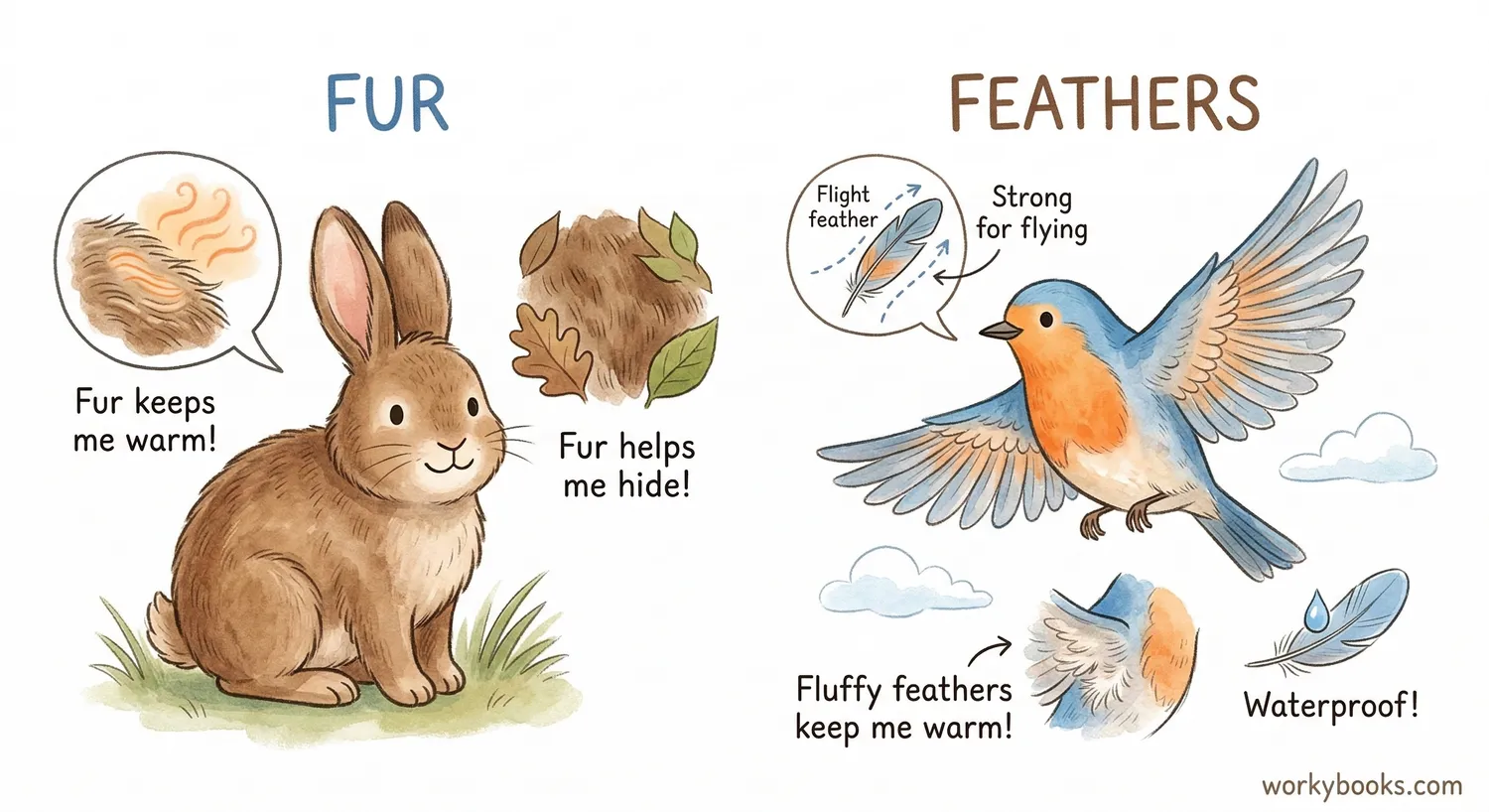
Fur and feathers are special body coverings that help animals survive. These external structures—parts on the outside of an animal's body—solve important problems like staying warm and staying safe.
Fur covers the bodies of mammals like rabbits, bears, and foxes. Fur keeps mammals warm by trapping air close to the skin. This works like a blanket that holds warm air near the body. Fur also provides camouflage, which means it helps animals blend in with their surroundings. A brown rabbit's fur matches the dirt and helps it hide from predators. Some animals, like Arctic foxes, change their fur color with the seasons. White fur in winter helps them hide in snow, while brown fur in summer matches the ground.
Feathers cover birds and serve many purposes. Soft, fluffy feathers close to a bird's body trap air and keep the bird warm, just like fur does for mammals. Feathers also keep birds dry by shedding water. Flight feathers are special feathers with a stiff shape that helps birds fly through the air. Some birds also change their feather colors with the seasons for better camouflage.
Both fur and feathers protect animals from weather and predators while helping them control their body temperature.
Interesting Fact: A single duck has about 14,000 feathers, and most of them are fluffy down feathers that trap air to keep the duck warm in cold water!
How does fur keep mammals warm?
By trapping air close to skinBy making them run fasterBy changing colors quicklyBy shedding water away
What are external structures?
Parts inside an animal's bodyParts on the outside of bodyFood that animals eatPlaces where animals live
What helps Arctic foxes hide in snow?
Brown fur in winterWhite fur in winterBlack fur in winterNo fur in winter
Why do birds have flight feathers?
To help them swim fasterTo help them fly through airTo help them dig holesTo help them climb trees
How do feathers help birds in water?
They make birds sinkThey change bird colorsThey keep birds dryThey help birds breathe
What does camouflage help animals do?
Run faster than predatorsBlend in with their surroundingsGrow bigger and strongerFind more food quickly
Both fur and feathers help regulate temperature.
TrueFalse
What does the word 'predators' mean?
Animals that hunt other animalsPlants that animals eatPlaces where animals sleepWeather conditions in nature
Perfect For:
👩🏫 Teachers
• Reading comprehension practice
• Auto-graded assessments
• Literacy skill development
👨👩👧👦 Parents
• Reading practice at home
• Comprehension improvement
• Educational reading time
🏠 Homeschoolers
• Reading curriculum support
• Independent reading practice
• Progress monitoring
Reading Features:
📖
Reading Passage
Engaging fiction or nonfiction text
❓
Comprehension Quiz
Auto-graded questions
📊
Instant Feedback
Immediate results and scoring
📄
Printable Version
Download for offline reading
🔊
Read Aloud
Voice-over with word highlighting
Reviews & Ratings
No reviews yet. Be the first to share your experience!
Related Content
What Are Bones Made Of
This engaging 250-word reading passage introduces Grade 4 students to the structure and function of bones, aligned with ...
NGSS 4-LS1-1LS1.A
How Bones Protect Organs
This engaging 250-word reading passage helps Grade 4 students understand how bones protect organs, aligned with NGSS sta...
NGSS 4-LS1-1LS1.A
How Joints Connect Bones
This 250-word reading passage teaches fourth-grade students about joints and their role in the human skeletal system. Al...
NGSS 4-LS1-1LS1.A
Layers of the Skin
This engaging 250-word reading passage introduces fourth-grade students to the three layers of skin and their functions....
NGSS 4-LS1-1LS1.A
Parts of Plant Stems
This engaging 250-word reading passage introduces fourth-grade students to the internal structure and function of plant ...
NGSS 4-LS1-1LS1.A
Parts of a Flower
This comprehensive 250-word reading passage introduces fourth-grade students to the essential parts of a flower and thei...
NGSS 4-LS1-1LS1.A
How Leaves Make Food
This engaging Grade 4 science reading passage explains how leaves make food through photosynthesis. Students discover th...
NGSS 4-LS1-1LS1.A
How Animal Hearts Work
This 250-word audio-integrated reading passage introduces fourth-grade students to the essential function of the heart a...
NGSS 4-LS1-1LS1.A
Animal Skeleton Structure
This 250-word reading passage introduces fourth grade students to animal skeleton structure, aligned with NGSS 4-LS1-1 a...
NGSS 4-LS1-1LS1.A
How Animal Lungs Work
This 250-word reading passage introduces fourth-grade students to how animal lungs work, aligned with NGSS standard 4-LS...
NGSS 4-LS1-1LS1.A
Parts of a Leaf
This 250-word reading passage introduces Grade 4 students to the internal structure of leaves, aligned with NGSS standar...
NGSS 4-LS1-1LS1.A
Stamen and Pistil
This 250-word reading passage introduces fourth-grade students to the stamen and pistil, the key reproductive structures...
NGSS 4-LS1-1LS1.A
How Internal Structures Help Plants Survive
This 250-word informational reading passage is designed for Grade 4 students and aligns with NGSS standard 4-LS1-1 (LS1....
NGSS 4-LS1-1LS1.A
How Stems Support Plants
This engaging 250-word reading passage helps Grade 4 students understand how stems support plants and contribute to thei...
NGSS 4-LS1-1LS1.A
How Plants Reproduce
This 250-word reading passage introduces fourth-grade students to plant reproduction aligned with NGSS 4-LS1-1 and the D...
NGSS 4-LS1-1LS1.A
How External Structures Help Plants Survive
This 250-word reading passage introduces fourth-grade students to how external plant structures help plants survive, gro...
NGSS 4-LS1-1LS1.A
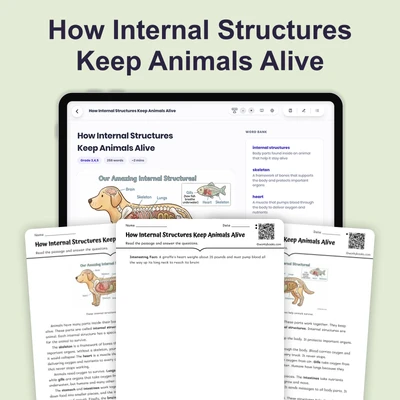
How Internal Structures Keep Animals Alive
This engaging 250-word reading passage introduces fourth-grade students to the essential internal structures that keep a...
NGSS 4-LS1-1LS1.A
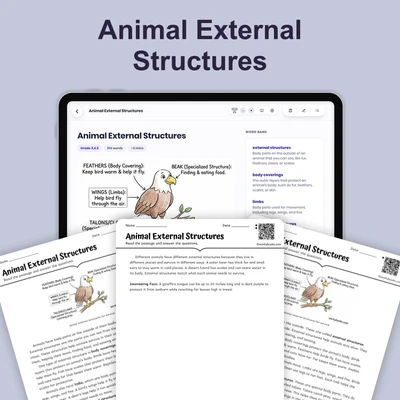
Animal External Structures
This engaging 250-word reading passage introduces fourth-grade students to the concept of animal external structures ali...
NGSS 4-LS1-1LS1.A
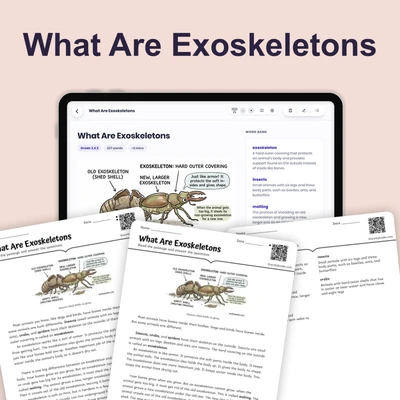
What Are Exoskeletons
This engaging 250-word reading passage introduces fourth-grade students to the concept of exoskeletons, aligning with NG...
NGSS 4-LS1-1LS1.A
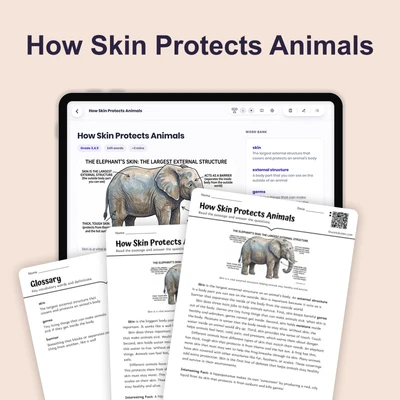
How Skin Protects Animals
This engaging 250-word reading passage introduces fourth-grade students to the protective functions of skin, the largest...