How Heart and Lungs Work Together — Reading Comprehension
Rate this
Premium Resource
Present
Present in classroom. No work saved
Assign
Classroom with student accounts, Track progress
Quick Play
No student accounts, assign with a link
Grades
3
4
5
Standards
NGSS 4-LS1-1
LS1.A
PRINT+DIGITAL RESOURCE
This learning resource is available in interactive and printable formats. The interactive worksheet can be played online and assigned to students. The Printable PDF version can be downloaded and printed for completion by hand.
This comprehensive Grade 4 science reading passage explores how the heart and lungs work together as interdependent systems in the human body. Aligned with NGSS standard 4-LS1-1 and Disciplinary Core Idea LS1.A, students discover the continuous cycle of oxygen delivery through blood circulation. The passage explains how lungs add oxygen to blood and how the heart pumps oxygen-rich blood throughout the body. Students learn why these two organs depend on each other and what would happen if one system failed. The content is presented in age-appropriate language with bold key vocabulary terms and real-world examples. This audio-integrated resource includes a simplified differentiated version for diverse learners, Spanish translations, interactive multiple-choice questions, writing activities, and graphic organizers. Perfect for introducing fourth graders to the concept of interdependent body systems and building foundational understanding of human anatomy and physiology through engaging, standards-based instruction.
CONTENT PREVIEW
Expand content preview
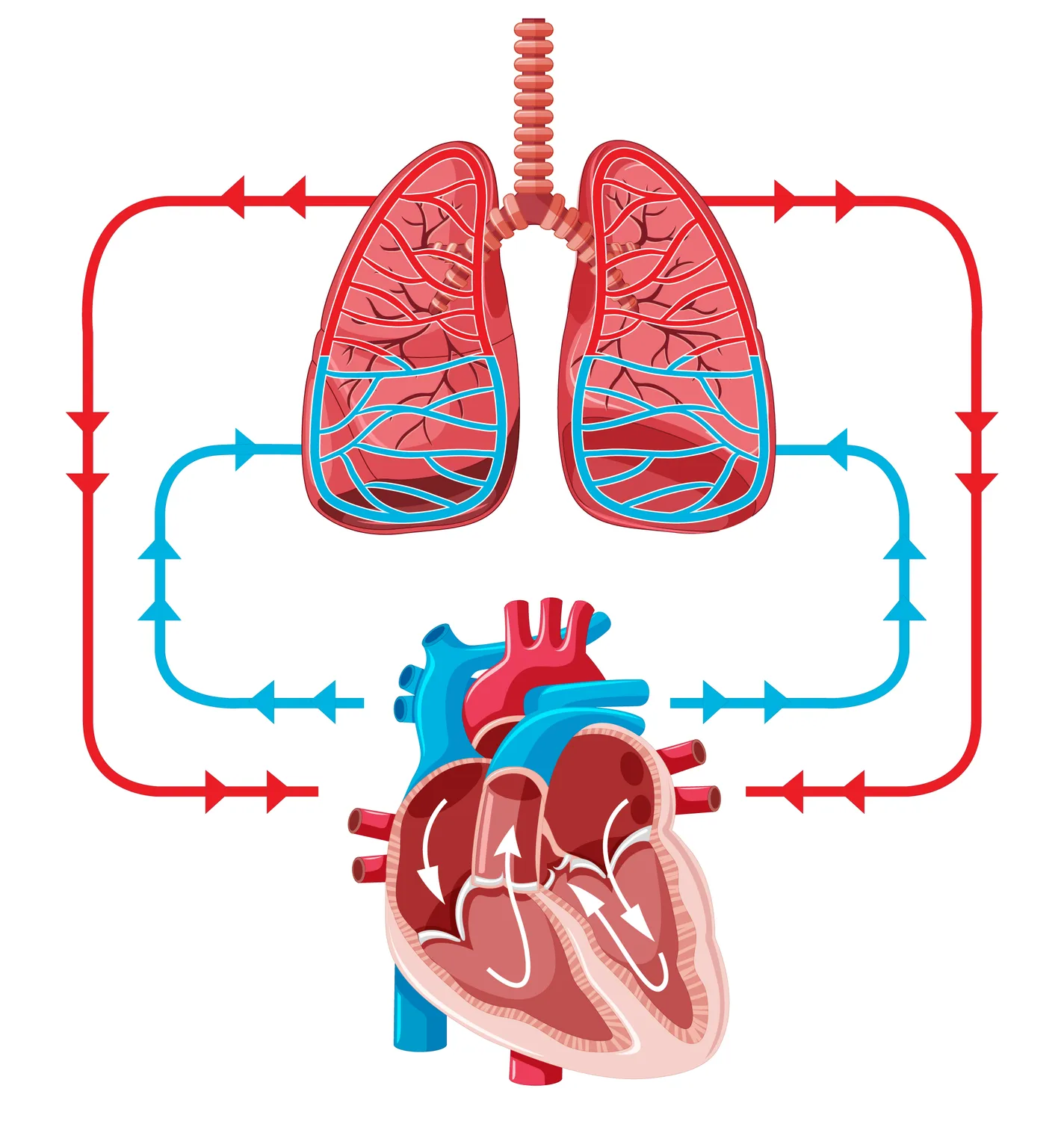
The heart and lungs work together to oxygenate and circulate blood.
Your heart and lungs are two organs that work as a team to keep you alive. The heart is a muscle that pumps blood through your body. The lungs are organs that help you breathe and add oxygen to your blood. These two organs depend on each other every second of every day.
When you breathe in, your lungs take in air that contains oxygen—a gas your body needs to survive. The oxygen moves from your lungs into your blood. This blood, now full of oxygen, travels to your heart. Your heart then pumps this oxygen-rich blood to every part of your body. Your brain, muscles, stomach, and all other body parts need this oxygen to work properly.
After your body uses the oxygen, the blood returns to your heart. This blood no longer has much oxygen in it. Your heart pumps this blood back to your lungs. In the lungs, the blood picks up fresh oxygen, and the cycle starts again. This process happens over and over without stopping.
Without your lungs, your heart would pump blood that has no oxygen. Without your heart, the oxygen in your lungs would have no way to reach the rest of your body. This is why the heart and lungs must work together. They form one connected system that delivers oxygen throughout your body. Think of it like a delivery truck (the heart) that needs a warehouse (the lungs) to load packages (oxygen) before making deliveries.
Interesting Fact: Your heart beats about 100,000 times each day, and you take about 20,000 breaths! That means your heart and lungs work together millions of times throughout your life without you even thinking about it.
What does the heart pump through your body?
AirBloodOxygenWater
What gas do lungs add to blood?
Carbon dioxideNitrogenOxygenHydrogen
Where does blood go after leaving the heart?
Only to the brainOnly to the musclesTo every part of the bodyOnly to the stomach
Why do heart and lungs depend on each other?
Heart pumps oxygen-rich blood from lungsThey are the same sizeThey both make oxygenThey work at different times
What happens to blood after body uses oxygen?
It disappearsIt stays in musclesIt returns to heart and lungsIt makes new oxygen
What would happen without lungs?
Heart would pump blood with no oxygenHeart would stop beatingHeart would make its own oxygenHeart would work better
The heart and lungs stop working at night.
TrueFalse
What does cycle mean in the passage?
Something that happens onceA process that repeats over and overA type of bicycleSomething that stops quickly
Perfect For:
👩🏫 Teachers
• Reading comprehension practice
• Auto-graded assessments
• Literacy skill development
👨👩👧👦 Parents
• Reading practice at home
• Comprehension improvement
• Educational reading time
🏠 Homeschoolers
• Reading curriculum support
• Independent reading practice
• Progress monitoring
Reading Features:
📖
Reading Passage
Engaging fiction or nonfiction text
❓
Comprehension Quiz
Auto-graded questions
📊
Instant Feedback
Immediate results and scoring
📄
Printable Version
Download for offline reading
🔊
Read Aloud
Voice-over with word highlighting
Reviews & Ratings
No reviews yet. Be the first to share your experience!
Related Content
What Are Bones Made Of
This engaging 250-word reading passage introduces Grade 4 students to the structure and function of bones, aligned with ...
NGSS 4-LS1-1LS1.A
How Bones Protect Organs
This engaging 250-word reading passage helps Grade 4 students understand how bones protect organs, aligned with NGSS sta...
NGSS 4-LS1-1LS1.A
How Joints Connect Bones
This 250-word reading passage teaches fourth-grade students about joints and their role in the human skeletal system. Al...
NGSS 4-LS1-1LS1.A
Layers of the Skin
This engaging 250-word reading passage introduces fourth-grade students to the three layers of skin and their functions....
NGSS 4-LS1-1LS1.A
Parts of Plant Stems
This engaging 250-word reading passage introduces fourth-grade students to the internal structure and function of plant ...
NGSS 4-LS1-1LS1.A
Parts of a Flower
This comprehensive 250-word reading passage introduces fourth-grade students to the essential parts of a flower and thei...
NGSS 4-LS1-1LS1.A
How Leaves Make Food
This engaging Grade 4 science reading passage explains how leaves make food through photosynthesis. Students discover th...
NGSS 4-LS1-1LS1.A
How Animal Hearts Work
This 250-word audio-integrated reading passage introduces fourth-grade students to the essential function of the heart a...
NGSS 4-LS1-1LS1.A
Animal Skeleton Structure
This 250-word reading passage introduces fourth grade students to animal skeleton structure, aligned with NGSS 4-LS1-1 a...
NGSS 4-LS1-1LS1.A
How Animal Lungs Work
This 250-word reading passage introduces fourth-grade students to how animal lungs work, aligned with NGSS standard 4-LS...
NGSS 4-LS1-1LS1.A
Parts of a Leaf
This 250-word reading passage introduces Grade 4 students to the internal structure of leaves, aligned with NGSS standar...
NGSS 4-LS1-1LS1.A
Stamen and Pistil
This 250-word reading passage introduces fourth-grade students to the stamen and pistil, the key reproductive structures...
NGSS 4-LS1-1LS1.A
How Internal Structures Help Plants Survive
This 250-word informational reading passage is designed for Grade 4 students and aligns with NGSS standard 4-LS1-1 (LS1....
NGSS 4-LS1-1LS1.A
How Stems Support Plants
This engaging 250-word reading passage helps Grade 4 students understand how stems support plants and contribute to thei...
NGSS 4-LS1-1LS1.A
How Plants Reproduce
This 250-word reading passage introduces fourth-grade students to plant reproduction aligned with NGSS 4-LS1-1 and the D...
NGSS 4-LS1-1LS1.A
How External Structures Help Plants Survive
This 250-word reading passage introduces fourth-grade students to how external plant structures help plants survive, gro...
NGSS 4-LS1-1LS1.A
How Internal Structures Keep Animals Alive
This engaging 250-word reading passage introduces fourth-grade students to the essential internal structures that keep a...
NGSS 4-LS1-1LS1.A
Animal External Structures
This engaging 250-word reading passage introduces fourth-grade students to the concept of animal external structures ali...
NGSS 4-LS1-1LS1.A
What Are Exoskeletons
This engaging 250-word reading passage introduces fourth-grade students to the concept of exoskeletons, aligning with NG...
NGSS 4-LS1-1LS1.A
How Skin Protects Animals
This engaging 250-word reading passage introduces fourth-grade students to the protective functions of skin, the largest...