This learning resource is available in interactive and printable formats. The interactive worksheet can be played online and assigned to students. The Printable PDF version can be downloaded and printed for completion by hand.
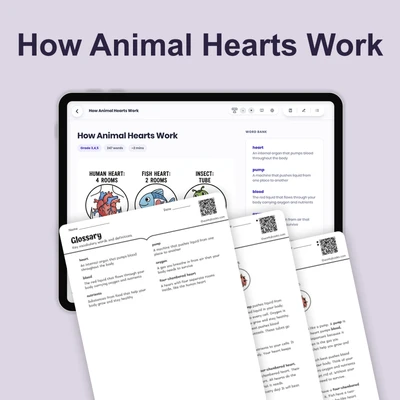
This engaging reading passage introduces fourth-grade students to the essential function of the heart as explained in NGSS 4-LS1-1 (LS1.A: Structure and Function). Students discover that the heart is a fist-sized muscle that pumps blood continuously throughout the body, delivering oxygen to all body parts. The passage uses simple, age-appropriate language to explain how the heart beats faster during exercise to meet increased oxygen demands. Audio-integrated features support diverse learners by providing text-to-speech functionality. The passage includes a simplified differentiated version for struggling readers, Spanish translations for English language learners, and hands-on activities including comprehension questions, writing prompts, and graphic organizers. Students learn to feel their own heartbeat and understand this vital organ's never-ending work. This resource aligns perfectly with elementary science standards while building foundational understanding of human body systems through relatable examples and concrete experiences appropriate for fourth-grade learners.
CONTENT PREVIEW
Expand content preview
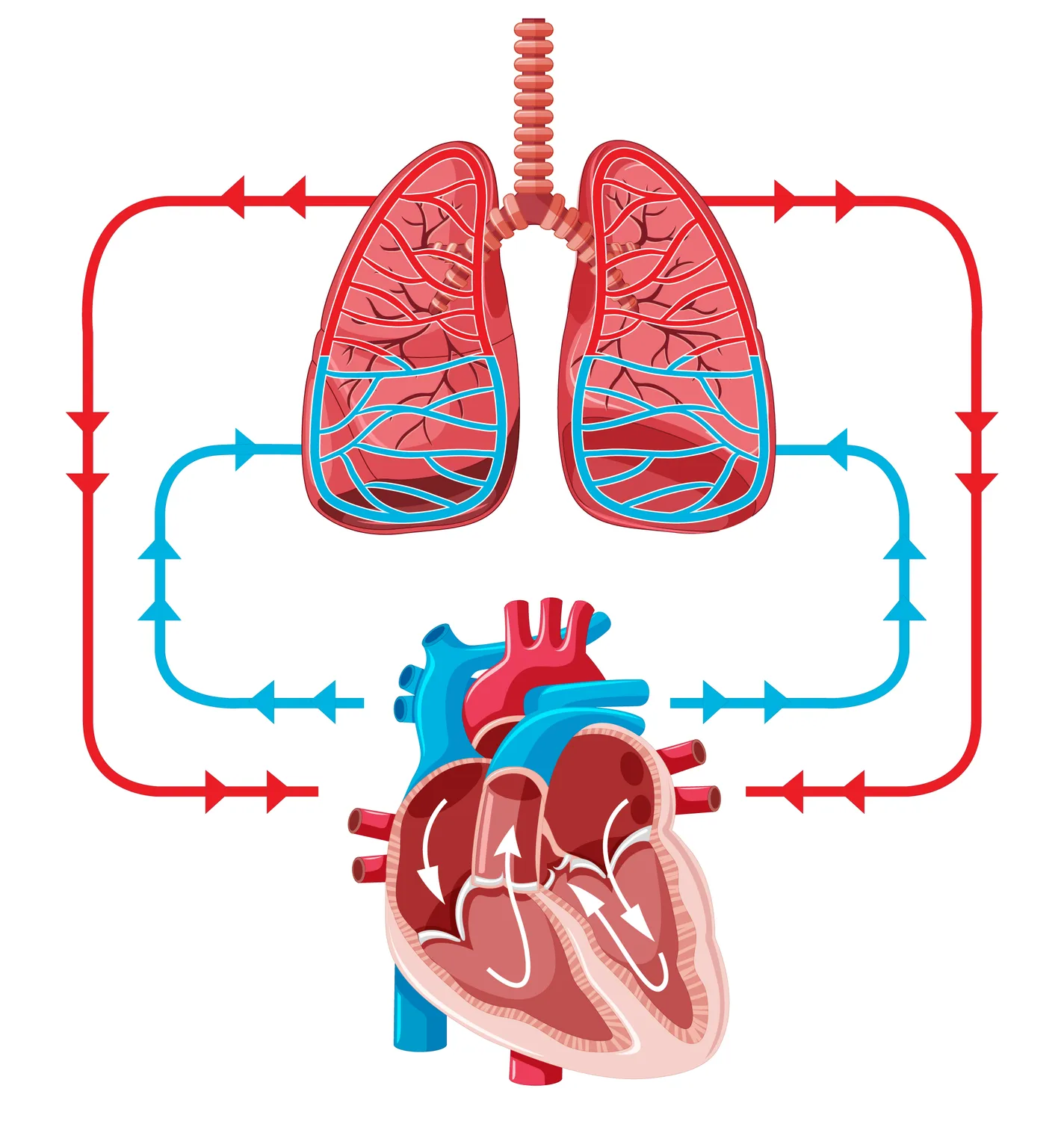
The heart pumps oxygen-rich blood to the body and lungs.
Your heart is a special muscle inside your chest that pumps blood through your body. A muscle is a body part that can squeeze and relax to make things move. Your heart is about the size of your fist. It works like a pump that never stops, beating all day and all night, even when you are sleeping.
Every time your heart beats, it does two important jobs. First, it pushes blood out to every part of your body. This blood carries oxygen, which is a gas from the air that your body needs to stay alive and work properly. Second, your heart pulls blood back in so it can pump it out again. You can feel your heartbeat by placing your hand on your chest. That thump-thump feeling is your heart squeezing and relaxing over and over.
Your heart beats faster when you run, jump, or play because your body needs more oxygen during exercise. Exercise is any activity that makes your body work harder than usual. When you are resting or sitting quietly, your heart beats more slowly because your body does not need as much oxygen. Your heart is always working to keep you healthy and strong.
Interesting Fact: Your heart beats about 100,000 times every single day! That means it will beat more than 3 billion times during your entire life.
What size is your heart?
Size of your fistSize of your headSize of your footSize of your thumb
What does blood carry to your body?
WaterOxygenFoodAir
When does your heart beat faster?
When you sleepWhen you sit quietlyWhen you exerciseWhen you read
Why does your heart beat faster during exercise?
Your body needs more oxygenYour heart is tiredYour body needs less oxygenYour heart wants to rest
How can you feel your heartbeat?
Look in a mirrorListen to musicPlace hand on chestTouch your head
What happens when your heart beats?
It pushes and pulls bloodIt makes noiseIt grows biggerIt stops working
Your heart stops beating when you sleep.
TrueFalse
What is a muscle?
A body part that squeezes and relaxesA type of foodA kind of bloodA gas from air
Perfect For:
๐ฉโ๐ซ Teachers
โข Reading comprehension practice
โข Auto-graded assessments
โข Literacy skill development
๐จโ๐ฉโ๐งโ๐ฆ Parents
โข Reading practice at home
โข Comprehension improvement
โข Educational reading time
๐ Homeschoolers
โข Reading curriculum support
โข Independent reading practice
โข Progress monitoring
Reading Features:
๐
Reading Passage
Engaging fiction or nonfiction text
โ
Comprehension Quiz
Auto-graded questions
๐
Instant Feedback
Immediate results and scoring
๐
Printable Version
Download for offline reading
๐
Read Aloud
Voice-over with word highlighting
Reviews & Ratings
No reviews yet. Be the first to share your experience!
Related Content
What Are Bones Made Of
This engaging 250-word reading passage introduces Grade 4 students to the structure and function of bones, aligned with ...
NGSS 4-LS1-1LS1.A
How Bones Protect Organs
This engaging 250-word reading passage helps Grade 4 students understand how bones protect organs, aligned with NGSS sta...
NGSS 4-LS1-1LS1.A
How Joints Connect Bones
This 250-word reading passage teaches fourth-grade students about joints and their role in the human skeletal system. Al...
NGSS 4-LS1-1LS1.A
Layers of the Skin
This engaging 250-word reading passage introduces fourth-grade students to the three layers of skin and their functions....
NGSS 4-LS1-1LS1.A
Parts of Plant Stems
This engaging 250-word reading passage introduces fourth-grade students to the internal structure and function of plant ...
NGSS 4-LS1-1LS1.A
Parts of a Flower
This comprehensive 250-word reading passage introduces fourth-grade students to the essential parts of a flower and thei...
NGSS 4-LS1-1LS1.A
How Leaves Make Food
This engaging Grade 4 science reading passage explains how leaves make food through photosynthesis. Students discover th...
NGSS 4-LS1-1LS1.A
How Animal Hearts Work
This 250-word audio-integrated reading passage introduces fourth-grade students to the essential function of the heart a...
NGSS 4-LS1-1LS1.A
Animal Skeleton Structure
This 250-word reading passage introduces fourth grade students to animal skeleton structure, aligned with NGSS 4-LS1-1 a...
NGSS 4-LS1-1LS1.A
How Animal Lungs Work
This 250-word reading passage introduces fourth-grade students to how animal lungs work, aligned with NGSS standard 4-LS...
NGSS 4-LS1-1LS1.A
Parts of a Leaf
This 250-word reading passage introduces Grade 4 students to the internal structure of leaves, aligned with NGSS standar...
NGSS 4-LS1-1LS1.A
Stamen and Pistil
This 250-word reading passage introduces fourth-grade students to the stamen and pistil, the key reproductive structures...
NGSS 4-LS1-1LS1.A
How Internal Structures Help Plants Survive
This 250-word informational reading passage is designed for Grade 4 students and aligns with NGSS standard 4-LS1-1 (LS1....
NGSS 4-LS1-1LS1.A
How Stems Support Plants
This engaging 250-word reading passage helps Grade 4 students understand how stems support plants and contribute to thei...
NGSS 4-LS1-1LS1.A
How Plants Reproduce
This 250-word reading passage introduces fourth-grade students to plant reproduction aligned with NGSS 4-LS1-1 and the D...
NGSS 4-LS1-1LS1.A
How External Structures Help Plants Survive
This 250-word reading passage introduces fourth-grade students to how external plant structures help plants survive, gro...
NGSS 4-LS1-1LS1.A
How Internal Structures Keep Animals Alive
This engaging 250-word reading passage introduces fourth-grade students to the essential internal structures that keep a...
NGSS 4-LS1-1LS1.A
Animal External Structures
This engaging 250-word reading passage introduces fourth-grade students to the concept of animal external structures ali...
NGSS 4-LS1-1LS1.A
What Are Exoskeletons
This engaging 250-word reading passage introduces fourth-grade students to the concept of exoskeletons, aligning with NG...
NGSS 4-LS1-1LS1.A
How Skin Protects Animals
This engaging 250-word reading passage introduces fourth-grade students to the protective functions of skin, the largest...