How Heat Powers Earth's Systems
Interactive passage with audio narration, comprehension questions, and printable PDF.
By completing this purchase you agree to our Terms of Use and Privacy Policy. Your subscription renews automatically until you cancel. You can cancel anytime from your account settings. All sales are final and non-refundable. Digital content is available for download in your account immediately upon purchase.
What's included
How Heat Powers Earth's Systems preview and details
About this printable How Heat Powers Earth's Systems science reading passage, NGSS-aligned (Grades 5-8)
Sample passage and quiz from How Heat Powers Earth's Systems
Reading passage and comprehension quiz preview
How Heat Powers Earth's Systems
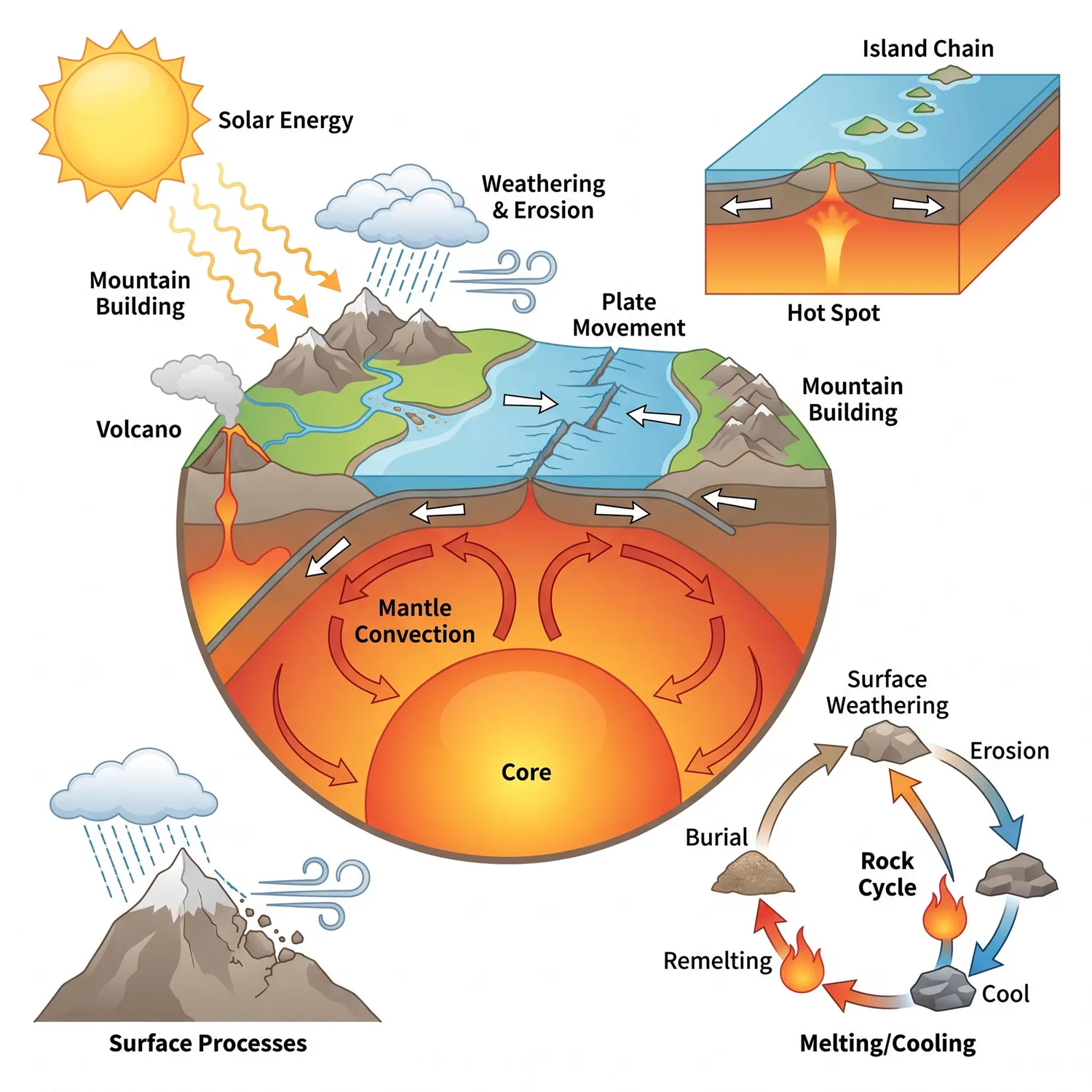
Earth operates like a giant heat engine with two main power sources. Thermal energy from deep inside Earth drives most of the processes that shape our planet from within. At the same time, energy from the Sun powers changes at Earth's surface. Together, these two energy sources keep our planet dynamic and constantly changing.
Earth's internal heat comes mainly from radioactive decay of elements deep within the planet. This heat causes mantle convection, a process where hot rock slowly rises toward the surface. Scientists explain that this movement works like a pot of boiling water. Hot material rises because it becomes less dense when heated. As the rock rises and cools, it becomes denser and sinks back down. This creates a continuous cycle of movement in Earth's mantle.
Mantle convection serves as the master engine behind plate movement. The rising and sinking rock drags Earth's tectonic plates along with it. Evidence shows that this plate movement causes earthquakes when plates grind past each other. Mountains build up where plates collide and push rock upward. Volcanoes erupt where plates pull apart or one plate slides beneath another. Most importantly, Earth's internal heat keeps materials constantly cycling. Rock melts deep underground, rises as magma, cools at the surface, and eventually sinks to melt again. This cycling of materials lies at the heart of how Earth renews itself.
The Hawaiian Islands demonstrate this heat-powered system in action. A hot spot deep in the mantle sends magma rising through the Pacific Plate. Over millions of years, this process has built a chain of volcanic islands. Each island formed as the plate slowly moved over the stationary hot spot below.
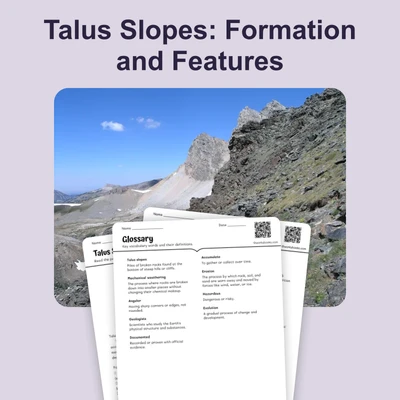
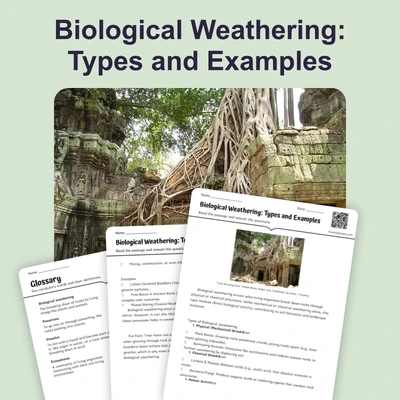
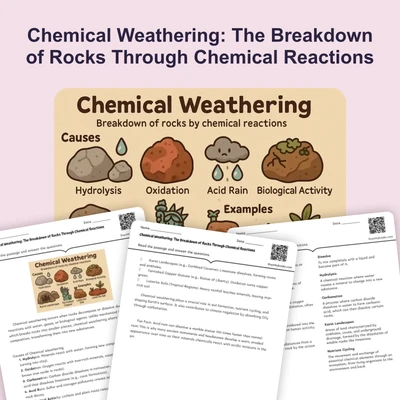
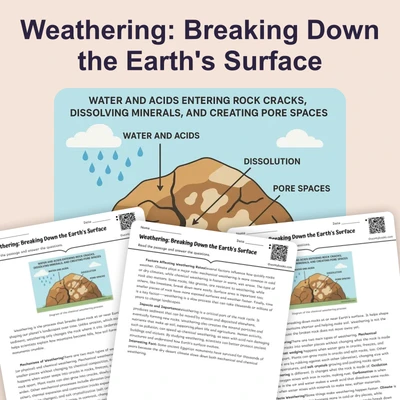
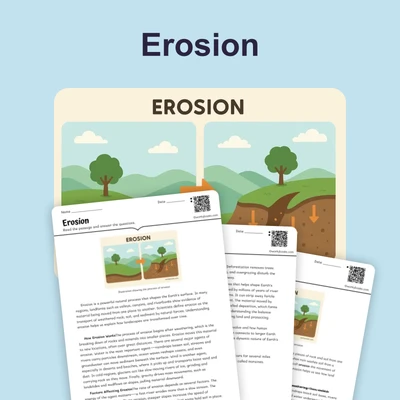
While internal heat shapes Earth from within, the Sun drives changes at the surface. Solar energy powers weathering, which breaks rocks into smaller pieces. It also drives erosion, which moves these pieces to new locations. Rain, wind, and flowing water all depend on energy from the Sun. These processes wear down mountains and reshape landscapes over time.
Understanding Earth's two energy sources matters because they work together to create the rock cycle. Internal heat builds new rock through volcanic activity and mountain formation. Surface processes break this rock down and move it around. This constant building up and breaking down has operated for billions of years. It continues to shape the planet we live on today.
Interesting Fact: Earth's core remains as hot as the surface of the Sun, reaching temperatures around 5,400 degrees Celsius. This incredible heat has been powering plate tectonics and mantle convection for over 4 billion years.
Comprehension quiz (10 questions)
1. What is the main source of Earth's internal heat?
2. How does mantle convection work?
3. Which term describes the process where rocks break into smaller pieces at Earth's surface?
4. What does the term 'tectonic plates' mean in the passage?
5. Based on the passage, what can you infer about the relationship between plate movement and earthquakes?
6. Why does the passage compare mantle convection to a pot of boiling water?
7. If you observed a chain of volcanic islands forming over millions of years, which Earth process would best explain this?
8. How do Earth's two energy sources work together in the rock cycle?
9. True or False: Earth's core is as hot as the surface of the Sun.
10. True or False: Energy from the Sun is the main power source for plate tectonics.
Perfect for the way you teach
- Build comprehension skills
- Auto-graded quiz
- Differentiated reading
- Read together at home
- Improve fluency
- Quiet reading time
- Reading curriculum support
- Independent practice
- Track Lexile growth