How Light Pollution Affects Astronomy
Interactive passage with audio narration, comprehension questions, and printable PDF.
By completing this purchase you agree to our Terms of Use and Privacy Policy. Your subscription renews automatically until you cancel. You can cancel anytime from your account settings. All sales are final and non-refundable. Digital content is available for download in your account immediately upon purchase.
What's included
How Light Pollution Affects Astronomy preview and details
About this printable How Light Pollution Affects Astronomy science reading passage, NGSS-aligned (Grades 5-8)
Sample passage and quiz from How Light Pollution Affects Astronomy
Reading passage and comprehension quiz preview
How Light Pollution Affects Astronomy
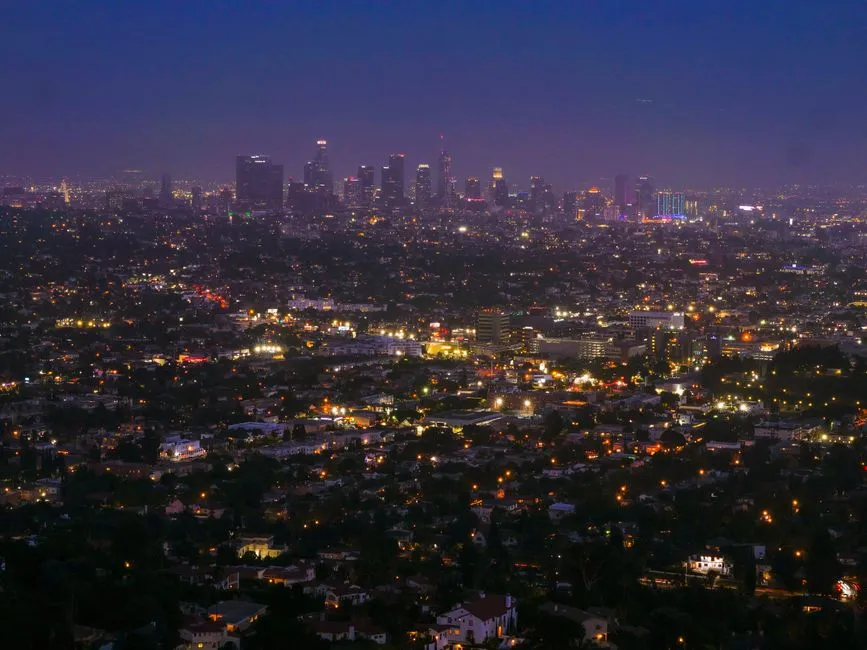
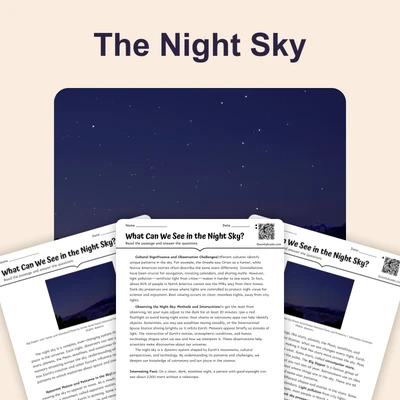
Light pollution occurs when artificial light from cities and towns brightens the night sky. This excess light creates a problem for astronomers who study stars, planets, and galaxies. City lights produce a glow that washes out the faint light from distant space objects. Scientists call this glow skyglow, and it makes observing the universe much harder.
Artificial lighting sends light upward into the atmosphere instead of directing it downward where it is needed. This scattered light reflects off dust and water particles in the air. The reflection creates a bright background that blocks our view of dim stars. Evidence shows that about 80% of Americans now live in areas where they cannot see the Milky Way galaxy. Professional astronomers face similar challenges when trying to observe celestial objects from observatories near populated areas.
Light pollution affects different types of astronomical observation in specific ways. Telescopes work by collecting light from distant objects and focusing it for study. When background light from cities enters the telescope, it reduces the contrast between the object and the sky. This makes it difficult to detect faint galaxies or study the chemical composition of stars. Astronomers often must travel to remote locations or use space-based telescopes to avoid this interference.
The Kitt Peak National Observatory in Arizona provides a clear example of this problem. Located about 56 miles from Tucson, the observatory once had exceptionally dark skies. Over the past 50 years, light from the growing city has increased skyglow at the site. Astronomers now work with local officials to use special lighting that reduces upward light. These efforts help preserve the observatory's ability to conduct research.
Light pollution matters because it affects more than just astronomy. The excess lighting wastes energy and money. It can disrupt wildlife behavior, especially in animals that rely on darkness. Perhaps most importantly, light pollution disconnects people from the natural night sky. For thousands of years, humans observed stars and developed understanding of our place in the universe. Today, many young people grow up never seeing a truly dark sky filled with stars.
Interesting Fact: The International Dark-Sky Association reports that outdoor lighting in the United States alone wastes about $3 billion worth of electricity each year, and most of this wasted light contributes directly to skyglow.
Comprehension quiz (10 questions)
1. What is skyglow?
2. According to the passage, what percentage of Americans cannot see the Milky Way from where they live?
3. How does light pollution affect telescopes?
4. What does the word 'artificial' mean in the context of this passage?
5. Based on the passage, why do astronomers sometimes need to use space-based telescopes?
6. What solution is mentioned for reducing light pollution at Kitt Peak Observatory?
7. Which of the following is NOT mentioned as an effect of light pollution?
8. How much money does outdoor lighting waste annually in the United States according to the passage?
9. True or False: Light pollution only affects professional astronomers and has no impact on wildlife or everyday people.
10. True or False: The passage states that artificial lighting sends light upward into the atmosphere instead of directing it downward where it is needed.
Perfect for the way you teach
- Build comprehension skills
- Auto-graded quiz
- Differentiated reading
- Read together at home
- Improve fluency
- Quiet reading time
- Reading curriculum support
- Independent practice
- Track Lexile growth