How Long Is the Lunar Cycle
Interactive passage with audio narration, comprehension questions, and printable PDF.
By completing this purchase you agree to our Terms of Use and Privacy Policy. Your subscription renews automatically until you cancel. You can cancel anytime from your account settings. All sales are final and non-refundable. Digital content is available for download in your account immediately upon purchase.
What's included
How Long Is the Lunar Cycle preview and details
About this printable How Long Is the Lunar Cycle science reading passage, NGSS-aligned (Grades 5-8)
Sample passage and quiz from How Long Is the Lunar Cycle
Reading passage and comprehension quiz preview
How Long Is the Lunar Cycle
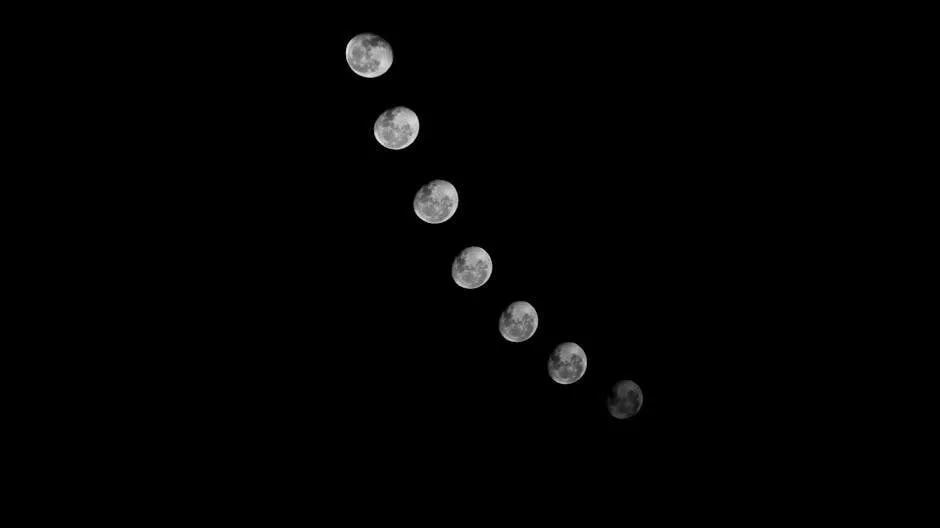
The lunar cycle, or the time it takes for the Moon to go through all its phases, lasts about 29.5 days. This period is slightly longer than the time the Moon takes to orbit Earth once. Scientists observe that the Moon completes one orbit around Earth in approximately 27 days. However, the cycle of phases takes an extra 2.5 days to complete.
The difference between these two time periods can be explained by Earth's motion. While the Moon orbits Earth, our planet continues moving around the Sun. Evidence shows that Earth travels a significant distance along its orbital path during those 27 days. The Moon must travel extra distance to catch up and return to the same Sun-Earth-Moon alignment. This alignment determines what phase we see from Earth.
Scientists call the 29.5-day cycle the synodic month. This term describes the time between identical Moon phases, such as from one full moon to the next. The 27-day period is called the sidereal month, which measures the Moon's orbit relative to distant stars. The synodic month is longer because it accounts for Earth's movement around the Sun. The Moon needs those extra days to reach the same position relative to both Earth and the Sun.
Many ancient cultures used the lunar cycle to track time and create calendars. The word "month" comes from the word "moon" because early calendars were based on lunar phases. Modern calendars still reflect this connection, with most months lasting about 30 days. Some cultures continue to use lunar calendars today for religious and cultural events. For example, the Islamic calendar follows a 12-month lunar year of about 354 days.
Understanding the lunar cycle helps scientists predict tides, plan space missions, and study Earth-Moon interactions. The cycle remains remarkably consistent because the Moon's orbit and Earth's motion follow predictable patterns. This regularity allows us to calculate Moon phases years into the future. The lunar cycle connects us to patterns in the solar system that have repeated for billions of years.
Interesting Fact: Because the synodic month is 29.5 days, we can experience 13 full moons in some calendar years instead of the usual 12. The second full moon in a single calendar month is sometimes called a "blue moon."
Comprehension quiz (10 questions)
1. How long does one complete lunar cycle take?
2. How long does it take the Moon to orbit Earth once?
3. What is a synodic month?
4. What does the term 'sidereal month' measure?
5. Why does the lunar cycle take longer than one orbit of the Moon around Earth?
6. Based on the passage, why might ancient cultures have based their calendars on the lunar cycle?
7. If scientists know the lunar cycle is predictable, what can they do?
8. How does understanding the lunar cycle help with planning space missions?
9. True or False: The word 'month' comes from the word 'moon.'
10. True or False: The Moon completes its orbit around Earth in exactly 29.5 days.
Perfect for the way you teach
- Build comprehension skills
- Auto-graded quiz
- Differentiated reading
- Read together at home
- Improve fluency
- Quiet reading time
- Reading curriculum support
- Independent practice
- Track Lexile growth