How Organ Systems Work Together — Reading Comprehension
Rate this
Premium Resource
Present
Present in classroom. No work saved
Assign
Classroom with student accounts, Track progress
Quick Play
No student accounts, assign with a link
Grades
3
4
5
Standards
NGSS 4-LS1-1
PRINT+DIGITAL RESOURCE
This learning resource is available in interactive and printable formats. The interactive worksheet can be played online and assigned to students. The Printable PDF version can be downloaded and printed for completion by hand.
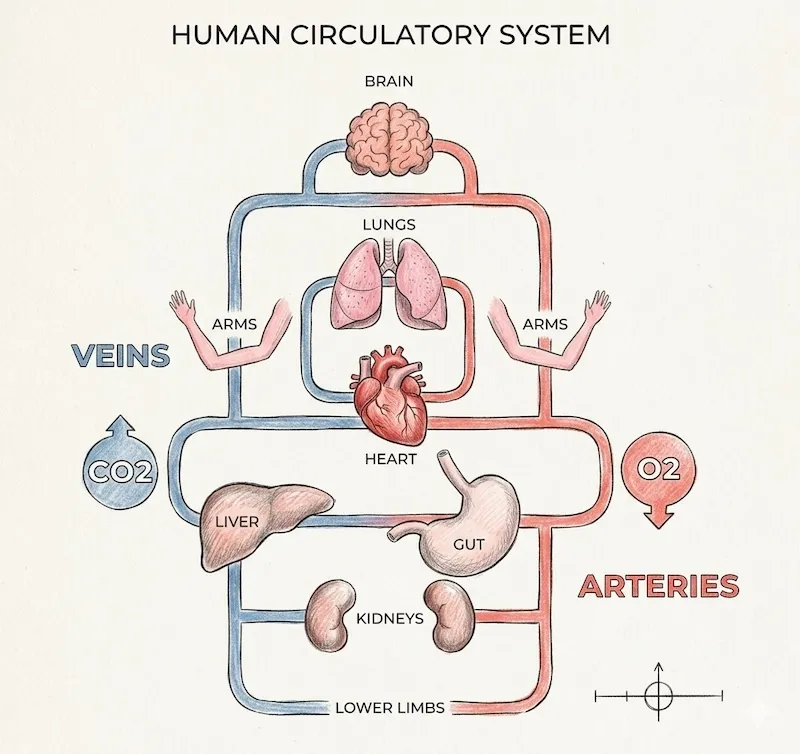
This engaging 250-word reading passage introduces fourth-grade students to the concept of how organ systems work together in the human body. Aligned with NGSS standard 4-LS1-1 and the Disciplinary Core Idea LS1.A, the passage explains that body systems do not work independently. Students discover how the lungs bring in oxygen while blood carries it throughout the body, how the stomach breaks down food while blood delivers nutrients to cells, and how multiple systems coordinate during activities like running. The passage uses simple, age-appropriate language and real-world examples to build foundational understanding. Audio integration supports diverse learners by providing multiple ways to access the content. The passage includes bolded key vocabulary terms with immediate definitions, helping students build science literacy. Students explore the interconnected nature of the respiratory, circulatory, digestive, and muscular systems through concrete examples they can relate to their own experiences. This resource prepares students for hands-on investigations and classroom discussions about human body systems and their functions.
CONTENT PREVIEW
Expand content preview
Your body has many different organ systems—groups of organs that work together to do important jobs. These systems do not work alone. They depend on each other to keep you healthy and alive.
The lungs are organs that bring oxygen from the air into your body. Oxygen is a gas that all your cells need to stay alive. But the lungs cannot deliver oxygen by themselves. The blood—a liquid that flows through your body—carries the oxygen from the lungs to every cell. Think of blood as a delivery truck that picks up oxygen at the lungs and drops it off wherever it is needed.
The stomach is an organ that breaks down food into tiny pieces called nutrients. Nutrients are substances your cells need for energy and growth. Once again, the blood carries these nutrients from the stomach to all the cells in your body.
When you run or play, your muscles work hard and need more oxygen and nutrients. Your heart beats faster to pump blood more quickly. You also breathe harder so your lungs can bring in more oxygen. Three systems—respiratory, circulatory, and muscular—are working together.
If one system stops working, the others are affected too. Without lungs bringing in oxygen, the blood has nothing to deliver. Without blood, nutrients from the stomach cannot reach your cells. Body systems are like teammates—they all need each other to win the game.
Interesting Fact: Your heart beats about 100,000 times every single day, pumping blood to deliver oxygen and nutrients throughout your entire body!
What do the lungs bring into your body?
Oxygen from the airFood from the stomachBlood from the heartNutrients from cells
What carries oxygen to every cell?
The stomachThe lungsThe bloodThe muscles
What does the stomach break food into?
OxygenNutrientsBloodMuscles
Why does your heart beat faster when you run?
To break down food fasterTo pump blood more quicklyTo stop the lungs from workingTo make muscles smaller
What happens if one body system stops working?
Other systems work betterNothing changesOther systems are affected tooNew systems appear
How many systems work together when you run?
One systemTwo systemsThree systemsFour systems
Body systems work completely alone from each other.
TrueFalse
What are nutrients?
Gases that help you breatheSubstances cells need for energy and growthOrgans that pump bloodLiquids that flow through lungs
Perfect For:
👩🏫 Teachers
• Reading comprehension practice
• Auto-graded assessments
• Literacy skill development
👨👩👧👦 Parents
• Reading practice at home
• Comprehension improvement
• Educational reading time
🏠 Homeschoolers
• Reading curriculum support
• Independent reading practice
• Progress monitoring
Reading Features:
📖
Reading Passage
Engaging fiction or nonfiction text
❓
Comprehension Quiz
Auto-graded questions
📊
Instant Feedback
Immediate results and scoring
📄
Printable Version
Download for offline reading
🔊
Read Aloud
Voice-over with word highlighting
Reviews & Ratings
No reviews yet. Be the first to share your experience!
Related Content
How Animals See Differently
This engaging 250-word reading passage introduces fourth-grade students to the fascinating world of animal vision and ey...
NGSS 4-LS1-1LS1.D
Animal Internal Structure
This engaging science passage for Grade 4-5 students explores animal internal structure and how organs work together to ...
NGSS 4-LS1-1
What Are Bones Made Of
This engaging 250-word reading passage introduces Grade 4 students to the structure and function of bones, aligned with ...
NGSS 4-LS1-1LS1.A
How Bones Protect Organs
This engaging 250-word reading passage helps Grade 4 students understand how bones protect organs, aligned with NGSS sta...
NGSS 4-LS1-1LS1.A
How Joints Connect Bones
This 250-word reading passage teaches fourth-grade students about joints and their role in the human skeletal system. Al...
NGSS 4-LS1-1LS1.A
How Muscles Move Bones
This comprehensive 250-word reading passage introduces fourth-grade students to the fundamental concept of how muscles a...
NGSS 4-LS1-1
Two Types of Muscles
This 250-word reading passage introduces fourth-grade students to the two main types of muscles in the human body: volun...
NGSS 4-LS1-1
What Are Muscles
This engaging 250-word reading passage introduces fourth-grade students to the essential concept of muscles and how they...
NGSS 4-LS1-1
How Skin Protects Body
This audio-integrated reading passage introduces fourth-grade students to the protective functions of skin, aligned with...
NGSS 4-LS1-1
Layers of the Skin
This engaging 250-word reading passage introduces fourth-grade students to the three layers of skin and their functions....
NGSS 4-LS1-1LS1.A
What Are Plant Structures
This engaging 250-word reading passage introduces fourth-grade students to the fundamental concept of plant structures a...
NGSS 4-LS1-1
Parts of Plant Stems
This engaging 250-word reading passage introduces fourth-grade students to the internal structure and function of plant ...
NGSS 4-LS1-1LS1.A
How Water Moves Inside Plants
This 250-word reading passage introduces fourth-grade students to the concept of water transport in plants, aligned with...
NGSS 4-LS1-1
Parts of a Flower
This comprehensive 250-word reading passage introduces fourth-grade students to the essential parts of a flower and thei...
NGSS 4-LS1-1LS1.A
How Fish Gills Work
This engaging 250-word reading passage introduces fourth-grade students to the concept of fish gills and how they functi...
NGSS 4-LS1-1
How Leaves Make Food
This engaging Grade 4 science reading passage explains how leaves make food through photosynthesis. Students discover th...
NGSS 4-LS1-1LS1.A
How Animal Hearts Work
This 250-word audio-integrated reading passage introduces fourth-grade students to the essential function of the heart a...
NGSS 4-LS1-1LS1.A
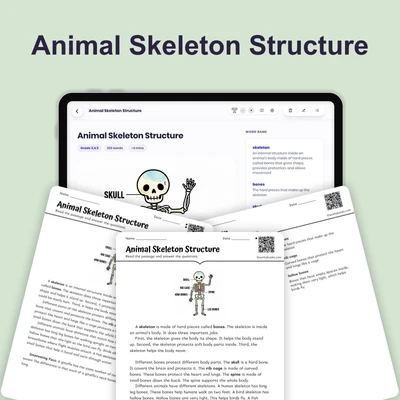
Animal Skeleton Structure
This 250-word reading passage introduces fourth grade students to animal skeleton structure, aligned with NGSS 4-LS1-1 a...
NGSS 4-LS1-1LS1.A
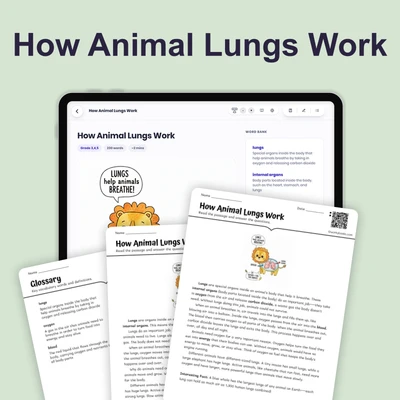
How Animal Lungs Work
This 250-word reading passage introduces fourth-grade students to how animal lungs work, aligned with NGSS standard 4-LS...
NGSS 4-LS1-1LS1.A
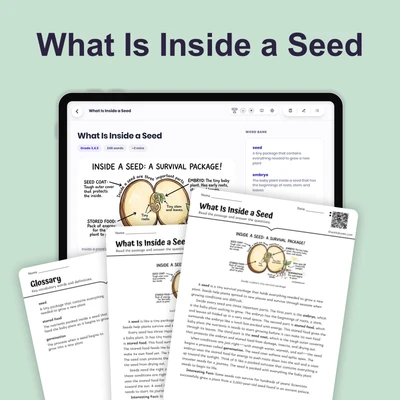
What Is Inside a Seed
This engaging 250-word reading passage helps Grade 4 students understand the internal structure of seeds, aligned with N...