This 400-500 word informational science passage for grades 6-8 explores how seasons affect plants and animals, aligned with NGSS MS-ESS1-1 and MS-ESS1.B Earth and the Solar System. Students examine how seasonal patterns drive critical life cycle events including leaf loss in deciduous trees, bird migration, bear hibernation, and spring flowering. The passage explains how organisms use environmental cues like temperature and day length to time these behaviors. Real-world examples demonstrate how climate change is disrupting these precisely timed patterns, putting many species at risk. The content includes key vocabulary terms such as dormancy, migration, hibernation, photoperiod, deciduous, adaptation, life cycle, and climate change. Audio-integrated features support diverse learners. Activities include reading comprehension questions, writing prompts, and graphic organizers that help students analyze cause-and-effect relationships and compare seasonal adaptations across different species.
Written by Workybooks TeamPublished by Workybooks
Preview
Sample passage and quiz content
CONTENT PREVIEW
Expand content preview
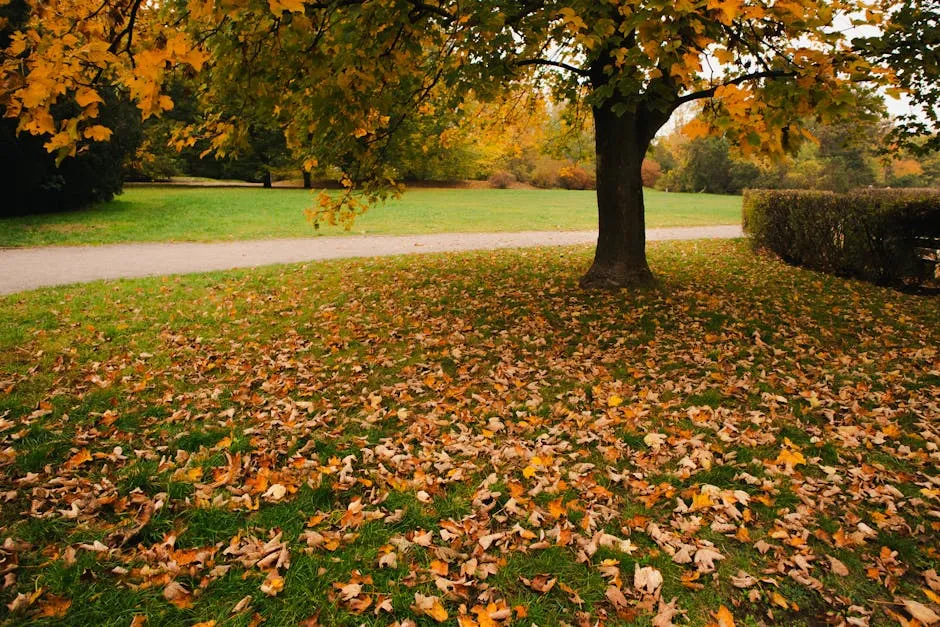
Deciduous trees lose their leaves before cold weather arrives. This process helps them conserve water when frozen ground makes it difficult to absorb moisture.Image by Lilia Danshyna / Pexels.
Seasons shape the lives of plants and animals in powerful ways. As Earth orbits the sun, different regions receive varying amounts of sunlight throughout the year. These changes create predictable patterns that organisms depend on for survival. Plants and animals have developed remarkable adaptations to respond to seasonal shifts in temperature, daylight, and food availability.
Many trees prepare for winter by entering a state called dormancy. Deciduous trees lose their leaves before cold weather arrives. This process helps them conserve water when frozen ground makes it difficult to absorb moisture. The trees seal off their leaves, which then change color and fall. Meanwhile, animals face their own seasonal challenges. Birds may migrate thousands of miles to find warmer climates and abundant food. Arctic terns travel over 44,000 miles each year between polar regions. Other animals like bears enter hibernation, a deep sleep that allows them to survive months without eating.
Scientists have discovered that many organisms use photoperiod, or day length, as a signal for seasonal changes. When days grow shorter in autumn, this triggers specific responses. Flowers bloom in spring when temperatures rise and days lengthen. Cherry trees in Washington, D.C., typically bloom in early April when conditions align. These precisely timed events are part of each species' life cycle. The timing ensures that young animals are born when food is plentiful and plants reproduce when pollinators are active.
Evidence shows that climate change is disrupting these ancient patterns. Warmer temperatures cause some plants to bloom weeks earlier than normal. Animals that depend on these plants for food may arrive too late if they migrate based on day length rather than temperature. Scientists observe that some bird species are laying eggs earlier, while others maintain their traditional schedules. These mismatches can reduce survival rates for young animals. Understanding how seasons affect living things helps us recognize the challenges that climate change creates for ecosystems worldwide.
Interesting Fact: Some animals can sense seasonal changes even when kept in laboratories with constant conditions. Their internal biological clocks continue to prepare them for migrations or hibernation at the right time of year.
What causes seasonal changes on Earth?
Different regions receive varying amounts of sunlight as Earth orbits the sunThe moon blocks sunlight at different times of yearEarth moves closer to and farther from the sunOcean currents change the amount of heat in the atmosphere
Why do deciduous trees lose their leaves before winter?
To make room for new leaves to growTo conserve water when frozen ground makes absorption difficultTo protect themselves from heavy snowTo store energy in their roots
What does the term 'photoperiod' mean?
The amount of rain that falls during a seasonThe temperature changes throughout the yearThe length of daylight in a 24-hour periodThe time it takes for a plant to grow
According to the passage, hibernation is a state that allows animals to:
Travel to warmer climates without stoppingSurvive months without eating during winterGrow thicker fur for cold weatherStore food for the entire winter season
How is climate change affecting seasonal patterns?
It makes all animals migrate earlier than normalIt causes plants to bloom weeks earlier, creating mismatches with animal behaviorIt stops trees from losing their leaves in autumnIt makes photoperiod signals stronger and more reliable
Which animal travels over 44,000 miles each year during migration?
Based on the passage, what can you infer about organisms that use day length as a seasonal signal?
They will easily adapt to climate change because day length stays constantThey may struggle when temperatures change but day length remains the sameThey only live in tropical regions near the equatorThey do not need to worry about food availability
If a bird species migrates based on day length but the plants it eats bloom based on temperature, what problem might occur with warmer temperatures?
The bird will arrive before the plants bloomThe bird will arrive after the plants have already bloomed and produced seedsThe bird will stop migrating completelyThe plants will wait for the bird to arrive before blooming
True or False: All animals respond to seasonal changes in exactly the same way.
TrueFalse
True or False: Some animals can sense seasonal changes even when kept in laboratories with constant conditions.
TrueFalse
Who it's for
Perfect for the way you teach
Teachers
Build comprehension skills
Auto-graded quiz
Differentiated reading
Parents
Read together at home
Improve fluency
Quiet reading time
Homeschoolers
Reading curriculum support
Independent practice
Track Lexile growth
Topics
seasonsplant life cyclesanimal migrationhibernationdeciduous treesclimate changephotoperiodadaptation
Reviews & Ratings
No reviews yet. Be the first to share your experience!
More reading you might love
20 more
What is Solar Radiation
This NGSS-aligned science reading passage for middle school students explores the concept of solar radiation. Solar radi...
MS-ESS1-1
How Incoming Solar Radiation Changes with Latitude
This NGSS-aligned science reading passage helps middle school students understand how solar radiation, or insolation, ch...
MS-ESS1-1
Tides and Tidal Forces
This middle school science passage explores the mechanisms of tides and tidal forces, aligning with NGSS standards MS-ES...
MS-ESS1-1MS-ESS1-2
The Night Sky
This comprehensive science reading passage for grades 6-8 aligns with NGSS standard MS-ESS1-1 and explores the systems a...
MS-ESS1-1
Ancient Astronomy
This engaging passage for grades 6-8 explores the history of astronomy through the lens of ancient observations. Student...
MS-ESS1-1
Tools of Modern Astronomy
This passage introduces middle school students to modern astronomy, aligning with NGSS standard MS-ESS1-1. It explains h...
MS-ESS1-1
How Astronomy Became a Science
This passage explores the transformative period known as the Scientific Revolution, with a special focus on the history ...
MS-ESS1-1
Earth's Rotation
This middle school science passage, aligned with NGSS standard MS-ESS1-1, focuses on Earth's rotation—how Earth spins on...
MS-ESS1-1
Earth's Revolution
This middle school science passage explores the science behind Earth's revolution around the Sun, closely aligned with N...
MS-ESS1-1
Why We Have Seasons
This comprehensive middle school science reading passage explains the mechanisms behind Earth's seasons, directly addres...
MS-ESS1-1
Earth's Seasons
This comprehensive reading passage for grades 6-8 explains why Earth has seasons, revealing the scientific mechanisms be...
MS-ESS1-1
Phases of the Moon
This comprehensive middle school science passage explains the phases of the Moon, focusing on the mechanisms behind the ...
MS-ESS1-1
Tides
This comprehensive middle school science reading passage explores the phenomenon of ocean tides, aligned to NGSS standar...
MS-ESS1-1MS-ESS1-2
Eclipses
This comprehensive passage for grades 6-8 explores the science behind eclipses, including solar and lunar eclipses, thei...
MS-ESS1-1
The Moon's Characteristics
This comprehensive science reading passage for grades 6-8 examines the Moon's physical characteristics, including its si...
MS-ESS1-1MS-ESS1-2
Lunar Eclipses
This passage introduces middle school students to the phenomenon of lunar eclipses, connecting observable events to the ...
MS-ESS1-1
The Sun's Characteristics
This engaging science passage introduces middle school students to the Sun’s key characteristics, such as its classifica...
MS-ESS1-1MS-ESS1-2
What Is a Galaxy?
This comprehensive middle school science passage answers the question: What is a galaxy? Aligned to NGSS standard MS-ESS...
MS-ESS1-1
The Milky Way: Our Home Galaxy
This comprehensive science passage introduces middle school students to the Milky Way, the barred spiral galaxy that is ...
MS-ESS1-1
Types of Galaxies
This comprehensive middle school science passage introduces students to the classification and characteristics of galaxi...