How Underwater Rovers and ROVs Work
Interactive passage with audio narration, comprehension questions, and printable PDF.
By completing this purchase you agree to our Terms of Use and Privacy Policy. Your subscription renews automatically until you cancel. You can cancel anytime from your account settings. All sales are final and non-refundable. Digital content is available for download in your account immediately upon purchase.
What's included
How Underwater Rovers and ROVs Work preview and details
About this printable How Underwater Rovers and ROVs Work science reading passage, NGSS-aligned (Grades 6-8)
Sample passage and quiz from How Underwater Rovers and ROVs Work
Reading passage and comprehension quiz preview
How Underwater Rovers and ROVs Work
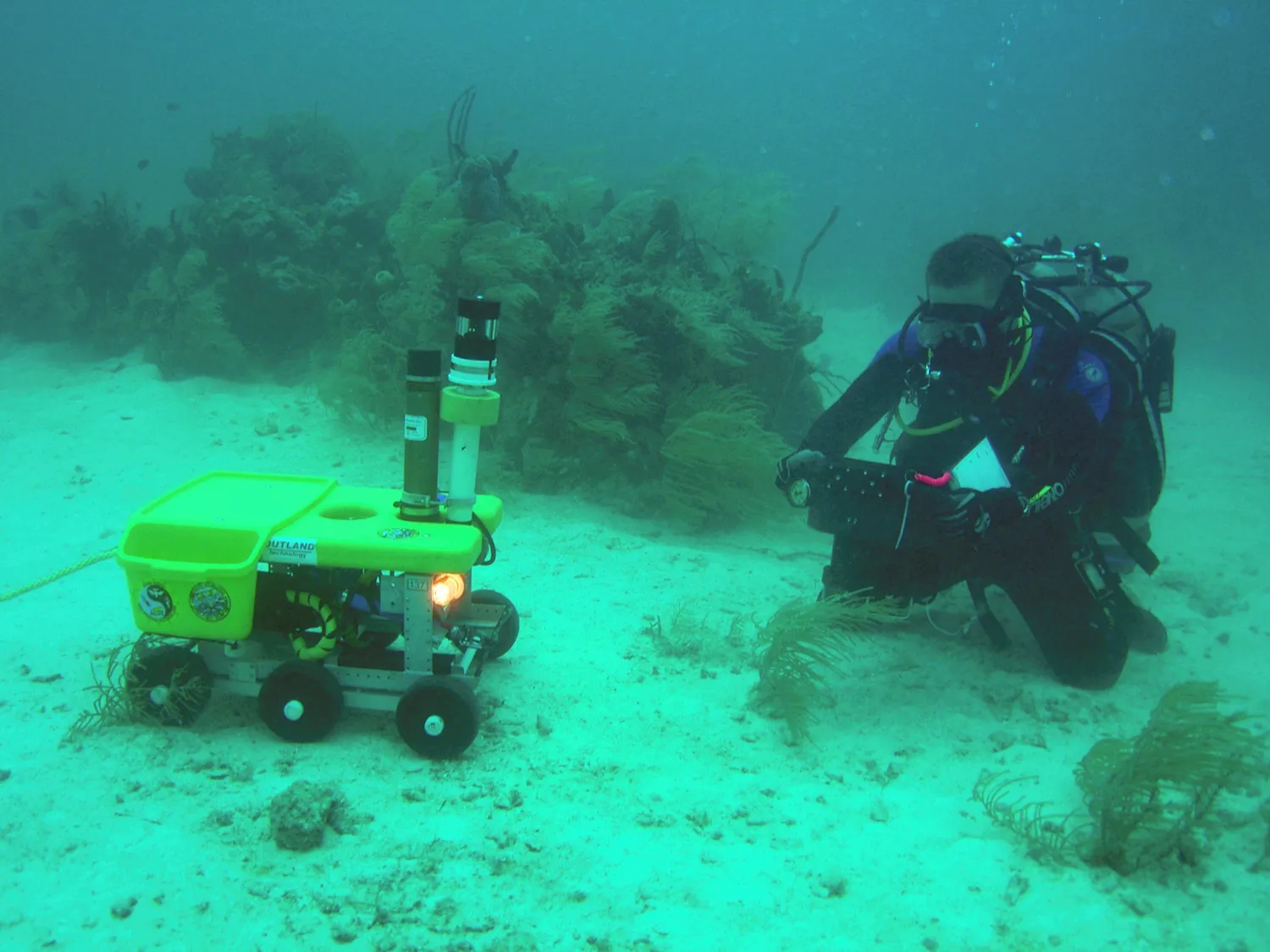
"NEEMO12 rover" by NASA / Wikimedia Commons. hese are sophisticated robots designed to withstand the crushing pressure and harsh conditions of the deep sea.
The deep ocean is one of the most challenging environments on Earth to explore. At depths below 1,000 meters, the water pressure is so intense it would crush a human body, and the temperature drops near freezing. No sunlight penetrates these depths, making it completely dark. To study these extreme environments, scientists use remotely operated vehicles (ROVs) and autonomous underwater rovers. These are sophisticated robots designed to withstand the crushing pressure and harsh conditions of the deep sea.
ROVs are connected to a research ship by a long cable called a tether. This tether serves multiple purposes: it provides electrical power to the ROV, allows scientists on the ship to control the vehicle's movements, and transmits data and video footage back to the surface in real time. Pilots on the ship use joysticks and computer screens to navigate the ROV, similar to playing a video game but with real scientific consequences. The ROV's body is built from strong materials like titanium and reinforced plastic that can resist the immense pressure found at depths up to 6,000 meters or more. Inside protective housings, cameras, lights, and scientific instruments remain safe from the crushing force of the water.
Autonomous underwater rovers work differently from ROVs. These robots are not connected by cables and operate independently once deployed. Scientists program the rover with specific instructions before sending it into the ocean. The autonomous rover follows its programmed route, collecting data and samples without direct human control. It uses onboard computers, sensors, and navigation systems to avoid obstacles and complete its mission. After finishing its tasks, the rover returns to a predetermined location where scientists can retrieve it and download the collected information.
Both types of vehicles carry specialized equipment for scientific research. Robotic arms with gripper tools can collect rock samples, sediment, and even living organisms from the ocean floor. Temperature sensors measure the heat coming from hydrothermal vents, which are underwater hot springs where superheated water erupts from cracks in the Earth's crust. Chemical sensors analyze the water's composition, detecting minerals and gases dissolved in the ocean. High-definition cameras and sonar systems create detailed maps and images of underwater landscapes, revealing mountains, valleys, and volcanic features on the ocean floor.
ROV and rover discoveries have transformed our understanding of deep-sea environments. In 1977, scientists using the ROV Alvin discovered hydrothermal vents for the first time. These vents support entire ecosystems of unusual creatures that survive without sunlight, getting energy from chemicals in the hot water instead. Giant tube worms, eyeless shrimp, and unique bacteria thrive in these extreme conditions. ROVs have also explored underwater volcanoes, mapped tectonic plate boundaries where Earth's crust spreads apart, and discovered shipwrecks and ancient artifacts. Each dive provides new information about ocean floor geology, helping scientists understand how our planet's surface changes over time.
The technology behind underwater rovers continues to advance. Modern ROVs can dive deeper, stay underwater longer, and carry more sophisticated instruments than ever before. Engineers are developing rovers with artificial intelligence that can make decisions independently, identifying interesting features and adjusting their missions without human input. These improvements allow scientists to explore more of the ocean and make discoveries that would be impossible with human divers alone.
Interesting Fact: More than 80 percent of the ocean remains unexplored and unmapped. We have better maps of the surface of Mars than we do of our own ocean floor, making ROVs and autonomous rovers essential tools for discovering what lies beneath the waves.
Comprehension quiz (10 questions)
1. What is the main purpose of the tether connected to an ROV?
2. How do autonomous underwater rovers differ from ROVs?
3. What does the term 'autonomous' mean in the context of underwater rovers?
4. What discovery did scientists make using the ROV Alvin in 1977?
5. Why are ROVs built from materials like titanium and reinforced plastic?
6. What do chemical sensors on ROVs and rovers measure?
7. Based on the passage, why are creatures near hydrothermal vents unusual?
8. How are engineers improving autonomous rovers according to the passage?
9. ROVs can operate at depths below 1,000 meters where humans cannot survive.
10. We have explored and mapped more of Earth's ocean floor than the surface of Mars.
Perfect for the way you teach
- Build comprehension skills
- Auto-graded quiz
- Differentiated reading
- Read together at home
- Improve fluency
- Quiet reading time
- Reading curriculum support
- Independent practice
- Track Lexile growth