How Volcanoes Reveal Earth's Interior
Interactive passage with audio narration, comprehension questions, and printable PDF.
By completing this purchase you agree to our Terms of Use and Privacy Policy. Your subscription renews automatically until you cancel. You can cancel anytime from your account settings. All sales are final and non-refundable. Digital content is available for download in your account immediately upon purchase.
What's included
How Volcanoes Reveal Earth's Interior preview and details
About this printable How Volcanoes Reveal Earth's Interior science reading passage, NGSS-aligned (Grades 5-8)
Sample passage and quiz from How Volcanoes Reveal Earth's Interior
Reading passage and comprehension quiz preview
How Volcanoes Reveal Earth's Interior
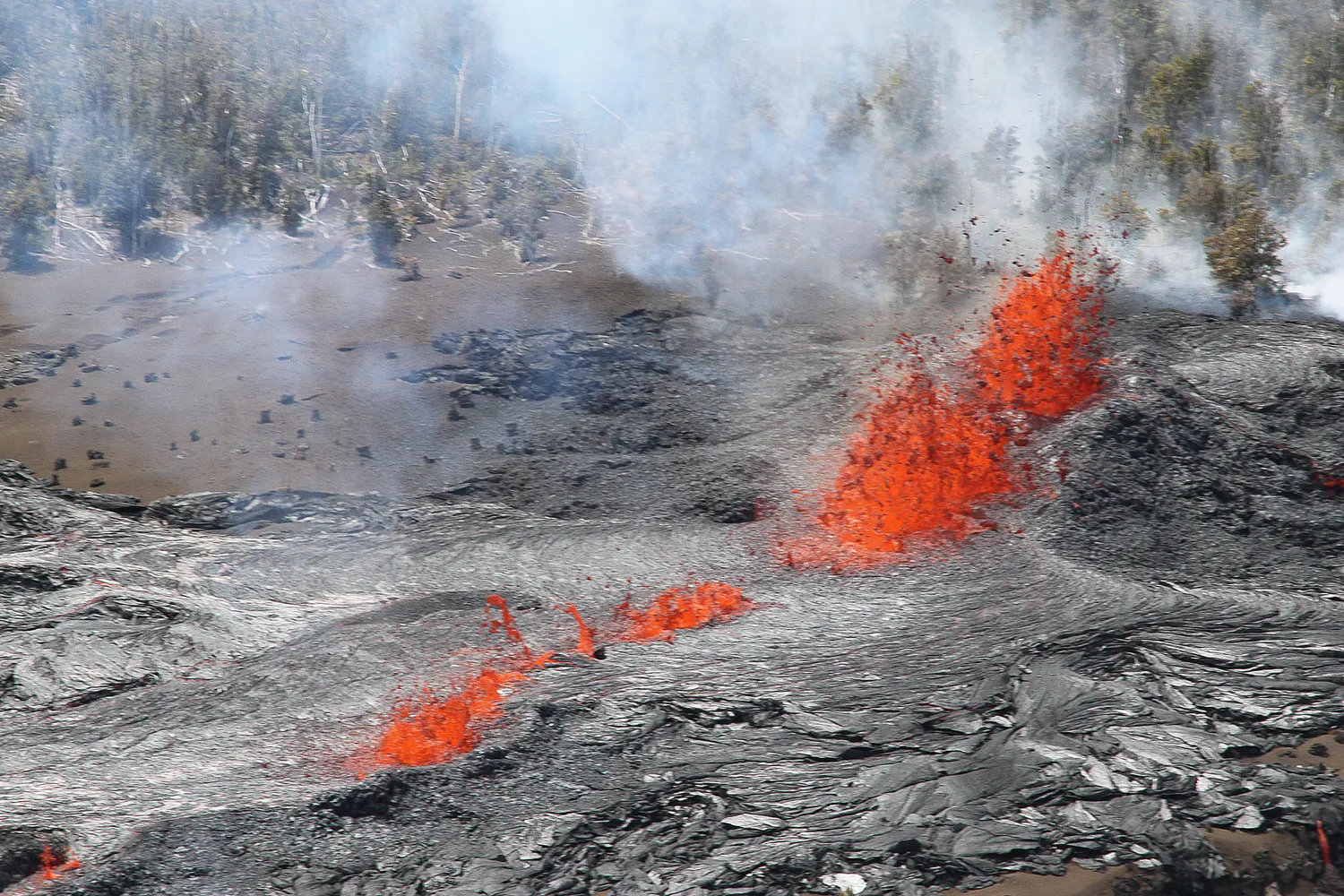
An aerial view of lava fountains at a fissure eruption just below Pu`u O`o cinder cone of Kilauea volcano in Hawaii, USA. by Jay Robinson/NPS / Wikimedia Commons
Volcanoes do more than create dramatic eruptions and flowing lava. They act as natural windows into Earth's hidden interior. When a volcano erupts, it brings magma to the surface. Magma is molten rock that forms deep below Earth's surface. By studying this material, scientists learn about places they cannot reach any other way.
Most of Earth's interior lies far beyond human reach. The deepest hole ever drilled reaches only about 12 kilometers down. Earth's radius measures more than 6,000 kilometers. Scientists cannot dig down to study the mantle or the core directly. However, volcanoes bring samples up from these deep layers. When magma rises through Earth's crust, it carries important clues. Sometimes eruptions even bring up solid chunks of rock from the mantle. These pieces, called xenoliths, get trapped in the rising magma and carried to the surface.
Scientists analyze volcanic materials to understand Earth's composition. The chemicals found in lava reveal what rocks exist deep underground. Evidence shows that the mantle contains different minerals than the crust. Temperature measurements of fresh lava help scientists estimate how hot Earth's interior is. Some lava erupts at temperatures exceeding 1,000 degrees Celsius. This evidence confirms that Earth's interior remains extremely hot, even billions of years after the planet formed.
The 2018 eruption of Kilauea volcano in Hawaii provides a real-world example. Scientists collected fresh lava samples during the eruption. Laboratory analysis revealed the chemical composition of rocks from deep in the mantle. This data helped researchers understand the processes happening far below Hawaii. The samples confirmed that mantle rock can melt and rise through weak spots in Earth's crust.
Volcanic evidence complements other methods scientists use to study Earth's interior. Seismic waves from earthquakes travel through Earth and reveal its layered structure. Volcanic samples provide direct physical evidence of what those layers contain. Together, these lines of evidence build a complete picture. Volcanoes may seem destructive, but they serve an important scientific purpose. They deliver samples from Earth's unreachable depths and help scientists understand our dynamic planet.
Interesting Fact: Some diamonds reach Earth's surface through volcanic eruptions. These gems form deep in the mantle under extreme pressure and ride up in magma, giving scientists rare samples from more than 150 kilometers below the surface.
Comprehension quiz (10 questions)
1. What is magma?
2. Why can't scientists dig down to study Earth's mantle directly?
3. What are xenoliths?
4. According to the passage, what can scientists learn by measuring the temperature of fresh lava?
5. In the passage, the word 'composition' most likely means:
6. Based on the passage, what role do seismic waves play in studying Earth's interior?
7. How did the 2018 Kilauea eruption help scientists?
8. Why does the passage describe volcanoes as 'natural windows' into Earth's interior?
9. True or False: The deepest hole ever drilled reaches Earth's mantle.
10. True or False: Volcanic evidence and seismic wave data work together to help scientists understand Earth's interior.
Perfect for the way you teach
- Build comprehension skills
- Auto-graded quiz
- Differentiated reading
- Read together at home
- Improve fluency
- Quiet reading time
- Reading curriculum support
- Independent practice
- Track Lexile growth