Inventions That Transformed Daily Life
Interactive passage with audio narration, comprehension questions, and printable PDF.
By completing this purchase you agree to our Terms of Use and Privacy Policy. Your subscription renews automatically until you cancel. You can cancel anytime from your account settings. All sales are final and non-refundable. Digital content is available for download in your account immediately upon purchase.
What's included
Inventions That Transformed Daily Life preview and details
About this printable Inventions That Transformed Daily Life reading passage (Grades 5-8)
Sample passage and quiz from Inventions That Transformed Daily Life
Reading passage and comprehension quiz preview
Inventions That Transformed Daily Life
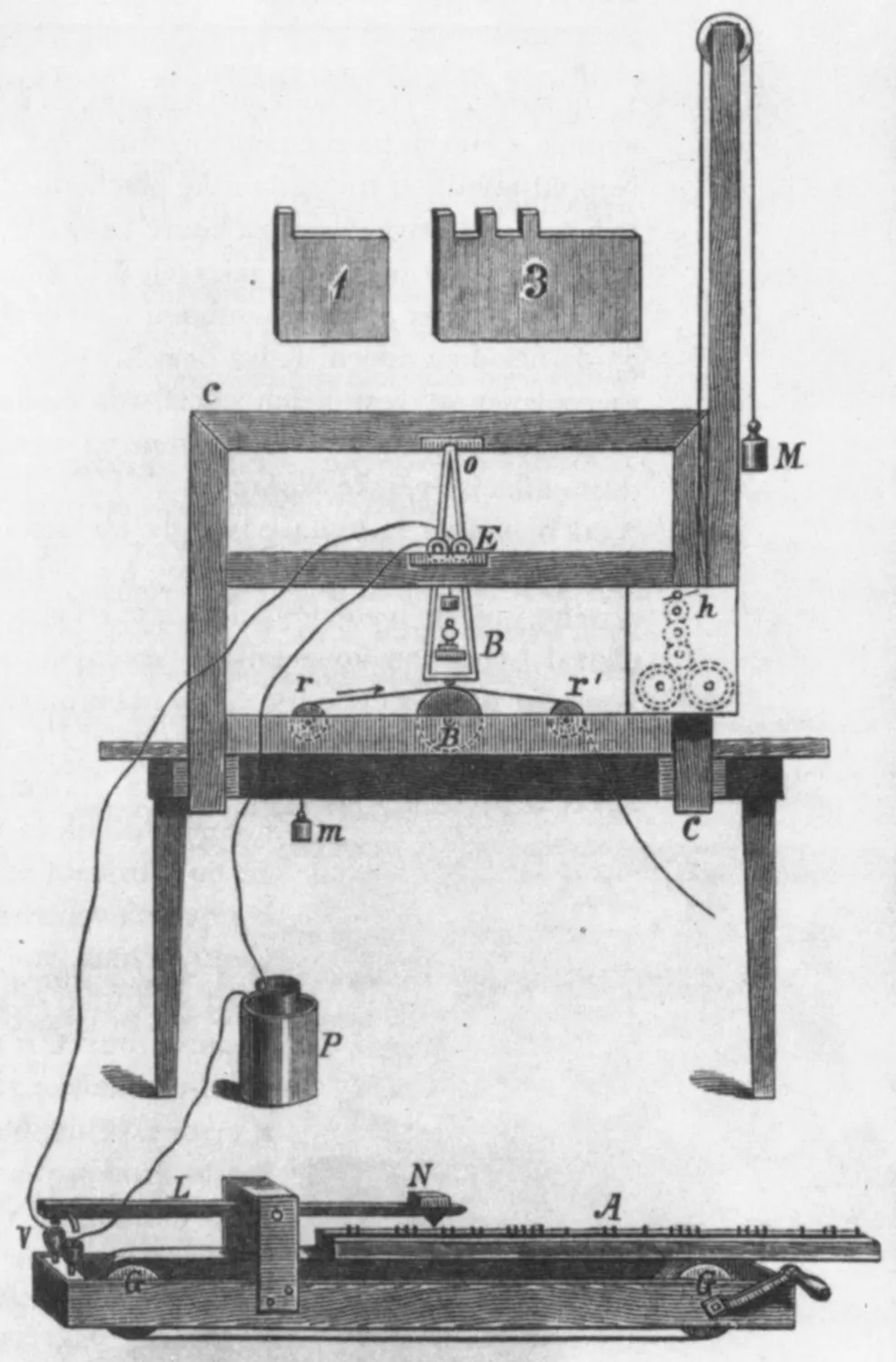
"Morse telegraph" /
Source: Wikimedia Commons (Public domain).
The Industrial Revolution, starting in Britain in the late 1700s, was a period of rapid technological change that dramatically changed daily life around the world. New inventions such as the telegraph, photography, and sewing machines not only boosted industry, but also altered how people communicated, worked, and connected with each other. Innovations from this era helped shape the modern world we know today.
One of the most influential inventions was the telegraph. In 1837, Samuel Morse and Alfred Vail developed the first practical telegraph system in the United States. The telegraph allowed messages to travel instantly across long distances using electrical signals and a code called Morse Code. Before the telegraph, news and information could only travel as fast as a horse or ship. After its installation between Washington, D.C., and Baltimore in 1844, the telegraph demonstrated its power when it transmitted the news of the Whig Party’s nomination for president. By the 1850s, telegraphs were connecting major cities across continents. This invention revolutionized communication, making business, government, and personal messages far faster and more reliable than ever before.
Another major innovation was the sewing machine, invented by Elias Howe in 1846 and improved by Isaac Singer soon after. The sewing machine made it possible to produce clothing and other textiles much more quickly and cheaply. Before this, sewing was slow, manual work done mostly by women and girls at home or by skilled workers in small shops. With the new machines, factories could produce goods on a huge scale, lowering prices and making clothing more accessible. However, this also led to changes in social hierarchy, as factory owners gained wealth and many workers had to adjust to strict schedules and new types of labor.
The invention of photography around 1839 by Louis Daguerre and others also changed how people saw the world. Early photographs, called daguerreotypes, captured real-life images for the first time. Families could now own portraits, and newspapers could show events as they happened. Photography became a valuable source for documenting history, social change, and even scientific discoveries. Photographs provided new ways to record evidence, study nature, and share information visually.
These inventions were possible because of the Industrial Revolution’s advances in science, engineering, and manufacturing. Railroads, steam engines, and new factories all helped spread these technologies quickly. As these inventions spread to Europe, the Americas, and beyond, they brought major changes to daily routines, work environments, and even relationships between people and their governments. The Industrial Revolution’s inventions had lasting impacts, shaping everything from the global economy to everyday family life.
Inventions like the telegraph, sewing machine, and photography not only made life faster and more efficient, but also created new connections between people and places. They are reminders of how technological change can transform societies. This period set the stage for even more inventions and global connections in the centuries that followed.
Interesting Fact: The first ever photograph of a person was taken in Paris in 1838 by Louis Daguerre—and the person only appeared in the photo because they stood still long enough while getting their shoes shined!
These changes connect to the broader theme of how technology and innovation continue to shape world history and daily life.
Comprehension quiz (8 questions)
1. Who invented the telegraph?
2. What year was the sewing machine invented?
3. Where did the Industrial Revolution begin?
4. How did the telegraph change communication?
5. Why did the sewing machine impact society?
6. What did early photographs allow families to do?
7. The Industrial Revolution made life more efficient. True or false?
8. What does 'hierarchy' mean?
Perfect for the way you teach
- Build comprehension skills
- Auto-graded quiz
- Differentiated reading
- Read together at home
- Improve fluency
- Quiet reading time
- Reading curriculum support
- Independent practice
- Track Lexile growth