This learning resource is available in interactive and printable formats. The interactive worksheet can be played online and assigned to students. The Printable PDF version can be downloaded and printed for completion by hand.
This comprehensive passage introduces middle school students (grades 6-8) to the concept of natural selection, aligning with NGSS standards MS-LS4-4 and MS-LS4-6. Students will learn how variation, heredity, overproduction, and differential survival drive the adaptation and evolution of populations. The passage explains the underlying mechanisms of natural selection using accessible language and real-world examples, such as the peppered moth during the Industrial Revolution, antibiotic-resistant bacteria, and pesticide-resistant insects. The resource includes a glossary, Spanish translation, differentiated version for struggling readers, and multiple activities including a quiz and graphic organizers. Audio integration is available for all passages and activities, supporting diverse learning needs. This resource is ideal for science teachers seeking engaging, standards-aligned content on evolution and adaptation.
CONTENT PREVIEW
Expand content preview
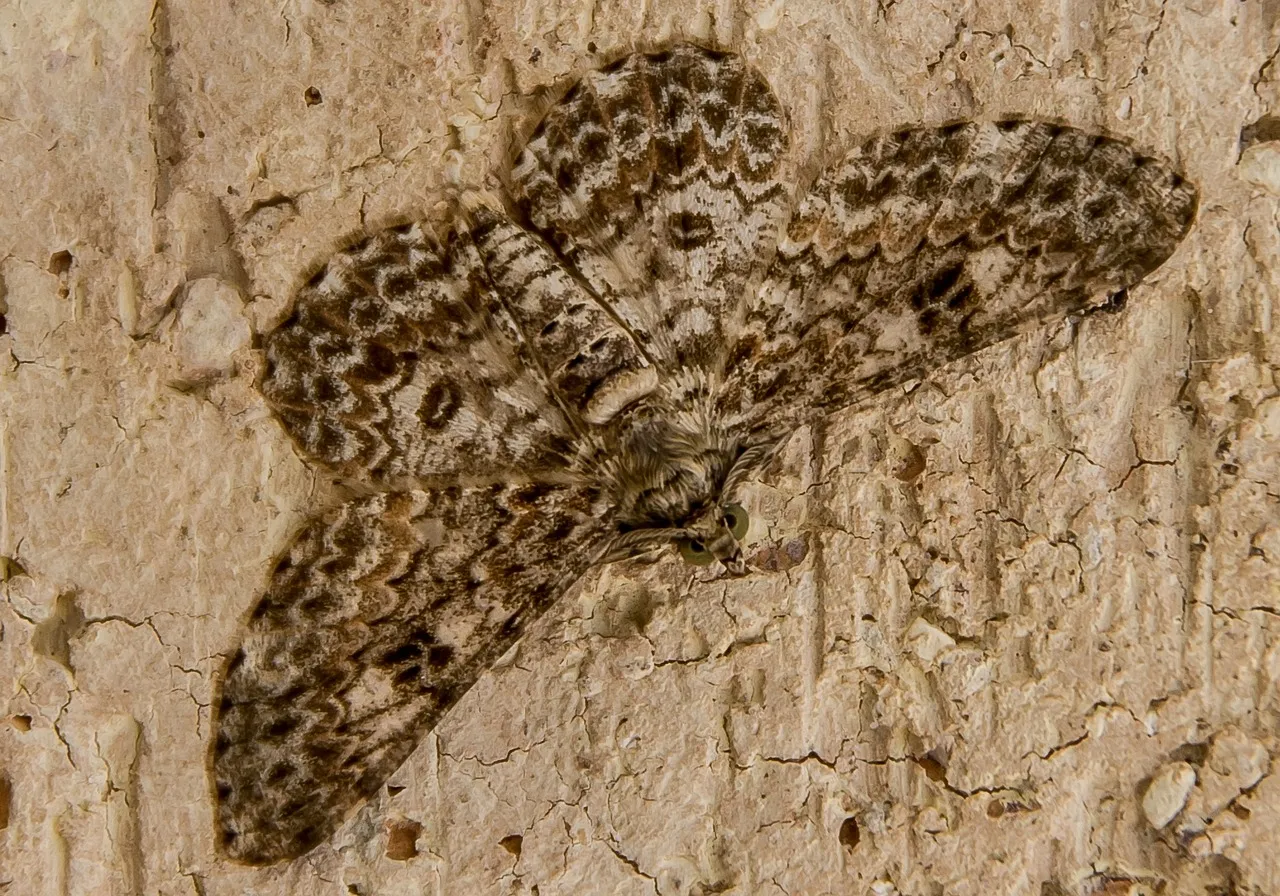
"The moth's pattern allows it to camouflage with its surroundings and not be spotted by prey, increasing its likelihood of survival" by sandid / Pixabay.
Natural selection drives the adaptation of species to their environments over generations. It explains why certain traits become common in a population while others disappear. For example, biologists observed that after the Industrial Revolution in England, dark-colored peppered moths became more common than light-colored ones. This change occurred because pollution darkened tree bark, making light moths more visible to predators. The process of natural selection reveals how species change as their environments change.
How Natural Selection Works Natural selection occurs when some individuals in a population have traits that give them an advantage for survival and reproduction. Four main requirements must be met for this process: variation exists among individuals; traits are heritable (passed from parents to offspring); more offspring are produced than can survive; and there is differential survival based on traits. For example, bacteria in a hospital may vary in their ability to survive antibiotics. Those with a random mutation that makes them resistant will survive and reproduce, passing on this trait. Over time, the population evolves, and more bacteria have this resistance.
Examples and Broader Implications Natural selection does not act on entire species at once; it acts on individuals, but the effects appear in populations over generations. Insects exposed to pesticides show similar processes. Some individuals are naturally resistant and survive chemical treatments, leading to populations that are harder to control. These patterns show how natural selection can affect agriculture, medicine, and health. Scientists use data from experiments—like measuring the percentage of resistant insects after pesticide use—to track these changes. For example, if 5% of insects survive a pesticide one year, and 50% survive a few years later, natural selection is making the population more resistant.
Natural Selection and Evolution Charles Darwin’s key insight was that the environment “selects” which traits are passed on. He observed that different environments favor different traits, leading to adaptation. Natural selection explains how populations evolve over time, even though individual organisms do not change their traits during their lifetimes. This principle is central to understanding biological diversity, agriculture, and public health strategies, such as rotating antibiotics to slow bacterial resistance. Recognizing how natural selection operates helps scientists predict changes in populations and develop solutions to environmental challenges.
In summary, natural selection is a powerful process that shapes life on Earth. By understanding how it works, we can see the connections between genetics, environment, and the survival of species.
Interesting Fact: Scientists have observed natural selection in action, such as bacteria evolving resistance to antibiotics within just a few years—demonstrating evolution can happen much faster than many people think.
What is natural selection?
A process by which organisms with helpful traits survive and reproduce more oftenA way plants make foodA method animals use to find waterA type of mutation in DNA
Which of the following is needed for natural selection to occur?
Variation among individualsAll organisms being identicalNo offspring producedTraits that cannot be inherited
According to the passage, what happened to peppered moths during the Industrial Revolution?
More dark-colored moths survived and became commonAll moths became extinctLight-colored moths became more commonMoths stopped reproducing
In the passage, what does the word 'heritable' mean?
Able to be passed from parents to offspringHard to seeOnly found in plantsCaused by pollution
What is 'differential survival' in the context of natural selection?
When some individuals survive better due to their traitsWhen all individuals survive equallyWhen new species are createdWhen traits are not inherited
Why do populations, not individuals, evolve according to the passage?
Because changes in traits build up in populations over generationsBecause individuals can change their traitsBecause populations never changeBecause only individuals can inherit traits
What is one real-world example of natural selection mentioned in the passage?
Bacteria becoming resistant to antibioticsClouds forming in the skyRocks breaking apartWater boiling
If 5% of insects survive a pesticide one year, and 50% survive a few years later, what does this show?
Natural selection is increasing resistance in the populationPesticides are making insects weakerAll insects are identicalInsects do not reproduce
Natural selection acts on individuals, but evolution occurs in populations. (True/False)
TrueFalse
All traits that help survival are passed on to the next generation. (True/False)
TrueFalse
Perfect For:
👩🏫 Teachers
• Reading comprehension practice
• Auto-graded assessments
• Literacy skill development
👨👩👧👦 Parents
• Reading practice at home
• Comprehension improvement
• Educational reading time
🏠 Homeschoolers
• Reading curriculum support
• Independent reading practice
• Progress monitoring
Reading Features:
📖
Reading Passage
Engaging fiction or nonfiction text
❓
Comprehension Quiz
Auto-graded questions
📊
Instant Feedback
Immediate results and scoring
📄
Printable Version
Download for offline reading
🔊
Read Aloud
Voice-over with word highlighting
Reviews & Ratings
No reviews yet. Be the first to share your experience!
Related Content
The Giant Isopod: Biological Evolution
This NGSS passage examines how giant isopods evolved for deep-sea survival, including slow metabolism for food scarcity,...
MS-LS4-4RI.6.3RI.7.3RI.8.8
What Is Biodiversity?
This comprehensive science reading passage for grades 6-8 introduces students to biodiversity and explores its importanc...
MS-LS2-5MS-LS4-4
Vertebrates: Fishes
This middle school science reading passage offers an in-depth look at fishes, a major group of vertebrates. It covers fi...
MS-LS4-2MS-LS4-4
Vertebrates: Amphibians
This comprehensive middle school science passage dives into the fascinating world of amphibians, a group of vertebrates ...
MS-LS4-2MS-LS4-4
Vertebrates: Reptiles
This comprehensive science passage for grades 6-8 introduces students to reptiles, a fascinating class of vertebrates. A...
MS-LS4-2MS-LS4-4
Vertebrates: Birds
This middle school science passage explores birds as vertebrates, focusing on their unique adaptations such as feathers,...
MS-LS4-2MS-LS4-4
Vertebrates: Mammals
This comprehensive passage introduces middle school students to the class Mammalia and their defining characteristics, i...
MS-LS4-2MS-LS4-4
Invertebrates: Arthropods
This comprehensive science passage introduces middle school students to the phylum Arthropoda, the largest and most dive...
MS-LS4-2MS-LS4-4
Biodiversity and Its Importance
This comprehensive middle school science passage explores the concept of biodiversity at the genetic, species, and ecosy...
MS-LS4-4MS-LS2-5
Galápagos Islands
This engaging science passage explores the Galápagos Islands, a volcanic archipelago located off the coast of Ecuador in...
MS-LS2-1MS-LS4-4MS-ESS3-4
Intertidal Zone
This middle school science reading passage introduces students to the intertidal zone, the area between high and low tid...
MS-LS2-1MS-LS4-4
Speciation
This comprehensive science passage introduces middle school students to the concept of speciation, the process by which ...
MS-LS4-4
Adaptation
This engaging middle school science passage explores adaptation, focusing on how inherited traits enable organisms to su...
MS-LS4-4MS-LS4-6
Extinction and Biodiversity
This comprehensive middle school science passage explores the concepts of extinction and biodiversity, aligned to NGSS s...
MS-LS4-1MS-LS4-4
Environmental Change and Species Survival
This middle school science passage explores how environmental changes, such as climate change, habitat destruction, the ...
MS-LS4-4MS-LS4-6
Coevolution
This passage for grades 6-8 introduces students to the concept of coevolution, where two or more species evolve in respo...
MS-LS4-4MS-LS4-6
Climate Change: Species Responses
This middle school science passage explores how species respond to climate change, aligning with NGSS standards MS-LS4-4...
MS-LS4-4MS-LS4-6
Effects of Climate Change
This comprehensive middle school science passage explores the effects of climate change on Earth's systems and life, ali...
MS-ESS3-5MS-LS4-4
How Climate Change Affects Seasons
This passage explores the science of shifting seasons and their effects on ecosystems, aligning with NGSS standards MS-E...