Japan Attacks Pearl Harbor
Interactive passage with audio narration, comprehension questions, and printable PDF.
By completing this purchase you agree to our Terms of Use and Privacy Policy. Your subscription renews automatically until you cancel. You can cancel anytime from your account settings. All sales are final and non-refundable. Digital content is available for download in your account immediately upon purchase.
What's included
Japan Attacks Pearl Harbor preview and details
About this printable Japan Attacks Pearl Harbor reading passage (Grades 5-8)
Sample passage and quiz from Japan Attacks Pearl Harbor
Reading passage and comprehension quiz preview
Pearl Harbor: America Enters the War
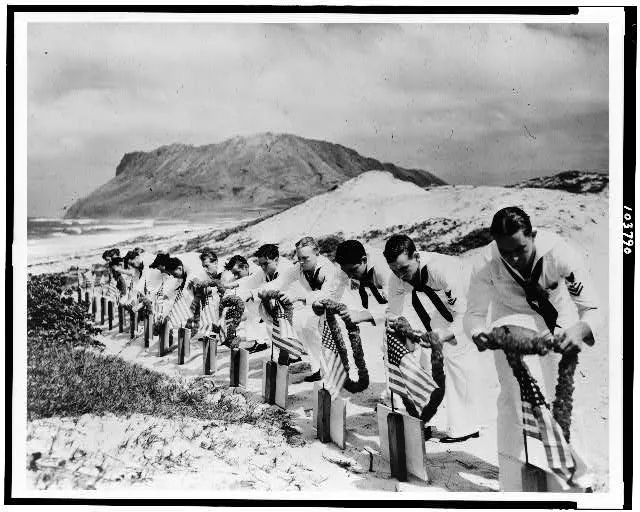
Source: Library of Congress
The attack on Pearl Harbor on December 7, 1941, marked a turning point in world history by bringing the United States into World War II. Located on the Hawaiian island of Oahu, Pearl Harbor was the main base for the U.S. Pacific Fleet. Before the attack, the United States tried to stay neutral in the growing conflict between Axis and Allied powers. However, tensions grew as Japan expanded its territory in Asia and the Pacific, seeking more resources and power.
On the morning of December 7, 1941, the Japanese military launched a surprise assault on Pearl Harbor. More than 350 Japanese planes bombed ships, airfields, and buildings. The attack lasted less than two hours but caused massive destruction. Over 2,400 Americans were killed, and the Pacific Fleet lost eight battleships, including the USS Arizona, which exploded and sank. Many survivors later described the chaos, with diary entries and letters revealing their shock and confusion. For example, a sailor named Donald Stratton wrote about escaping the burning USS Arizona using a rope thrown from another ship.
The attack on Pearl Harbor was carefully planned by Japanese leaders, including Admiral Isoroku Yamamoto. Their goal was to weaken the U.S. Navy and prevent it from interfering with Japan’s plans to conquer new territories. American leaders were caught off guard, despite some intelligence warnings. The attack showed the importance of geographic location, as Hawaii’s distance from the U.S. mainland made it seem safe from invasion. However, advances in military technology and aircraft carriers made distant attacks possible.
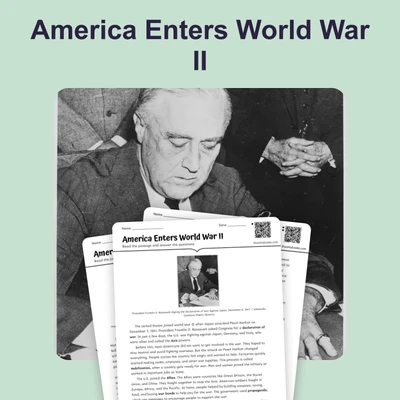
The immediate effect of the Pearl Harbor attack was the United States’ entry into World War II. On December 8, 1941, President Franklin D. Roosevelt delivered his famous “Day of Infamy” speech to Congress, calling for a declaration of war on Japan. Congress responded quickly, and America joined the Allied powers. This decision changed the course of the war and the lives of millions. People in the United States united behind the war effort, while many Japanese Americans faced unfair suspicion and were forced into internment camps. The attack also highlighted the dangers of underestimating enemies and the impact of surprise attacks in modern warfare.
The significance of Pearl Harbor extends far beyond the event itself. It demonstrated how a single day could alter the direction of history, influence military strategy, and shape global alliances. The U.S. response helped turn World War II in favor of the Allies. Pearl Harbor remains a symbol of sacrifice, resilience, and the costs of war. It also serves as a reminder to study the past to prevent future conflicts.
This story connects to broader themes of conflict, cooperation, and how geography and technology shape history across time and place.
Interesting Fact: The USS Arizona still lies at the bottom of Pearl Harbor as a memorial to those who lost their lives on December 7, 1941.
Comprehension quiz (8 questions)
1. When did the attack on Pearl Harbor happen?
2. Where is Pearl Harbor located?
3. Who led Japan's plan for the attack?
4. What was Japan's goal in attacking Pearl Harbor?
5. What was a direct result of the attack?
6. How did Americans respond after the attack?
7. The attack on Pearl Harbor happened in 1941. True or false?
8. What does 'internment camps' mean?
Perfect for the way you teach
- Build comprehension skills
- Auto-graded quiz
- Differentiated reading
- Read together at home
- Improve fluency
- Quiet reading time
- Reading curriculum support
- Independent practice
- Track Lexile growth