This learning resource is available in interactive and printable formats. The interactive worksheet can be played online and assigned to students. The Printable PDF version can be downloaded and printed for completion by hand.
This World History reading passage, 'Acts of Resistance: Fighting Back Against the Nazis,' explores the courageous efforts of individuals and groups who resisted Nazi oppression during the Holocaust and World War II. Students will learn how partisans, ghetto uprisings, and secret networks challenged Nazi authority, using specific historical examples like the Warsaw Ghetto Uprising and Jewish partisan fighters in Eastern Europe. The passage highlights key vocabulary, cause-and-effect relationships, and the significance of resistance in shaping history. Activities include a rigorous multiple-choice quiz, writing assessments, graphic organizers, and a clear timeline of events. The passage meets CA HSS and CCSS standards, supporting close reading, analysis, and historical thinking skills. Spanish translation and read aloud audio are provided for accessibility, making this resource ideal for diverse classrooms and supporting English learners in their study of the Holocaust and resistance movements.
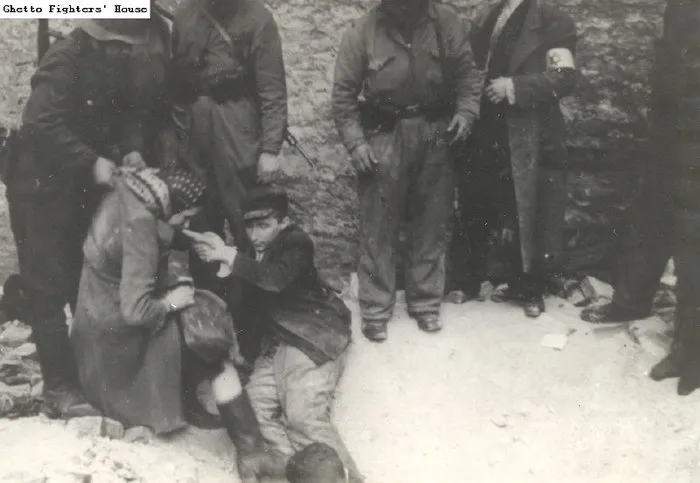
The Nazi regime, led by Adolf Hitler, controlled much of Europe during World War II and enforced brutal policies of persecution and genocide, especially targeting Jewish people. However, in the face of terror and oppression, many individuals and groups found ways to resist the Nazis’ power. Acts of resistance took many forms, from organized armed uprisings to secret efforts to save lives. These courageous actions challenged the Nazis and inspired hope among oppressed communities.
One of the most well-known examples of resistance was the Warsaw Ghetto Uprising in 1943. The Nazis forced over 400,000 Jews into the Warsaw Ghetto, an overcrowded area in Poland with terrible living conditions. When the Nazis began to deport residents to death camps, members of the Jewish Fighting Organization, like Mordechai Anielewicz, organized an armed revolt. For nearly a month, outnumbered and poorly equipped fighters resisted Nazi soldiers. Though the uprising was eventually crushed, it showed the world that Jews would not surrender without a fight. Survivors and eyewitnesses later shared these events, providing valuable testimony for historians.
Resistance was not limited to large cities. In forests across Eastern Europe, groups called partisans formed secret communities. These fighters sabotaged railways, attacked German supply lines, and helped people escape from Nazi-occupied areas. Many partisans were Jews who had escaped from ghettos or camps, joined by others opposed to Nazi rule. For example, the Bielski brothers, a Jewish family in Belarus, led hundreds of people in a hidden forest camp. Their story is documented through survivor accounts and Nazi military records. The partisans’ actions disrupted Nazi operations and saved thousands of lives, even as they faced constant danger.
Other resistance involved nonviolent acts. Some people hid Jews in their homes, forged identity papers, or created underground newspapers to spread news of Nazi crimes. The White Rose, a student group in Germany, distributed leaflets calling for Germans to oppose Hitler’s regime. Although many members were arrested, their words inspired others to question Nazi authority. These acts of resistance, both violent and nonviolent, showed that ordinary people could make a difference despite overwhelming odds.
The significance of resistance against the Nazis lies not only in the immediate impact but also in its legacy. These acts proved that, even in the darkest times, people could choose courage over fear and stand up for justice. Today, historians study these events using primary sources such as diaries, photographs, and official documents to understand the complex choices people faced under Nazi rule. Resistance movements continue to remind us of the importance of speaking out against injustice.
Resistance against the Nazis connects to broader themes of human rights, the struggle for freedom, and the power of individuals to shape history, topics explored throughout world history studies.
Interesting Fact: During World War II, some resistance fighters created secret radio stations to communicate with Allied forces and warn others of Nazi plans, risking their lives for the cause.
What year did the Warsaw Ghetto Uprising occur?
1943193919451941
Who led the Nazis during World War II?
Adolf HitlerJoseph StalinWinston ChurchillFranklin D. Roosevelt
Where did the Bielski brothers form their partisan group?
BelarusFranceGermanyItaly
Why did the Jewish Fighting Organization resist deportation?
To avoid death campsTo get more foodTo leave EuropeTo join the army
What effect did partisan sabotage have?
It slowed Nazi operationsIt helped Nazis escapeIt started World War IIIt ended the Holocaust
How did the White Rose resist the Nazis?
By distributing leafletsBy fighting battlesBy building campsBy sabotaging trains
Resistance was only violent. True or false?
TrueFalse
What is a primary source?
An original document from the timeA modern movieA fictional storyA teacher's summary
Perfect For:
👩🏫 Teachers
• Reading comprehension practice
• Auto-graded assessments
• Literacy skill development
👨👩👧👦 Parents
• Reading practice at home
• Comprehension improvement
• Educational reading time
🏠 Homeschoolers
• Reading curriculum support
• Independent reading practice
• Progress monitoring
Reading Features:
📖
Reading Passage
Engaging fiction or nonfiction text
❓
Comprehension Quiz
Auto-graded questions
📊
Instant Feedback
Immediate results and scoring
📄
Printable Version
Download for offline reading
🔊
Read Aloud
Voice-over with word highlighting
Reviews & Ratings
No reviews yet. Be the first to share your experience!
Related Content
Events Leading to World War II
This passage explores the complex causes of World War II, focusing on the interwar period, the Treaty of Versailles, the...
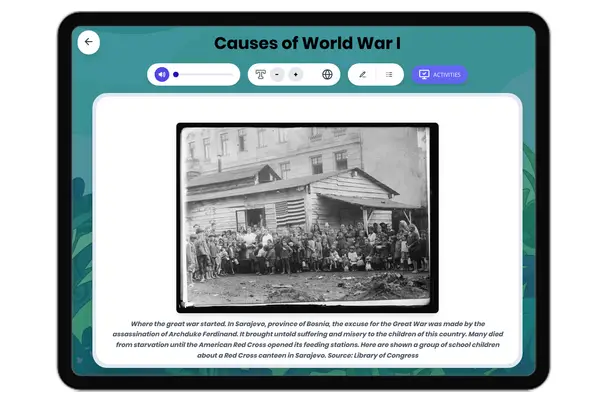
Causes of World War I
This comprehensive history reading passage explores the complex causes of World War I, focusing on alliances, nationalis...
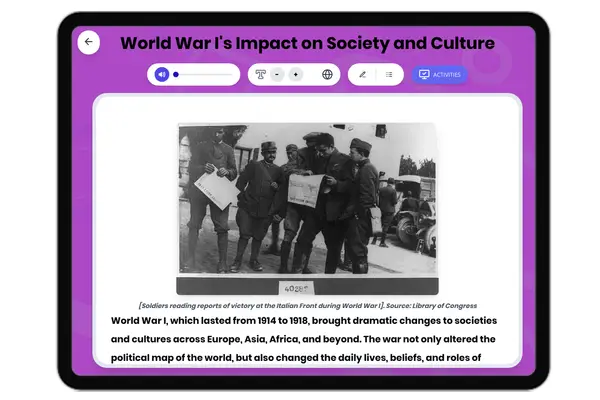
World War I Impact on America
This engaging history reading passage explores World War I's impact on society and culture, highlighting key changes in ...
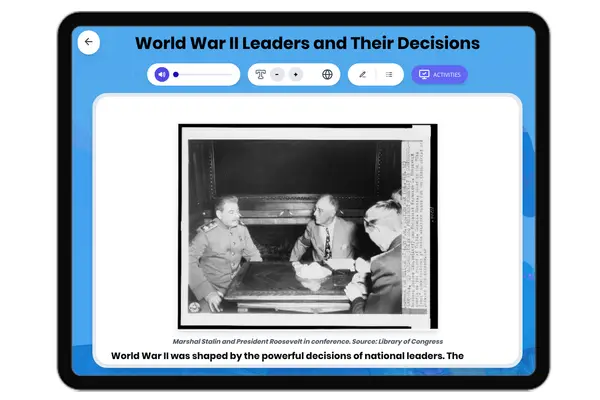
Leaders and Decisions in World War II
This passage explores the major leaders of World War II and the critical decisions they made that shaped the course of g...
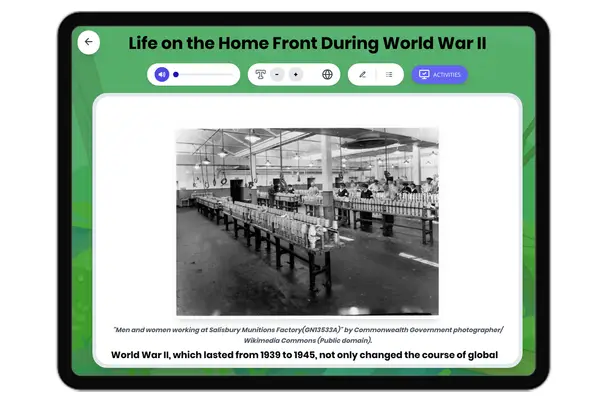
American Life During World War II
This history reading passage explores life on the home front during World War II, focusing on the experiences of ordinar...
War Bonds: Financing World War II
This passage examines the critical role of war bonds in financing World War II, focusing on how the U.S. government enco...
D2.HIS.2.3-5D2.HIS.3.3-5RI.4.3RI.4.4
Trench Warfare in World War I
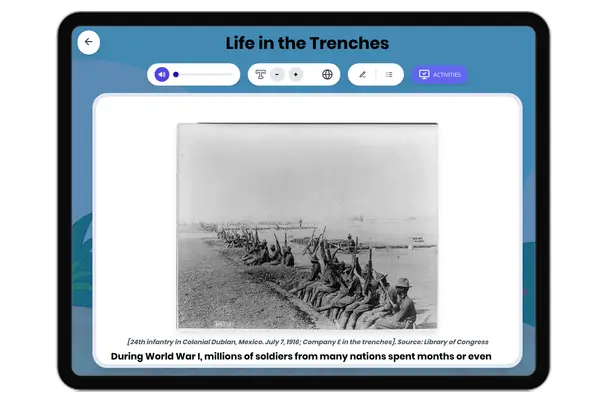
This comprehensive history reading passage explores the realities of life in the trenches during World War I, aligned to...
Russia Exits World War I
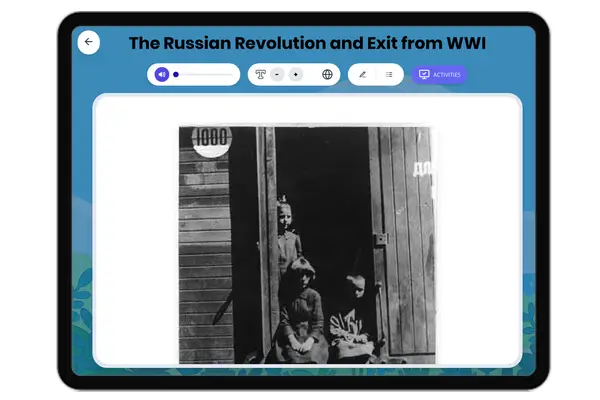
This comprehensive world history reading passage explores the Russian Revolution and how Russia exited World War I. Stud...
America Enters World War II
This history reading passage analyzes America’s entry into World War II, focusing on the causes, perspectives, and conse...
D2.HIS.2.3-5D2.HIS.3.3-5RI.4.3RI.4.4
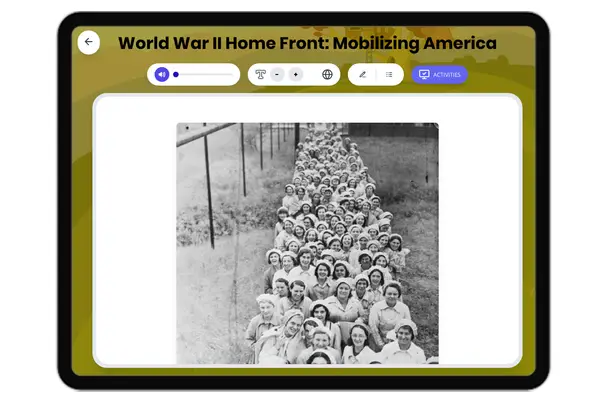
World War II Home Front
This rigorous U.S. history reading passage explores the complexities and challenges of the World War II Home Front, focu...
D2.HIS.2.3-5D2.HIS.3.3-5RI.6.3RI.6.4
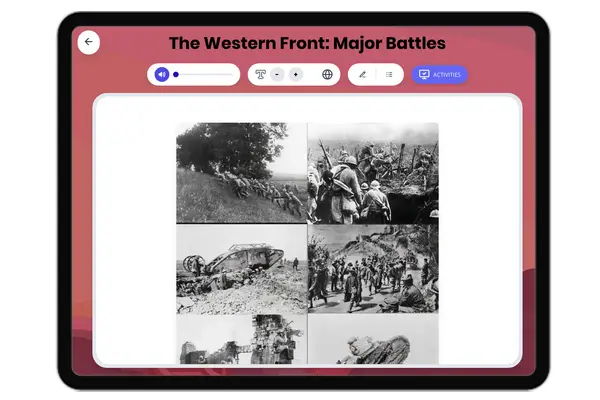
The Western Front in World War I
This engaging history reading passage explores the major battles of the Western Front during World War I, focusing on th...
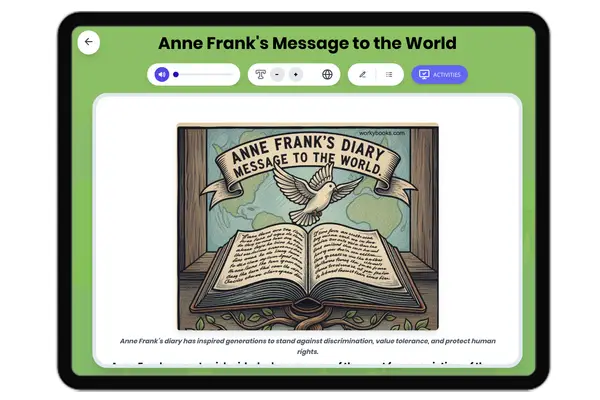
Anne Frank's Message to the World
This reading passage explores the life and legacy of Anne Frank, a Jewish teenager who documented her experiences during...
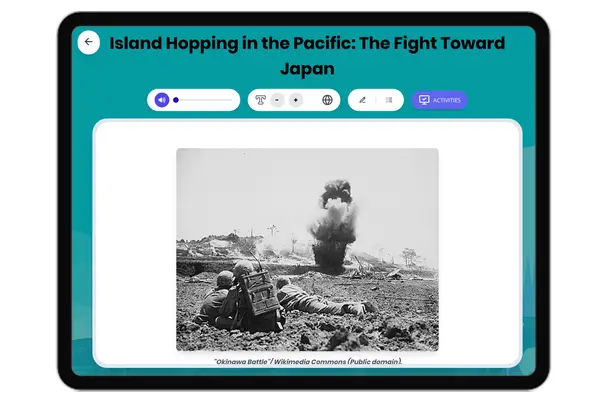
Allied Strategy in the Pacific War
This comprehensive history reading passage dives into the strategic 'island hopping' campaign of World War II in the Pac...
Major Battles Change the War's Course
This engaging history reading passage examines three crucial turning points of World War II: the Battles of Stalingrad, ...
Japan Surrenders: World War II Ends
This comprehensive history reading passage examines the pivotal moment when Japan surrendered in August 1945, bringing W...
D2.HIS.2.3-5D2.HIS.3.3-5RI.4.3RI.4.4
America Enters the War: 1917
This comprehensive history reading passage explores America’s entry into World War I in 1917, examining the causes, even...
Black History Month Word Search
RF.4.3RF.5.3L.4.4L.5.4
Worky World! Capitalize Locations
This capitalization sheet will help students to practice capitalizing geographic locations. Illustrated on the sheet is ...
L.2.2.AL.2.2
Word Families: —ight Words
This word families worksheet focuses on -ight words and is designed to help 4th-grade students practice their reading an...
RF.4.4
The Atomic Bomb Ends the War
This informative passage explores the role of the atomic bomb in ending World War II, focusing on the events leading up ...