Reading Passage

Karst Landforms

Interactive passage with audio narration, comprehension questions, and printable PDF.

No ratings yet|
27
Grades 5–8ScienceElaEnglish · SpanishInteractive · Printable
Aligned toMS-ESS2-1

What's included

Reading passage
Audio narration
Comprehension quiz
Writing activity
Glossary & flashcards
Differentiated version
Spanish translation

Karst Landforms preview and details

About this printable Karst Landforms science reading passage, NGSS-aligned (Grades 5-8)

This comprehensive science passage for grades 6-8 explores the fascinating world of karst landforms, aligning with NGSS standard MS-ESS2-1. Students learn how slightly acidic water, containing CO₂ from the atmosphere and soil, dissolves limestone to create unique features such as sinkholes, disappearing streams, caves, stalactites, and springs. The text integrates scientific thinking by explaining the mechanisms behind these formations, the interactions between surface and subsurface processes, and how karst aquifers supply drinking water but are vulnerable to contamination. Real-world examples like Mammoth Cave and Florida sinkholes illustrate the global importance and hazards of karst regions. The passage includes a glossary, differentiated version, Spanish translations, and a variety of activities such as quizzes, writing prompts, and graphic organizers. Content is audio integrated and designed to develop critical thinking and science literacy in middle school students.
Written by Workybooks TeamPublished by Workybooks
Preview

Sample passage and quiz from Karst Landforms

Reading passage and comprehension quiz preview

Karst Landforms
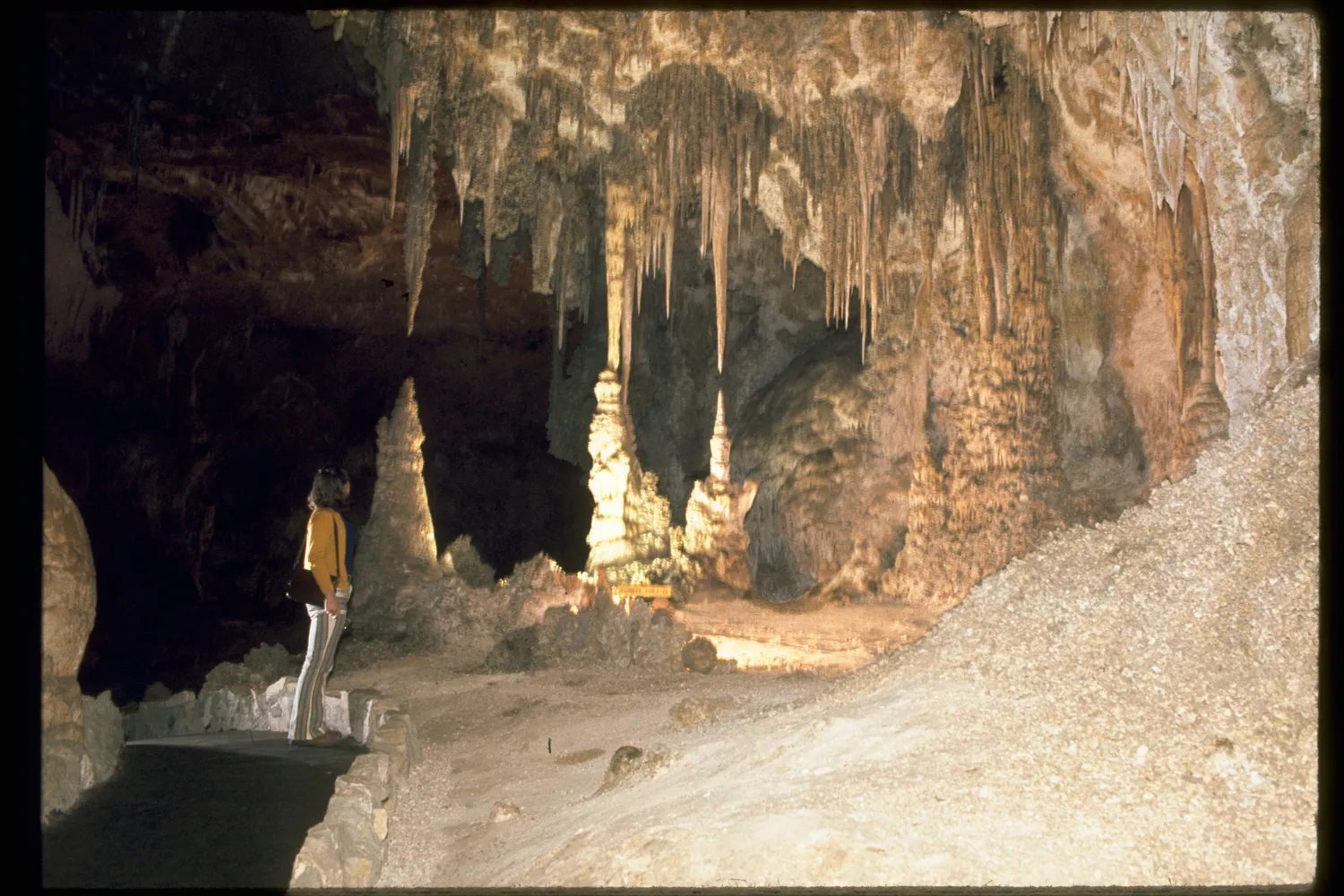
Carlsbad Caverns National Park CAVE2770

"Carlsbad Caverns National Park CAVE2770" by National Park Service Digital Image Archives / Wikimedia Commons (Public domain).

Karst landforms are some of the most distinctive geological features on Earth, seen both on the surface and deep underground. In many regions, sudden sinkholes appear, streams vanish into the ground, or vast cave systems stretch for miles below the surface. These phenomena are all connected by a powerful natural process: the chemical weathering of limestone rock by slightly acidic water. Understanding karst helps scientists explain major landscape changes and manage important water resources.

How Karst Landforms Form: The Power of Dissolving Water
Most karst features develop in areas where the bedrock is made of limestone. Rainwater absorbs carbon dioxide (CO₂) from the atmosphere and soil, forming a weak acid called carbonic acid. When this acid travels through cracks in the limestone, it slowly dissolves the rock. Over thousands to millions of years, this process creates underground openings and enlarges fractures. Surface water can drain into these spaces, sometimes causing streams to disappear entirely underground. When enough rock is removed, the ground above may collapse, forming a sinkhole. In the United States, about 20% of the land surface is karst, and in Florida alone, hundreds of new sinkholes form each year.

Surface and Subsurface Features of Karst Regions
Karst landscapes are rich with unique landforms. On the surface, features include sinkholes, disappearing streams, and springs—where groundwater flows back to the surface. Underground, karst creates caves and caverns, many of which are large enough to explore. Inside these caves, minerals deposited by dripping water form stalactites (hanging from the ceiling) and stalagmites (rising from the floor). Sometimes, these features grow together to make columns. Flowstone covers cave walls with smooth, mineral-rich layers. Famous karst sites include Mammoth Cave in Kentucky, Carlsbad Caverns in New Mexico, Florida’s sinkhole regions, and the dramatic tower karst landscapes of southern China.

Karst Aquifers: Water Supply and Environmental Risks
Karst regions are vital sources of groundwater stored in aquifers. These aquifers provide drinking water for millions of people. However, because water moves rapidly through karst, pollution can spread quickly, making these aquifers highly vulnerable to contamination. For example, chemicals spilled on the surface or leaking from landfills can travel directly into the water supply through sinkholes or fissures. Scientists study karst aquifers to protect water quality and prevent hazards. In developed areas, sinkholes can cause major damage to buildings, roads, and infrastructure.

Karst landforms demonstrate how small-scale chemical reactions, like the formation of carbonic acid, can produce dramatic changes in Earth’s landscape over time. These systems are dynamic, constantly shaped by the movement of water and rock. Studying karst teaches us about Earth’s natural processes and helps us plan for responsible land and water use in the future.

Interesting Fact: The world’s longest known cave system, Mammoth Cave, stretches over 426 miles (686 kilometers) and is still being explored today!

Comprehension quiz (10 questions)

1. What is the main process responsible for forming karst landforms?

Dissolving of limestone by slightly acidic water
Erosion by wind and sand
Melting of glaciers
Movement of tectonic plates

2. Which rock is most commonly dissolved to create karst features?

Granite
Limestone
Sandstone
Basalt

3. What is a sinkhole?

A hole formed by wind erosion
A depression caused by the collapse of the ground above a cave
A hill made of sand
A type of mineral formation in caves

4. How does rainwater become slightly acidic in karst regions?

By absorbing carbon dioxide from the atmosphere and soil
By mixing with salt from the ocean
By freezing and thawing
By passing through volcanic ash

5. What is an aquifer?

A layer of rock that holds groundwater
A type of cave formation
A collapsed sinkhole
A river that flows underground

6. What does the word 'karst' mean in the passage?

A type of mountain range
A landscape shaped by dissolving limestone
A mineral found in caves
A kind of volcanic rock

7. According to the passage, why are karst aquifers at risk for contamination?

Because water moves slowly and filters out pollution
Because water moves rapidly and can carry pollutants directly to the aquifer
Because there are no plants in karst regions
Because limestone is very hard

8. If a chemical spill occurs on the surface in a karst area, what might happen?

The chemicals will be filtered out by the soil
The chemicals can travel quickly through cracks and reach groundwater
The chemicals will stay on the surface
The chemicals will evaporate immediately

9. True or False: Stalactites grow upward from the cave floor.

True
False

10. True or False: Mammoth Cave is still being explored and is the longest known cave system in the world.

True
False
Who it's for

Perfect for the way you teach

Teachers
  • Build comprehension skills
  • Auto-graded quiz
  • Differentiated reading
Parents
  • Read together at home
  • Improve fluency
  • Quiet reading time
Homeschoolers
  • Reading curriculum support
  • Independent practice
  • Track Lexile growth
Topics

Reviews & Ratings

No reviews yet. Be the first to share your experience!

More reading you might love

20 more
Passage
Talus Slopes: Formation and Features - reading educational content
Grades 5–8

Talus Slopes: Formation and Features

science · MS-ESS2-1

Free
Passage
Biological Weathering: Types and Examples - reading educational content
Grades 5–8

Biological Weathering: Types and Examples

science · MS-ESS2-1

Free
Passage
Frost Wedging: How Ice Splits Rock - reading educational content
Grades 5–8

Frost Wedging: How Ice Splits Rock

science · MS-ESS2-1

$1.50
Passage
Chemical Weathering: The Breakdown of Rocks Through Chemical Reactions - reading educational content
Grades 5–8

Chemical Weathering: The Breakdown of Rocks Through Chemical Reactions

science · MS-ESS2-1

Free
Passage
Limestone Caves: Nature’s Underground Wonders - reading educational content
Grades 5–8

Limestone Caves: Nature’s Underground Wonders

science · MS-ESS2-1

Free
Passage
The Coldest City in the World: Yakutsk - reading educational content
Grades 5–8

The Coldest City in the World: Yakutsk

science · MS-ESS2-1

$1.50
Passage
Igneous Rocks - reading educational content
Grades 5–8

Igneous Rocks

science · MS-ESS2-1

$1.50
Passage
Sedimentary Rocks - reading educational content
Grades 5–8

Sedimentary Rocks

science · MS-ESS2-1

$1.50
Passage
Metamorphic Rocks - reading educational content
Grades 5–8

Metamorphic Rocks

science · MS-ESS2-1

Free
Passage
Scientific Inquiry in Earth Science - reading educational content
Grades 5–8

Scientific Inquiry in Earth Science

earth science · MS-ESS1-4

$1.50
Passage
Contour Lines and Elevation - reading educational content
Grades 5–8

Contour Lines and Elevation

science · MS-ESS2-2

$1.50
Passage
Weathering - reading educational content
Grades 5–8

Weathering

science · MS-ESS2-1

$1.50
Passage
Erosion - reading educational content
Grades 5–8

Erosion

science · MS-ESS2-1

$1.50
Passage
Stream Erosion and Deposition - reading educational content
Grades 5–8

Stream Erosion and Deposition

science · MS-ESS2-1

$1.50
Passage
Wind Erosion and Deposition - reading educational content
Grades 5–8

Wind Erosion and Deposition

science · MS-ESS2-1

$1.50
Passage
Glacial Erosion and Deposition - reading educational content
Grades 5–8

Glacial Erosion and Deposition

science · MS-ESS2-1

$1.50
Passage
Mass Movements - reading educational content
Grades 5–8

Mass Movements

science · MS-ESS2-1

$1.50
Passage
Soil Formation and Composition - reading educational content
Grades 5–8

Soil Formation and Composition

science · MS-ESS2-1

$1.50
Passage
Constructive and Destructive Forces - reading educational content
Grades 5–8

Constructive and Destructive Forces

science · MS-ESS2-1

Free
Passage
Mountains and Mountain Building - reading educational content
Grades 5–8

Mountains and Mountain Building

science · MS-ESS2-1

$1.50
Copyright © 2026 Workybooks. Made with ♥ in California.