This learning resource is available in interactive and printable formats. The interactive worksheet can be played online and assigned to students. The Printable PDF version can be downloaded and printed for completion by hand.
This comprehensive history reading passage examines the Kindertransport, a rescue mission that saved thousands of Jewish children from Nazi-controlled territories before and during World War II. Students will learn about the historical context, the organization and challenges of the Kindertransport, and its long-term impact on children and families. The passage includes primary source evidence, cause-and-effect relationships, and connections to social and geographic context. Activities include a multiple-choice quiz, writing prompts, graphic organizers, a timeline, and glossaries to support comprehension. The passage and activities align with CA HSS Framework and CCSS informational text standards. Spanish translation and read aloud audio are available, making this resource accessible for diverse learners and supporting English Language Development. Students will analyze history like historians, mastering key vocabulary and concepts related to the Holocaust and refugee experiences.
CONTENT PREVIEW
Expand content preview
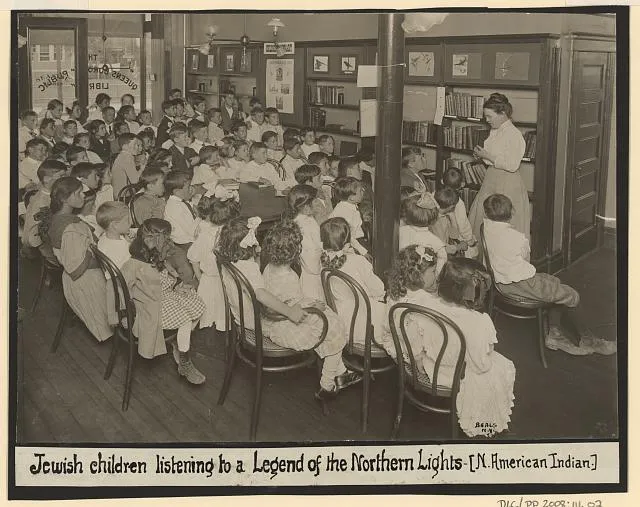
Jewish children listening to A Legend of the Northern Lights (N. American Indian). Source: Library of Congress - Beals, Jessie Tarbox
The Kindertransport was an organized rescue effort that saved nearly 10,000 Jewish children from Nazi-controlled territories between 1938 and 1940. As antisemitic laws and violence increased in Germany and Austria, many families sought ways to protect their children. The Kindertransport program was established just after Kristallnacht, a violent attack against Jewish people and property on November 9-10, 1938. Britain agreed to accept unaccompanied children under the age of 17, offering them a chance to escape persecution.
Organizing the Kindertransport required cooperation between British authorities, Jewish aid organizations, and volunteers. Parents faced heartbreaking decisions, as children traveled alone by train and boat to the United Kingdom. In Germany, the Gestapo, the Nazi secret police, allowed children to leave but restricted them to a single suitcase. The first transport arrived in Harwich, England, on December 2, 1938. Children were often placed with foster families, in hostels, or on farms throughout Britain. Some primary sources, such as letters and diaries, describe both the relief and fear experienced by these young refugees. For example, a letter from a 12-year-old girl named Lore shows her gratitude for safety, but also her longing for her parents.
The Kindertransport was possible because of urgent international response after Kristallnacht. However, the program had limitations. Only a small number of children from Nazi-occupied Czechoslovakia, Poland, and the Netherlands were included. Most parents and relatives could not escape and were later victims of the Holocaust. The children had to adapt to new languages, cultures, and sometimes even new religions. Some siblings were separated, and many never saw their families again. This experience shaped their identities and memories for the rest of their lives.
The significance of the Kindertransport extends beyond the number of lives saved. It demonstrated both the possibilities and challenges of humanitarian rescue during times of crisis. The British government and charities acted with urgency, but many other countries did not accept refugees. Survivors of the Kindertransport have shared their stories through interviews and memoirs, reminding future generations about the importance of compassion and international cooperation in the face of injustice.
The Kindertransport connects to broader themes in world history, such as migration, human rights, and the effects of war and discrimination on societies.
Interesting Fact: Nicholas Winton, a British organizer, secretly arranged trains that saved 669 children from Czechoslovakia, and his efforts were not widely known until decades later.
When did the first Kindertransport arrive?
December 2, 1938September 1, 1939November 10, 1938July 4, 1940
Who agreed to accept Kindertransport children?
BritainUnited StatesFranceCanada
How many children did Nicholas Winton help save?
66910,0001,0005,000
Why was Kindertransport organized?
To rescue childrenTo rebuild citiesTo start a warTo teach English
What was a major limitation of Kindertransport?
Few parents escapedIt rescued adultsIt lasted ten yearsIt started in 1945
How did children travel to Britain?
By train and boatBy airplaneOn footBy bicycle
Most Kindertransport children saw their families again. True or false?
TrueFalse
What does 'refugees' mean in the passage?
People who flee dangerPeople who stay homeTravel guidesSoldiers
Perfect For:
👩🏫 Teachers
• Reading comprehension practice
• Auto-graded assessments
• Literacy skill development
👨👩👧👦 Parents
• Reading practice at home
• Comprehension improvement
• Educational reading time
🏠 Homeschoolers
• Reading curriculum support
• Independent reading practice
• Progress monitoring
Reading Features:
📖
Reading Passage
Engaging fiction or nonfiction text
❓
Comprehension Quiz
Auto-graded questions
📊
Instant Feedback
Immediate results and scoring
📄
Printable Version
Download for offline reading
🔊
Read Aloud
Voice-over with word highlighting
Reviews & Ratings
No reviews yet. Be the first to share your experience!
Related Content
Events Leading to World War II
This passage explores the complex causes of World War II, focusing on the interwar period, the Treaty of Versailles, the...
Causes of World War I
This comprehensive history reading passage explores the complex causes of World War I, focusing on alliances, nationalis...
World War I Impact on America
This engaging history reading passage explores World War I's impact on society and culture, highlighting key changes in ...
Leaders and Decisions in World War II
This passage explores the major leaders of World War II and the critical decisions they made that shaped the course of g...
American Life During World War II
This history reading passage explores life on the home front during World War II, focusing on the experiences of ordinar...
War Bonds: Financing World War II
This passage examines the critical role of war bonds in financing World War II, focusing on how the U.S. government enco...
D2.HIS.2.3-5D2.HIS.3.3-5RI.4.3RI.4.4
Trench Warfare in World War I
This comprehensive history reading passage explores the realities of life in the trenches during World War I, aligned to...
Russia Exits World War I
This comprehensive world history reading passage explores the Russian Revolution and how Russia exited World War I. Stud...
America Enters World War II
This history reading passage analyzes America’s entry into World War II, focusing on the causes, perspectives, and conse...
D2.HIS.2.3-5D2.HIS.3.3-5RI.4.3RI.4.4
World War II Home Front
This rigorous U.S. history reading passage explores the complexities and challenges of the World War II Home Front, focu...
D2.HIS.2.3-5D2.HIS.3.3-5RI.6.3RI.6.4
The Western Front in World War I
This engaging history reading passage explores the major battles of the Western Front during World War I, focusing on th...
Anne Frank's Message to the World
This reading passage explores the life and legacy of Anne Frank, a Jewish teenager who documented her experiences during...
Allied Strategy in the Pacific War
This comprehensive history reading passage dives into the strategic 'island hopping' campaign of World War II in the Pac...
Major Battles Change the War's Course
This engaging history reading passage examines three crucial turning points of World War II: the Battles of Stalingrad, ...
Japan Surrenders: World War II Ends
This comprehensive history reading passage examines the pivotal moment when Japan surrendered in August 1945, bringing W...
D2.HIS.2.3-5D2.HIS.3.3-5RI.4.3RI.4.4
America Enters the War: 1917
This comprehensive history reading passage explores America’s entry into World War I in 1917, examining the causes, even...
Black History Month Word Search
RF.4.3RF.5.3L.4.4L.5.4
Worky World! Capitalize Locations
This capitalization sheet will help students to practice capitalizing geographic locations. Illustrated on the sheet is ...
L.2.2.AL.2.2
Word Families: —ight Words
This word families worksheet focuses on -ight words and is designed to help 4th-grade students practice their reading an...
RF.4.4
The Atomic Bomb Ends the War
This informative passage explores the role of the atomic bomb in ending World War II, focusing on the events leading up ...