Light Energy
Interactive passage with audio narration, comprehension questions, and printable PDF.
What's included
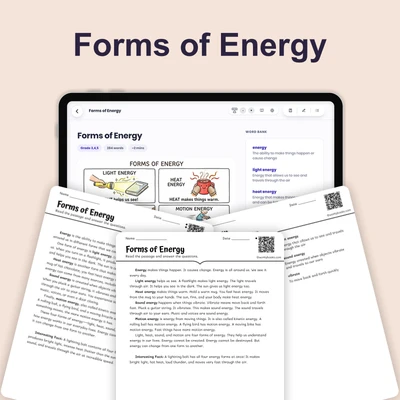
Light Energy preview and details
About this printable Light Energy science reading passage, NGSS-aligned (Grades 3-6)
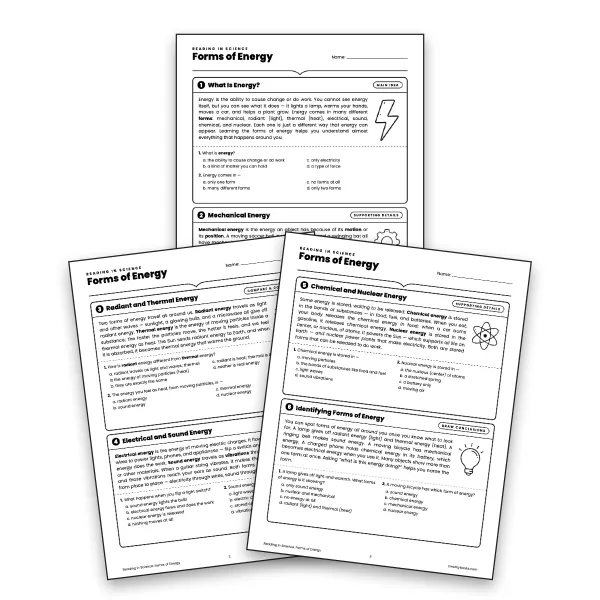
Sample passage and quiz from Light Energy
Reading passage and comprehension quiz preview
Light Energy
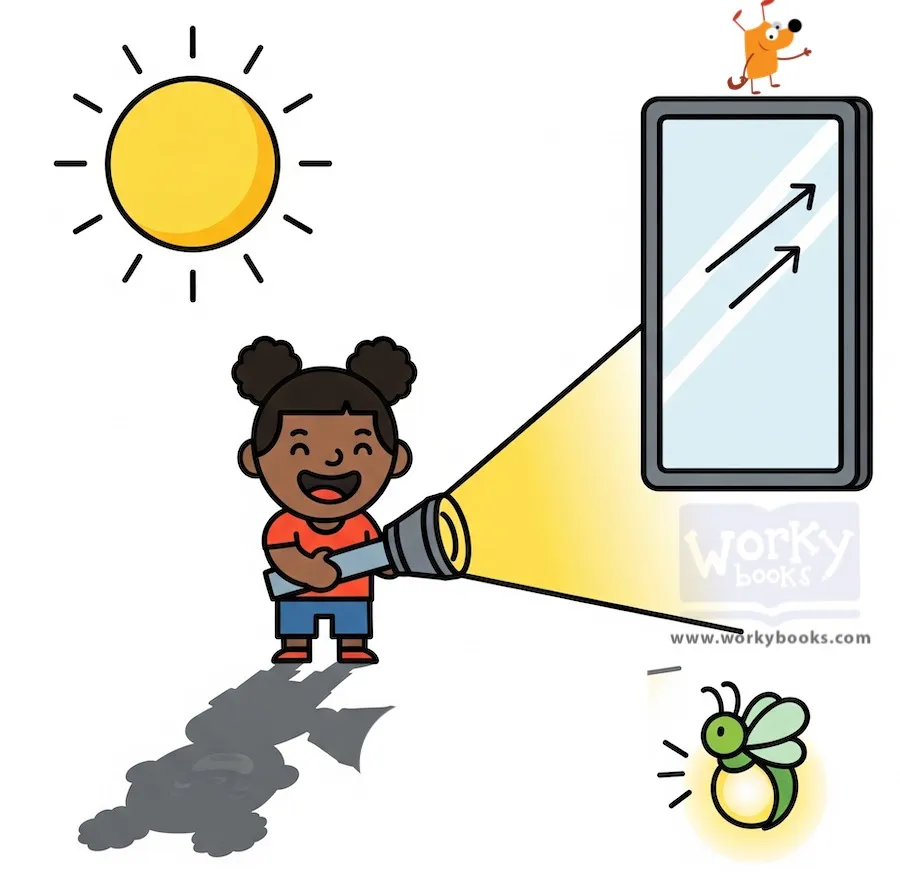
Light Energy is a kind of energy we can see. It travels from a source like the sun, light bulbs, or fire to our eyes. Without light energy, we would not be able to see anything around us.
There are many sources of light. Some are natural, like the sun, stars, fire, lightning, and fireflies. Others are human-made, such as light bulbs, computer screens, flashlights, and lasers. No matter where it comes from, light energy travels in straight lines called rays.
Light is the fastest thing in the universe! It travels at 186,000 miles per second. That means sunlight takes only about 8 minutes to travel from the sun to Earth. Light energy zooms through space like the fastest superhero ever!
We see objects because light bounces off them and enters our eyes. This bouncing is called reflection. For example, a mirror or calm water can show your face because they reflect light well. When something blocks light, it creates a shadow behind it. Shadows happen because light travels in straight lines and cannot go through most solid things.
White light is actually made of all colors mixed together. When light passes through a prism or even a raindrop, it splits into a rainbow of colors: red, orange, yellow, green, blue, and violet. This is why we see rainbows in the sky after it rains!
Dark colors absorb (take in) more light energy and can get warmer in sunlight. Plants use light energy in a process called photosynthesis to make their own food.
It is important to be safe with light energy. Never look directly at the sun because too much light can hurt your eyes.
Interesting Fact: Light from the moon is actually sunlight bouncing off the moon's surface and traveling to our eyes!
Comprehension quiz (8 questions)
1. What is a source of light?
2. What is reflection?
3. What happens when something blocks light?
4. Why do we see rainbows?
5. What do plants use light energy for?
6. What would happen if there was no light?
7. Light travels in straight lines. True or false?
8. What is a shadow?
Perfect for the way you teach
- Build comprehension skills
- Auto-graded quiz
- Differentiated reading
- Read together at home
- Improve fluency
- Quiet reading time
- Reading curriculum support
- Independent practice
- Track Lexile growth