What Is Meiosis
Interactive passage with audio narration, comprehension questions, and printable PDF.
What's included
What Is Meiosis preview and details
About this printable What Is Meiosis science reading passage, NGSS-aligned (Grades 5-8)
Sample passage and quiz from What Is Meiosis
Reading passage and comprehension quiz preview
Meiosis: Creating Genetic Diversity
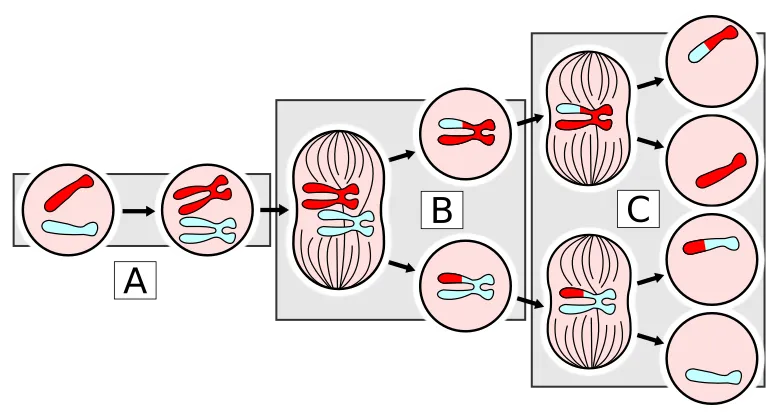
Overview of the major events in meiosis A: DNA replication; B: Meiosis I; C: Meiosis II
Original image from NCBI; original vector version by Jakov / Wikimedia Commons (Public domain).
Meiosis is the process by which cells produce gametes, or sex cells, with half the usual number of chromosomes. This process is crucial for sexual reproduction in animals, plants, and many other organisms. Without meiosis, offspring would receive too many chromosomes, leading to severe problems in development. Scientists have discovered that meiosis not only reduces chromosome number but also increases genetic diversity among individuals.
How Meiosis Works: Stages and Mechanisms
During meiosis, a single parent cell divides to form four unique haploid cells. Each of these cells contains half the number of chromosomes as the original cell. Meiosis involves two rounds of cell division: Meiosis I and Meiosis II. In Meiosis I, homologous chromosomes—pairs of chromosomes with the same genes—separate into different cells. Before they separate, these chromosomes often exchange segments in a process called crossing over. This shuffling of genetic material produces new combinations of genes. In Meiosis II, the sister chromatids—the two identical halves of each chromosome—are split apart, creating four gametes, each with a unique genetic code.
Genetic Variation and Importance of Meiosis
Meiosis is different from mitosis, which produces two identical diploid cells for growth and repair. Unlike mitosis, meiosis creates diversity through crossing over and independent assortment. Independent assortment means that the chromosomes are randomly distributed to the gametes, so each egg or sperm cell is genetically distinct. For example, in humans, with 23 pairs of chromosomes, over 8 million different combinations are possible just from independent assortment. When fertilization occurs, two gametes combine to restore the full chromosome number and create a new organism with a unique set of genes.
Errors in Meiosis: Consequences and Examples
Sometimes, errors happen during meiosis. If chromosomes do not separate correctly, a gamete may have too many or too few chromosomes. For instance, Down syndrome is caused by an extra copy of chromosome 21. Such errors can affect health and development, highlighting why precise chromosome separation is essential.
Meiosis is a key process for life on Earth, ensuring healthy offspring and increasing genetic diversity. This diversity allows populations to adapt to changing environments and survive diseases or challenges. By studying meiosis, scientists gain insight into heredity, evolution, and human health.
Interesting Fact:
Every human egg or sperm cell is genetically unique, which is why siblings (except identical twins) are never exactly alike!
Comprehension quiz (10 questions)
1. What is the main purpose of meiosis?
2. How many unique haploid cells are produced by meiosis?
3. Which process creates genetic variation during meiosis?
4. What is the difference between mitosis and meiosis?
5. What can happen if chromosomes do not separate correctly during meiosis?
6. What does the term 'haploid' mean in the passage?
7. In context, what is 'independent assortment'?
8. Why is meiosis necessary for sexual reproduction?
9. True or False: Meiosis produces cells that are all genetically identical.
10. True or False: Crossing over occurs during Meiosis I.
Perfect for the way you teach
- Build comprehension skills
- Auto-graded quiz
- Differentiated reading
- Read together at home
- Improve fluency
- Quiet reading time
- Reading curriculum support
- Independent practice
- Track Lexile growth