What Are Mendel's Laws
Interactive passage with audio narration, comprehension questions, and printable PDF.
What's included
What Are Mendel's Laws preview and details
About this printable What Are Mendel's Laws science reading passage, NGSS-aligned (Grades 5-8)
Sample passage and quiz from What Are Mendel's Laws
Reading passage and comprehension quiz preview
Mendelian Inheritance Patterns
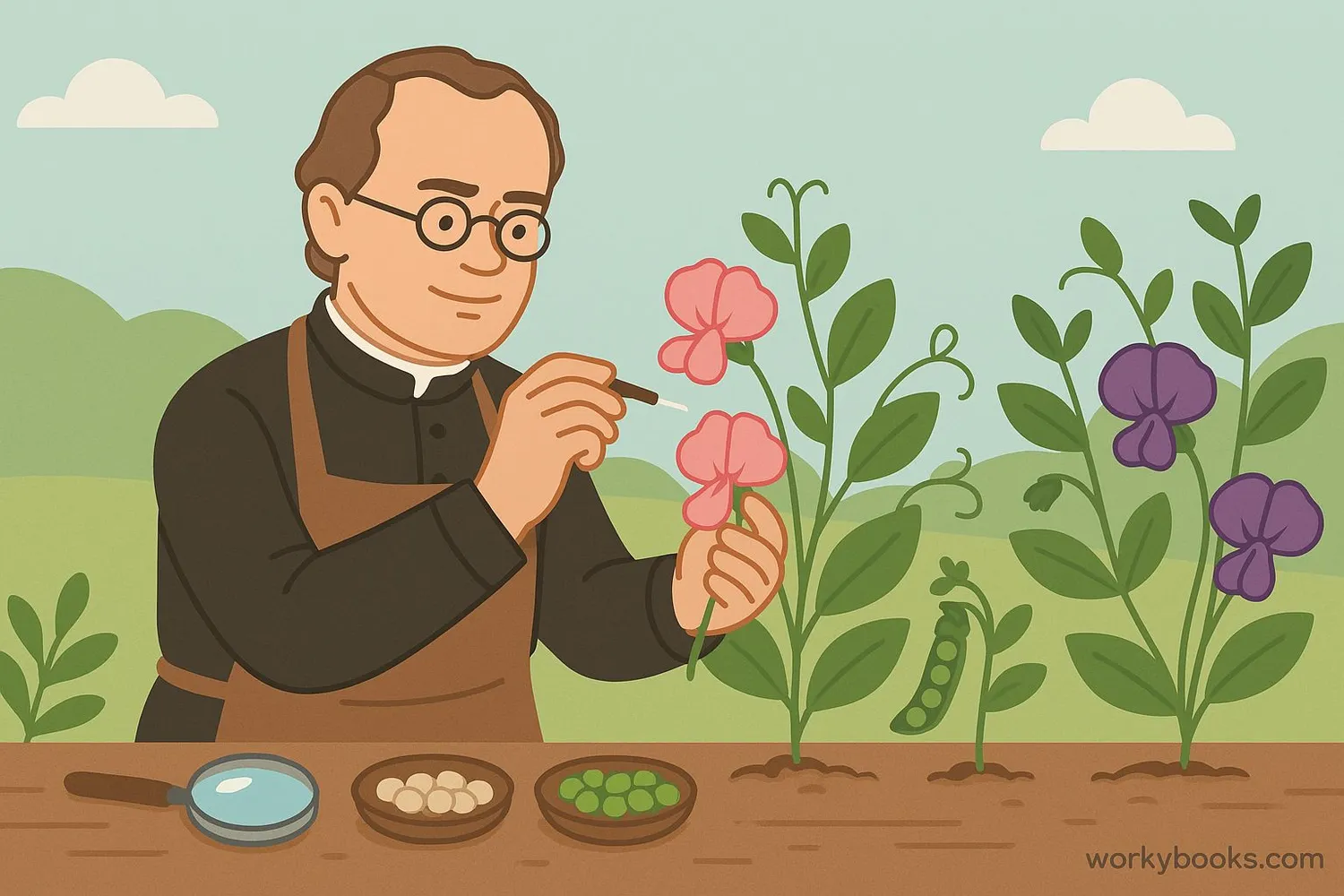
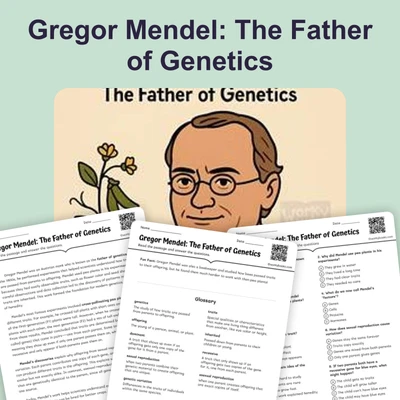
Mendelian inheritance is a system that explains how traits are passed from parents to offspring. Scientists first recognized these patterns through the work of Gregor Mendel, who is often called the “father of genetics.” Mendel’s experiments with pea plants revealed predictable ways that traits, like flower color or seed shape, are inherited. His discoveries form the basis of modern genetics and help explain why organisms look and behave the way they do.
Uncovering Patterns: Mendel's Experiments
In the 1800s, Gregor Mendel studied pea plants because they had clear, observable traits. He noticed that when he crossed plants with different traits, such as tall and short stems, the offspring did not blend these traits. Instead, one trait would appear, while the other seemed to disappear. Mendel called the visible trait “dominant” and the hidden one “recessive.” For example, when crossing a pure tall plant with a pure short plant, all offspring were tall. However, in the next generation, some short plants reappeared, showing the trait was not lost but hidden. Mendel proposed the Law of Segregation: each parent passes on only one of their two alleles for a trait, and these alleles separate during the formation of gametes (egg or sperm cells). This explains why traits can reappear after skipping a generation.
Expanding the Rules: Law of Independent Assortment and Monohybrid Crosses
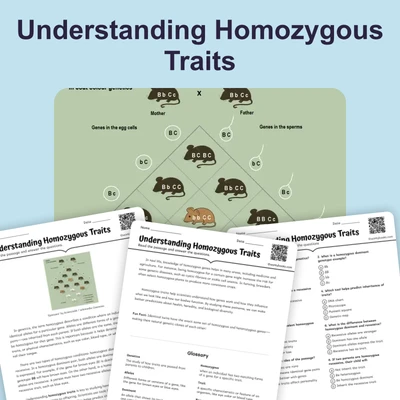
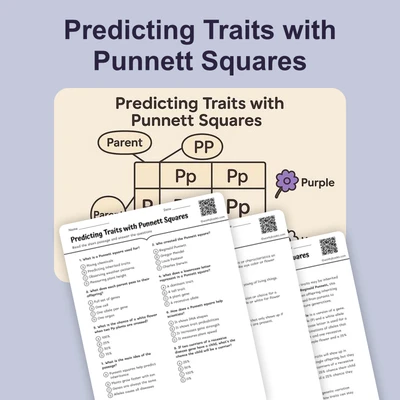
Mendel also noticed that different traits are inherited independently. For instance, a plant’s seed color does not affect its seed shape. This is described by the Law of Independent Assortment, which states that genes for different traits are passed on separately. Mendel’s monohybrid crosses focused on inheritance of a single trait, while dihybrid crosses examined two traits at once. Using probability, Mendel could predict the ratios of traits in the offspring. For example, in a monohybrid cross between two heterozygous plants (carrying both dominant and recessive alleles), the chance of a dominant trait appearing is about 75%, while the recessive trait appears in about 25% of the offspring. These mathematical patterns form the foundation of genetic prediction.
Beyond Mendel: Real-World Complexity
While Mendel’s laws explain many simple traits, most characteristics are influenced by multiple genes or environmental factors. For example, human height and eye color involve many genes interacting together, and some traits can also be shaped by nutrition or climate. Additionally, some genes show incomplete dominance, codominance, or are linked on the same chromosome, which means they do not follow Mendel’s exact patterns. Despite these complexities, Mendelian inheritance remains crucial for understanding genetic diseases, agriculture, and even animal breeding today.
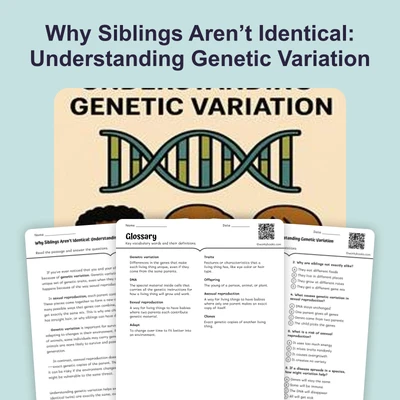
Mendel’s discoveries reveal the hidden logic behind heredity, connecting everyday observations—like why siblings look similar but not identical—to deeper biological processes. These principles help scientists predict genetic outcomes, improve crops, and understand the diversity of life.
Interesting Fact: Gregor Mendel’s work was not widely recognized until over 30 years after his experiments, when other scientists independently rediscovered his findings.
Comprehension quiz (10 questions)
1. What is Mendelian inheritance?
2. Who is known as the 'father of genetics'?
3. What is the Law of Segregation?
4. In Mendel's experiments, what happened when a pure tall plant was crossed with a pure short plant?
5. What does 'alleles' mean as used in the passage?
6. What does the Law of Independent Assortment state?
7. Why did some traits reappear in the second generation of Mendel’s pea plants?
8. If a monohybrid cross is made between two heterozygous plants, what percentage of offspring are likely to show the dominant trait?
9. True or False: All traits in living things follow Mendel’s simple inheritance patterns.
10. True or False: Mendel’s work was immediately accepted during his lifetime.
Perfect for the way you teach
- Build comprehension skills
- Auto-graded quiz
- Differentiated reading
- Read together at home
- Improve fluency
- Quiet reading time
- Reading curriculum support
- Independent practice
- Track Lexile growth