Nuremberg Laws 1935
Interactive passage with audio narration, comprehension questions, and printable PDF.
By completing this purchase you agree to our Terms of Use and Privacy Policy. Your subscription renews automatically until you cancel. You can cancel anytime from your account settings. All sales are final and non-refundable. Digital content is available for download in your account immediately upon purchase.
What's included
Nuremberg Laws 1935 preview and details
About this printable Nuremberg Laws 1935 reading passage (Grades 5-8)
Sample passage and quiz from Nuremberg Laws 1935
Reading passage and comprehension quiz preview
Nuremberg Laws 1935
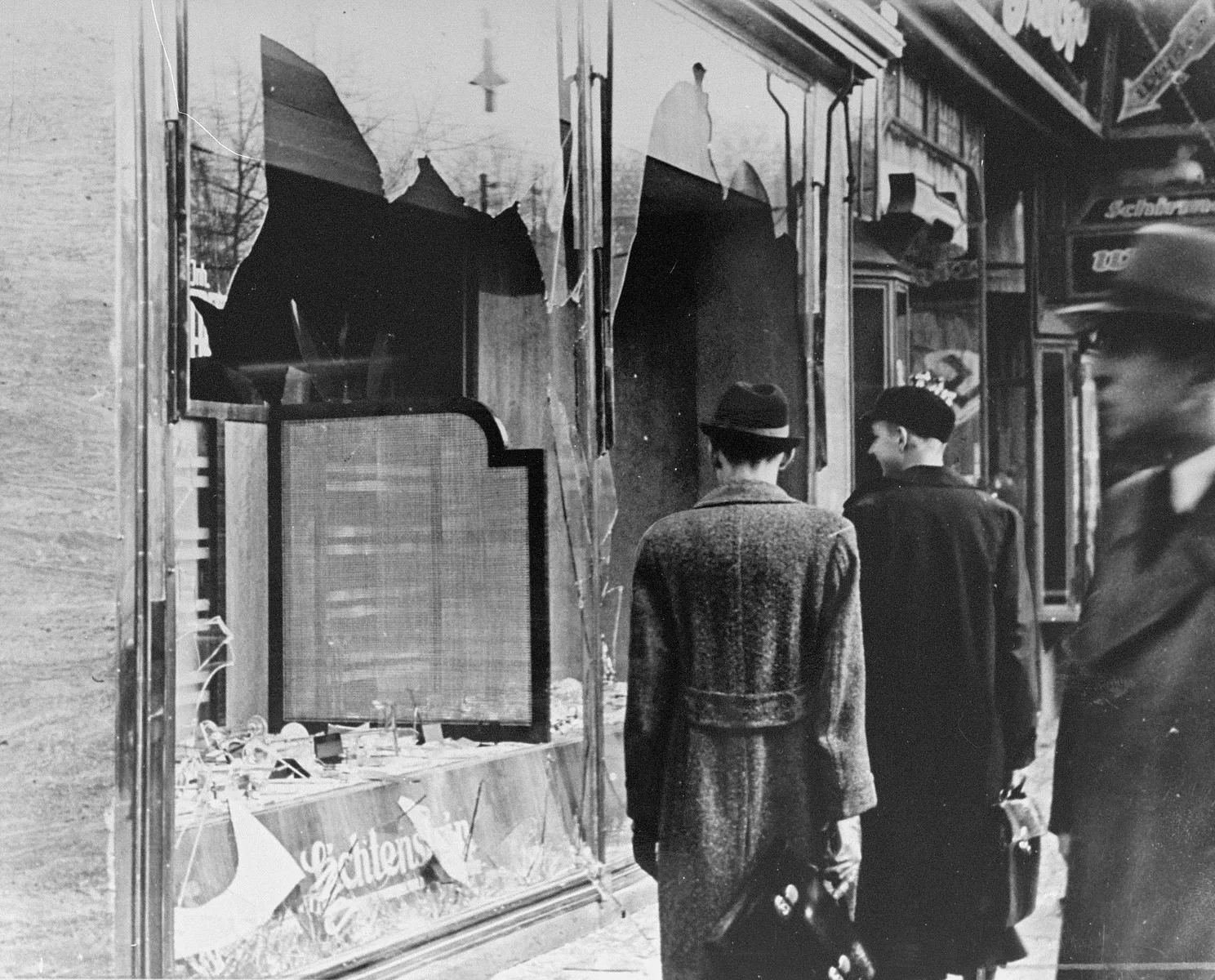
"The day after Kristallnacht" by Unknown authorUnknown author / Wikimedia Commons (Public domain).
In 1930s Germany, the rise of the Nazi Party led by Adolf Hitler brought about a series of harsh policies specifically targeting Jewish people. Two major events, the Nuremberg Laws of 1935 and Kristallnacht in 1938, marked turning points in the persecution of Jews and set the stage for the Holocaust.
The Nuremberg Laws were a set of antisemitic laws passed in September 1935 in the city of Nuremberg. These laws stripped German Jews of their citizenship and outlawed marriage or sexual relations between Jews and non-Jewish Germans. The intent was to isolate Jews from the rest of society. The Nazis claimed these laws would protect "German blood," but in reality, they made Jews outsiders in their own country. For example, Jewish children were forced out of public schools, and Jewish doctors and lawyers lost their right to work with non-Jewish clients. Official documents from the time, such as the Reich Citizenship Law, defined who was considered Jewish based on ancestry rather than religion or self-identification.
The impact of these laws became clear in daily life. Jews had to carry special identity cards marked with a "J" and adopt names that revealed their heritage, such as "Sara" for women and "Israel" for men. These discriminatory policies affected where Jews could live, work, and travel. Nazi propaganda, distributed through newspapers and posters, encouraged ordinary Germans to see Jews as dangerous or different. The laws were strictly enforced by the Gestapo (secret police) and local authorities, creating an atmosphere of fear and exclusion.
The situation escalated on the night of November 9-10, 1938, during an event known as Kristallnacht or the "Night of Broken Glass." On this night, Nazi leaders organized violent attacks against Jewish communities across Germany and Austria. Over 1,400 synagogues were destroyed, thousands of Jewish businesses and homes were vandalized, and at least 91 Jews were killed. More than 30,000 Jewish men were arrested and sent to concentration camps. Eyewitness accounts, including diaries and photographs from the time, show streets littered with shattered glass and people in shock as their neighbors' shops and places of worship were destroyed. The Nazis claimed the violence was a "spontaneous" reaction, but historical evidence shows it was carefully planned by the government.
The international community responded with outrage, but there was little direct intervention. Kristallnacht demonstrated that Jews in Nazi Germany were no longer safe, and it marked a shift from legal discrimination to open violence. Many historians view these events as a critical turning point leading to the Holocaust and the deaths of millions of Jews during World War II. The persecution of Jews was not only a result of Nazi ideology, but also of widespread propaganda and the willingness of ordinary people to participate or look away.
Understanding the Nuremberg Laws and Kristallnacht helps us analyze the dangerous effects of prejudice, propaganda, and unchecked government power. These events remind us of the importance of defending human rights and standing against discrimination in any society.
This period connects to broader themes in world history, such as the struggle for civil rights, the consequences of intolerance, and the responsibilities of individuals within a society.
Interesting Fact: After Kristallnacht, Jewish communities were forced to pay for the damages caused by the attacks on their own homes and businesses.
Comprehension quiz (8 questions)
1. When were the Nuremberg Laws passed?
2. What did Kristallnacht target?
3. Who enforced Nazi laws strictly?
4. Why did the Nazis create Nuremberg Laws?
5. What was a result of Kristallnacht?
6. How did propaganda affect Germans?
7. Kristallnacht was carefully planned by Nazis. True or false?
8. What does antisemitic mean?
Perfect for the way you teach
- Build comprehension skills
- Auto-graded quiz
- Differentiated reading
- Read together at home
- Improve fluency
- Quiet reading time
- Reading curriculum support
- Independent practice
- Track Lexile growth