This learning resource is available in interactive and printable formats. The interactive worksheet can be played online and assigned to students. The Printable PDF version can be downloaded and printed for completion by hand.
This passage explores the Nuremberg Trials and their significance in world history, focusing on post-World War II justice and the prosecution of Nazi war criminals. Students will learn about the causes, events, and impacts of these historic trials, examining primary sources and understanding the legal and moral challenges faced by the international community. The passage is aligned with CA HSS 10.8 and RH.6-8.2 standards and is accompanied by engaging activities, a timeline, graphic organizers, and both English and Spanish versions. Students will analyze how the Nuremberg Trials shaped international law, the concept of crimes against humanity, and the global response to the Holocaust. This resource also features a read aloud audio and vocabulary support to help students master complex academic skills while connecting history to broader world themes.
CONTENT PREVIEW
Expand content preview
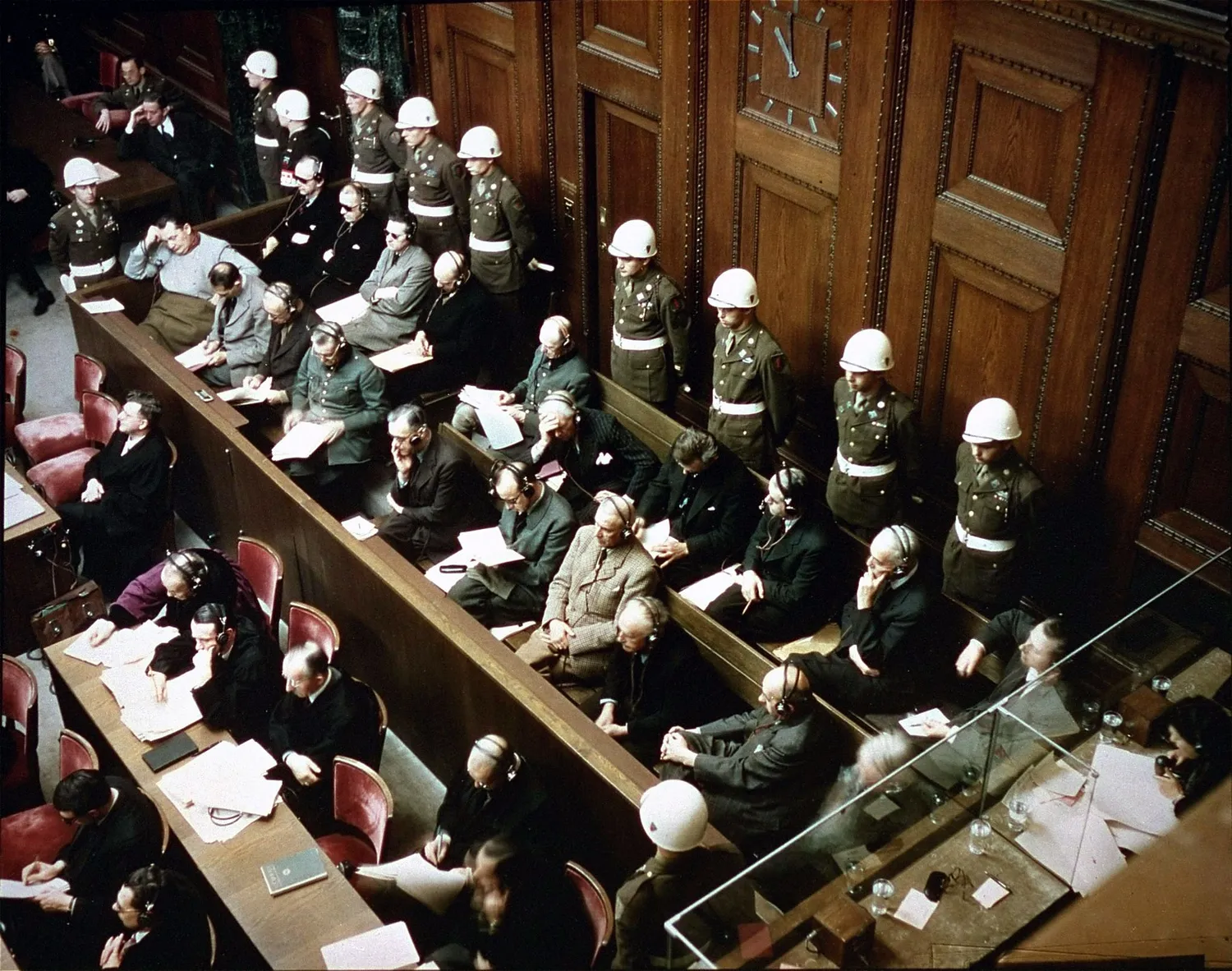
"Defendants in the dock at nuremberg trials" by Raymond D’Addario / Wikimedia Commons (Public domain).
The Nuremberg Trials were a series of military tribunals held in the city of Nuremberg, Germany, from November 1945 to October 1946. These trials were created by the Allied powers after World War II to hold the leaders of Nazi Germany responsible for crimes committed during the war, including the Holocaust. The trials represented an important turning point by introducing new ideas about international law and accountability.
During the trials, judges from the United States, Great Britain, the Soviet Union, and France served as the main authorities. Twenty-four major Nazi officials were charged with crimes such as crimes against humanity, war crimes, and planning a war of aggression. Notable defendants included Hermann Göring, Rudolf Hess, and Joachim von Ribbentrop. These individuals were accused of organizing and carrying out the Holocaust, where millions of Jews and other groups were murdered. The prosecution used primary sources, such as official Nazi documents and survivor testimonies, as evidence. For example, the minutes of the Wannsee Conference, where Nazi leaders discussed the "Final Solution," were presented to show planning of genocide.
The Nuremberg Trials were unique because they established the principle that leaders could be held criminally responsible for actions taken by a government. The judges introduced the concept of individual accountability under international law. This meant that "following orders" was no longer an excuse for committing terrible acts. The trials also created legal definitions for crimes against humanity and genocide, which influenced later international courts. However, the process was not without criticism. Some argued that the trials represented victors' justice, since only the Axis powers were prosecuted, while the Allies' actions were not put on trial.
The impact of the Nuremberg Trials went beyond Germany. They inspired the creation of the Universal Declaration of Human Rights in 1948 and influenced the founding of the International Criminal Court. The trials demonstrated how international cooperation could bring about justice for atrocities, but they also revealed the challenges of balancing fairness and punishment. Survivors of the Holocaust and other victims saw the trials as a step toward recognition and remembrance, although not all perpetrators were caught or punished.
Today, the legacy of the Nuremberg Trials is seen in efforts to prevent genocide and in the ongoing development of international law. These events remind us of the need for global cooperation in seeking justice and protecting human rights, connecting to broader themes of civic responsibility and ethical leadership in world history.
Interesting Fact: One of the judges at Nuremberg, Justice Robert Jackson from the United States, later helped write the Universal Declaration of Human Rights.
Where were the Nuremberg Trials held?
Nuremberg, GermanyBerlin, GermanyLondon, EnglandParis, France
Who were some main judges at Nuremberg?
United States, Britain, USSR, FranceItaly, Japan, USA, RussiaChina, USA, Germany, FranceBritain, China, France, Spain
What crimes were defendants charged with?
Crimes against humanitySpeedingTax evasionPiracy
Why were the trials important for international law?
Created new legal principlesMade new countriesBanned all warsBuilt new cities
What evidence was used against the Nazis?
Official documents and testimoniesOnly rumorsPaintingsCoins
What was a criticism of the trials?
Only Axis powers prosecutedLasted too longNo real judgesHeld in secret
The Universal Declaration of Human Rights was created after the trials.
TrueFalse
What does 'genocide' mean?
Planned killing of a groupStarting a new countryBuilding a cityWriting a law
Perfect For:
👩🏫 Teachers
• Reading comprehension practice
• Auto-graded assessments
• Literacy skill development
👨👩👧👦 Parents
• Reading practice at home
• Comprehension improvement
• Educational reading time
🏠 Homeschoolers
• Reading curriculum support
• Independent reading practice
• Progress monitoring
Reading Features:
📖
Reading Passage
Engaging fiction or nonfiction text
❓
Comprehension Quiz
Auto-graded questions
📊
Instant Feedback
Immediate results and scoring
📄
Printable Version
Download for offline reading
🔊
Read Aloud
Voice-over with word highlighting
Reviews & Ratings
No reviews yet. Be the first to share your experience!
Related Content
Events Leading to World War II
This passage explores the complex causes of World War II, focusing on the interwar period, the Treaty of Versailles, the...
Causes of World War I
This comprehensive history reading passage explores the complex causes of World War I, focusing on alliances, nationalis...
World War I Impact on America
This engaging history reading passage explores World War I's impact on society and culture, highlighting key changes in ...
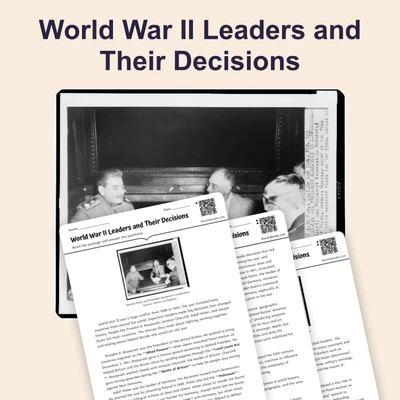
Leaders and Decisions in World War II
This passage explores the major leaders of World War II and the critical decisions they made that shaped the course of g...
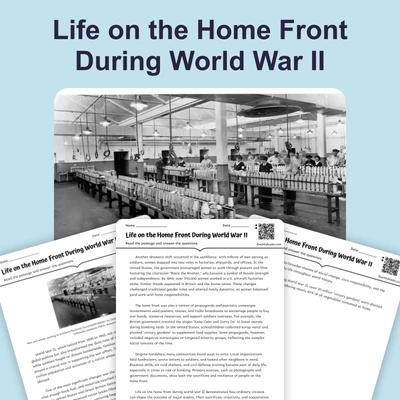
American Life During World War II
This history reading passage explores life on the home front during World War II, focusing on the experiences of ordinar...
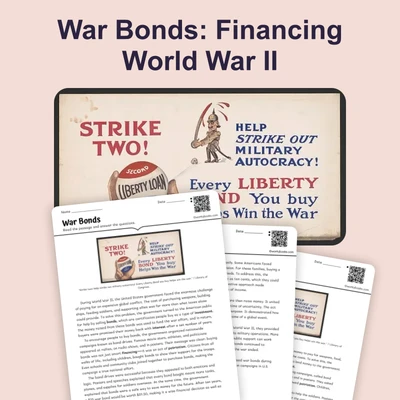
War Bonds: Financing World War II
This passage examines the critical role of war bonds in financing World War II, focusing on how the U.S. government enco...
D2.HIS.2.3-5D2.HIS.3.3-5RI.4.3RI.4.4
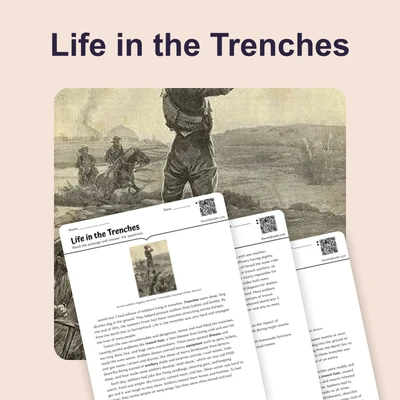
Trench Warfare in World War I
This comprehensive history reading passage explores the realities of life in the trenches during World War I, aligned to...
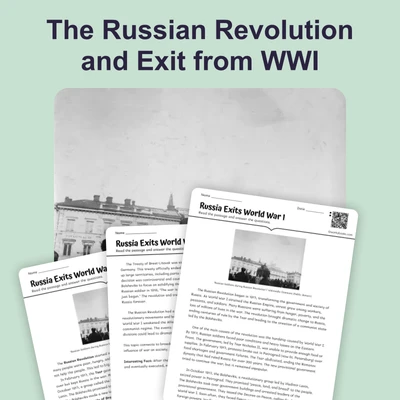
Russia Exits World War I
This comprehensive world history reading passage explores the Russian Revolution and how Russia exited World War I. Stud...
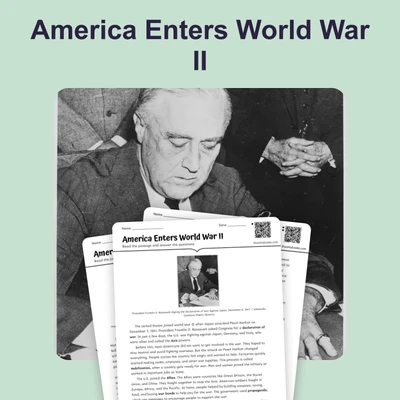
America Enters World War II
This history reading passage analyzes America’s entry into World War II, focusing on the causes, perspectives, and conse...
D2.HIS.2.3-5D2.HIS.3.3-5RI.4.3RI.4.4
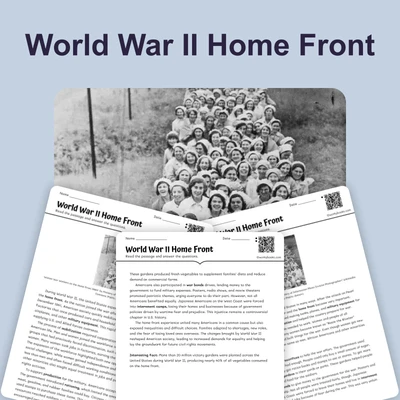
World War II Home Front
This rigorous U.S. history reading passage explores the complexities and challenges of the World War II Home Front, focu...
D2.HIS.2.3-5D2.HIS.3.3-5RI.6.3RI.6.4
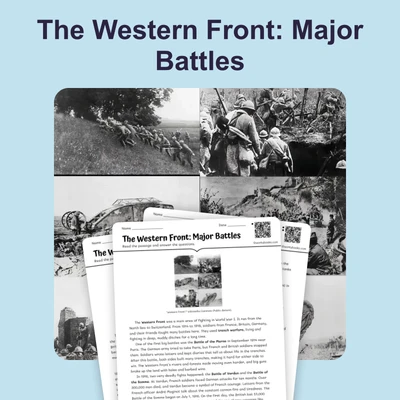
The Western Front in World War I
This engaging history reading passage explores the major battles of the Western Front during World War I, focusing on th...
Anne Frank's Message to the World
This reading passage explores the life and legacy of Anne Frank, a Jewish teenager who documented her experiences during...
Allied Strategy in the Pacific War
This comprehensive history reading passage dives into the strategic 'island hopping' campaign of World War II in the Pac...
Major Battles Change the War's Course
This engaging history reading passage examines three crucial turning points of World War II: the Battles of Stalingrad, ...
Japan Surrenders: World War II Ends
This comprehensive history reading passage examines the pivotal moment when Japan surrendered in August 1945, bringing W...
D2.HIS.2.3-5D2.HIS.3.3-5RI.4.3RI.4.4
America Enters the War: 1917
This comprehensive history reading passage explores America’s entry into World War I in 1917, examining the causes, even...
Black History Month Word Search
RF.4.3RF.5.3L.4.4L.5.4
Worky World! Capitalize Locations
This capitalization sheet will help students to practice capitalizing geographic locations. Illustrated on the sheet is ...
L.2.2.AL.2.2
Word Families: —ight Words
This word families worksheet focuses on -ight words and is designed to help 4th-grade students practice their reading an...
RF.4.4
The Atomic Bomb Ends the War
This informative passage explores the role of the atomic bomb in ending World War II, focusing on the events leading up ...