Otto Frank
Interactive passage with audio narration, comprehension questions, and printable PDF.
By completing this purchase you agree to our Terms of Use and Privacy Policy. Your subscription renews automatically until you cancel. You can cancel anytime from your account settings. All sales are final and non-refundable. Digital content is available for download in your account immediately upon purchase.
What's included
Otto Frank preview and details
About this printable Otto Frank reading passage (Grades 5-8)
Sample passage and quiz from Otto Frank
Reading passage and comprehension quiz preview
Otto Frank
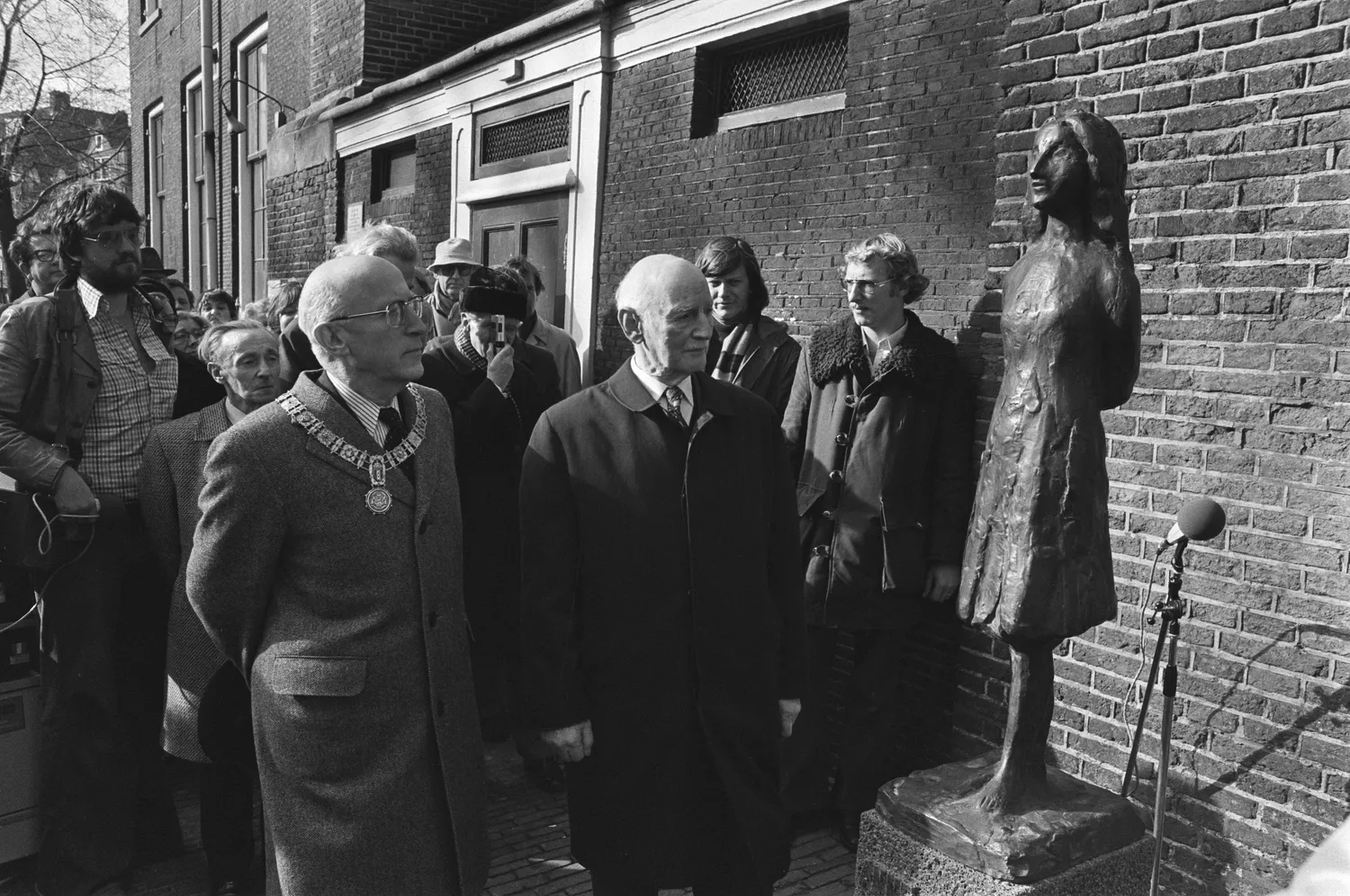
Samkalden and Otto Frank (father of Anne) in the picture, by Bert Verhoeff / Wikimedia Commons
Otto Frank was a German-born businessman who became the sole survivor of his immediate family after the Holocaust. Born on May 12, 1889, in Frankfurt, Germany, Otto Frank was raised in a prosperous Jewish family. He served as an officer in the German army during World War I. After the war, due to increasing persecution of Jewish people by the Nazis, Otto moved his family to Amsterdam, Netherlands, in 1933. This decision changed the course of his family's life and connected them to one of history’s most studied tragedies.
In Amsterdam, Otto Frank established a business selling pectin, a substance used to make jam. However, life became increasingly dangerous after German forces occupied the Netherlands in 1940. Laws restricting Jewish rights forced Otto to hand over his business to non-Jewish colleagues, and the Frank family was required to wear yellow stars. By July 1942, the threat grew so severe that Otto led his family—his wife Edith, and daughters Margot and Anne—into hiding above his office building. The hidden rooms, known as the 'Secret Annex,' became their home for over two years. During this period, Anne Frank kept a detailed diary that would later become a crucial primary source for understanding life during the Holocaust.
Life in the Secret Annex was marked by tension, fear, and hope. Otto Frank acted as the group's leader, organizing supplies and keeping spirits up. The family relied on trusted friends, such as Miep Gies, who risked their own safety to bring food, news, and messages. Despite their precautions, the Franks were betrayed in August 1944. Nazi officers arrested the family and sent them to concentration camps. Otto was separated from his wife and daughters at Auschwitz. Letters and camp records, primary sources from the period, reveal that Otto was the only member of his immediate family to survive. Edith died in Auschwitz, and Anne and Margot died in Bergen-Belsen in early 1945.
After the war ended in 1945, Otto Frank returned to Amsterdam, where Miep Gies gave him Anne’s preserved diary. Otto worked tirelessly to have Anne’s writings published, believing they could educate the world about the dangers of hatred and intolerance. The diary, first published in Dutch in 1947 as 'Het Achterhuis,' became a powerful symbol of human resilience. Otto Frank devoted the rest of his life to promoting memory and tolerance, supporting educational projects and visiting schools to share his experiences. He passed away in 1980 in Switzerland, but his efforts ensured that Anne’s voice would never be forgotten.
The story of Otto Frank is significant not only because he survived but because he chose to transform his family's tragedy into a message of hope and understanding. By supporting the publication of Anne’s diary, Otto allowed future generations to learn from the past. His actions highlight the importance of documentation and personal testimony in history.
This history demonstrates the impact one person can have on preserving memory and advancing social change, connecting to broader themes of World War II, the Holocaust, and human rights.
Interesting Fact: Otto Frank received thousands of letters from young people around the world who read Anne’s diary and were inspired to stand up against injustice.
Comprehension quiz (8 questions)
1. Where was Otto Frank born?
2. What was Otto Frank’s business in Amsterdam?
3. When did the Frank family go into hiding?
4. Why did Otto Frank move his family to Amsterdam?
5. How did Anne Frank’s diary become important?
6. What was Otto Frank’s role in the Secret Annex?
7. Otto Frank was the only family survivor. True or false?
8. What does 'tolerance' mean in the passage?
Perfect for the way you teach
- Build comprehension skills
- Auto-graded quiz
- Differentiated reading
- Read together at home
- Improve fluency
- Quiet reading time
- Reading curriculum support
- Independent practice
- Track Lexile growth