How Does Probability Predict Traits
Interactive passage with audio narration, comprehension questions, and printable PDF.
By completing this purchase you agree to our Terms of Use and Privacy Policy. Your subscription renews automatically until you cancel. You can cancel anytime from your account settings. All sales are final and non-refundable. Digital content is available for download in your account immediately upon purchase.
What's included
How Does Probability Predict Traits preview and details
About this printable How Does Probability Predict Traits science reading passage, NGSS-aligned (Grades 5-8)
Sample passage and quiz from How Does Probability Predict Traits
Reading passage and comprehension quiz preview
Probability in Genetics
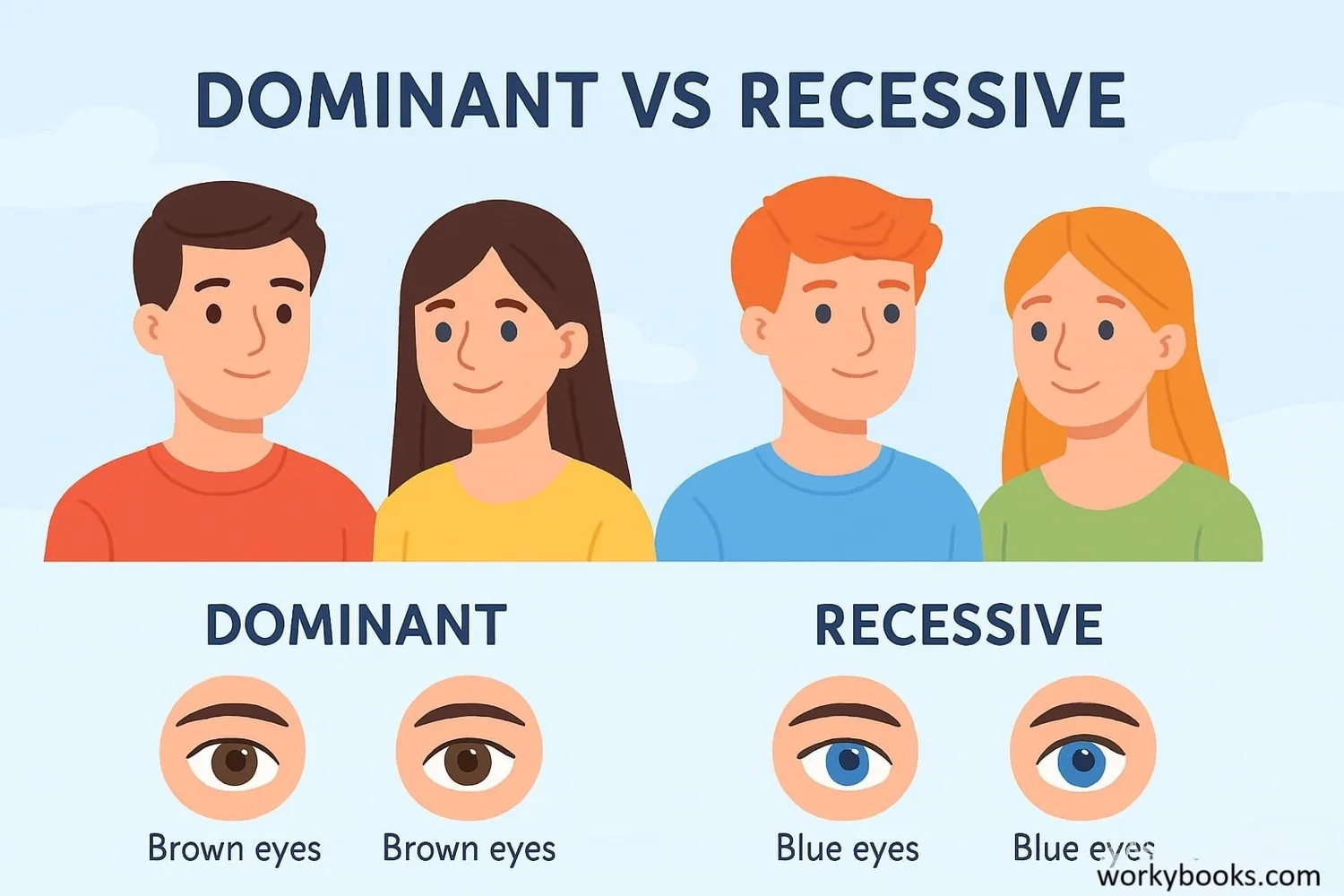
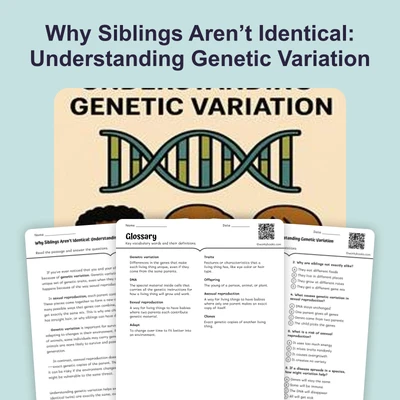
Genetics is the study of how traits are passed from parents to offspring. Scientists have discovered that the chance of inheriting certain traits can be predicted using probability. This is similar to flipping a coin, where each flip is independent. In genetics, each offspring represents a new event, and the inheritance of traits follows predictable patterns. Understanding these patterns helps scientists, doctors, and families make informed decisions about health and heredity.
How Probability Operates in Genetics
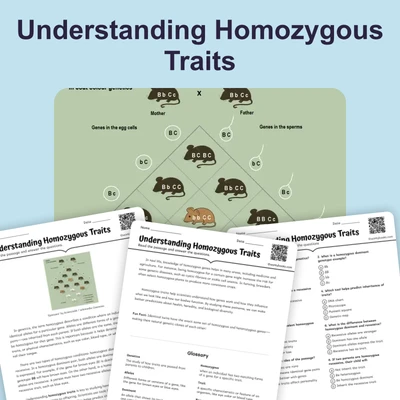
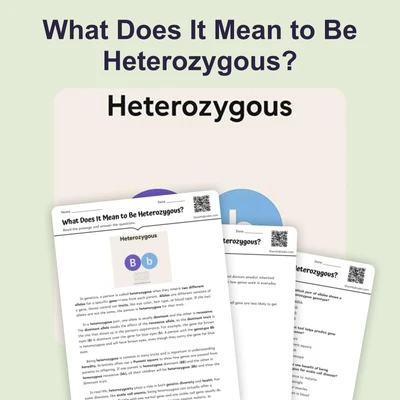
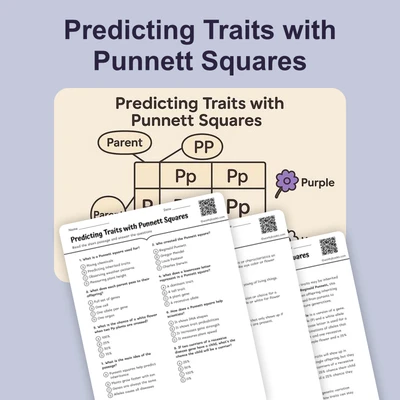
Traits are determined by genes, which come in different forms called alleles. Each parent gives one allele for each gene to their child. When both parents are heterozygous (having two different alleles, like Aa), the chance of passing each allele is equal. Scientists use Punnett squares to predict the possible combinations in offspring. For example, if two heterozygous pea plants (Aa x Aa) cross, there is a 75% chance the offspring will show the dominant trait and a 25% chance for the recessive trait. This creates a 3:1 ratio for phenotypes. At the genetic level, the ratio for genotypes (AA, Aa, aa) is 1:2:1. Each offspring's genotype is an independent event, just like each flip of a coin.
Predictions, Real Results, and the Law of Large Numbers
Predicted ratios, such as 3:1 or 1:2:1, are based on probability and large numbers. However, in small families or small samples, actual results may differ from the expected ratios. This is because chance events can cause variation. For example, in a family with only four children, you might see all dominant traits or more recessive traits than expected. The law of large numbers tells us that as the number of offspring increases, the results will get closer to the predicted ratios. This principle is important in both scientific experiments and real-life situations.
Applications in Real Life: Genetic Counseling
Probability in genetics is not just theoretical. In genetic counseling, families are often told there is a 25% chance their child could inherit a certain genetic condition if both parents are carriers. This probability does not change with each child—each birth is a separate event. Understanding probability helps people make informed choices about health and family planning. It also shows the importance of large sample sizes in scientific studies, which provide more accurate predictions of genetic outcomes.
Probability connects biology and mathematics, allowing scientists to predict patterns in heredity, help families understand risks, and study evolution across generations.
Interesting Fact:
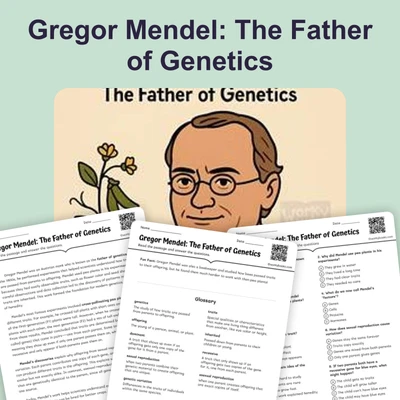
Gregor Mendel, known as the father of genetics, used thousands of pea plants to discover inheritance patterns and prove that probability plays a key role in genetics.
Comprehension quiz (10 questions)
1. What does a Punnett square help scientists predict?
2. Which of the following is a 3:1 ratio in genetics?
3. What does 'heterozygous' mean in genetics?
4. What is the law of large numbers?
5. What is the purpose of genetic counseling?
6. What does 'phenotype' mean?
7. If two heterozygous parents (Aa x Aa) have a child, what is the chance the child will show the recessive trait?
8. Why might actual results differ from predicted ratios in small samples?
9. True or False: Each child born is an independent event, like flipping a coin.
10. True or False: The probability of inheriting a genetic condition changes with each child.
Perfect for the way you teach
- Build comprehension skills
- Auto-graded quiz
- Differentiated reading
- Read together at home
- Improve fluency
- Quiet reading time
- Reading curriculum support
- Independent practice
- Track Lexile growth