Queen Nzinga Resists the Slave Trade
Interactive passage with audio narration, comprehension questions, and printable PDF.
By completing this purchase you agree to our Terms of Use and Privacy Policy. Your subscription renews automatically until you cancel. You can cancel anytime from your account settings. All sales are final and non-refundable. Digital content is available for download in your account immediately upon purchase.
What's included
Queen Nzinga Resists the Slave Trade preview and details
About this printable Queen Nzinga Resists the Slave Trade reading passage (Grades 5-8)
Sample passage and quiz from Queen Nzinga Resists the Slave Trade
Reading passage and comprehension quiz preview
Queen Nzinga Resists the Slave Trade
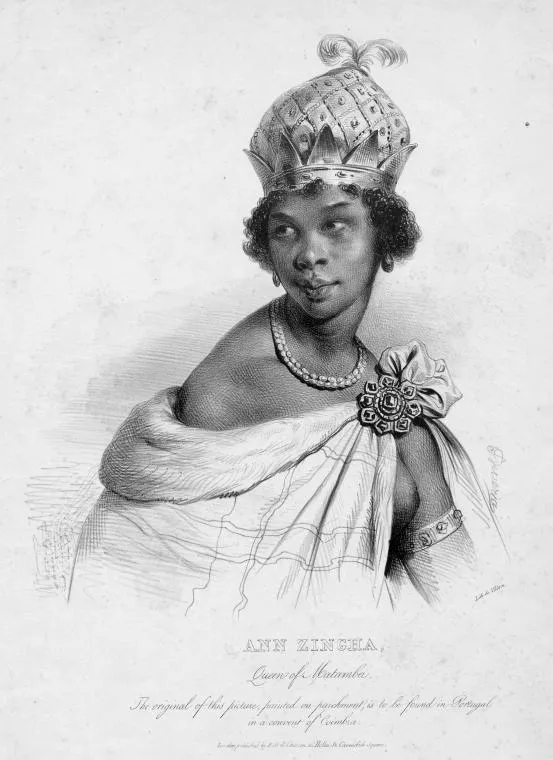
"Ann Zingha, queen of Matamba" by François Villain (litographer) /
Source: Wikimedia Commons (Public domain).
Queen Nzinga of Ndongo and Matamba was a powerful African ruler in the 1600s. She is remembered for her fierce resistance against the Portuguese colonization of Central Africa and her determined fight to protect her people from the transatlantic slave trade. Nzinga’s actions challenged the growing European influence and changed the history of Angola.
Nzinga was born in 1583 in the kingdom of Ndongo, in present-day Angola. The Portuguese had arrived in the late 1400s, seeking to expand their trade networks. By the early 1600s, the Portuguese were capturing Africans to sell as slaves in the Americas. When Nzinga’s brother, the king, asked her to negotiate with the Portuguese in 1622, Nzinga demonstrated her skill as a diplomat. According to a famous account, the Portuguese governor did not offer her a chair during their meeting. Nzinga ordered a servant to kneel so she could sit at the same level, showing she was an equal to the Europeans.
After becoming queen in 1624, Nzinga led her people in a long struggle against Portuguese forces. She formed alliances with neighboring kingdoms and even with the Dutch, who were also fighting the Portuguese. Nzinga reorganized her army and used both military and political strategies to resist. For example, she welcomed runaway slaves and Portuguese soldiers into her territory, strengthening her resistance. Nzinga also moved her capital, adapting to the shifting geography of conflict. The struggle was harsh, and many people suffered, but Nzinga’s leadership kept her kingdom independent for decades.
Primary sources, such as Portuguese letters and missionary accounts, describe Nzinga as a clever and determined leader. Some sources call her “the Amazon of Africa” and describe her dressing as a man in battle to inspire her soldiers. Archaeological findings, such as fortified towns and evidence of trade, show that Ndongo and Matamba were complex societies with their own systems of governance and culture. Nzinga’s resistance slowed the spread of the slave trade in the region and inspired others to fight for their freedom.
Nzinga ruled until her death in 1663. Her story shows the power of agency—the ability of individuals and groups to shape history, even when facing powerful outside forces. Nzinga’s legacy reminds us that African societies were not just passive victims of the slave trade, but active participants in their own history. Her life connects to the larger theme of resistance to injustice, which can be seen in many societies throughout history.
Interesting Fact: Nzinga’s court included women warriors and advisors, and she was known for her intelligence and bravery.
Comprehension quiz (8 questions)
1. Where was Queen Nzinga born?
2. Who did Nzinga negotiate with in 1622?
3. What year did Nzinga become queen?
4. Why did Nzinga form alliances?
5. How did Nzinga show she was equal to Europeans?
6. What impact did Nzinga’s actions have?
7. Nzinga’s leadership kept her kingdom independent. True or false?
8. What does 'agency' mean in the passage?
Perfect for the way you teach
- Build comprehension skills
- Auto-graded quiz
- Differentiated reading
- Read together at home
- Improve fluency
- Quiet reading time
- Reading curriculum support
- Independent practice
- Track Lexile growth