Righteous Among the Nations — Reading Comprehension
Rate this
Premium Resource
Present
Present in classroom. No work saved
Assign
Classroom with student accounts, Track progress
Quick Play
No student accounts, assign with a link
Grades
5
6
7
8
PRINT+DIGITAL RESOURCE
This learning resource is available in interactive and printable formats. The interactive worksheet can be played online and assigned to students. The Printable PDF version can be downloaded and printed for completion by hand.
This passage explores the Righteous Among the Nations, a special title given to non-Jews who risked their lives to save Jews during the Holocaust in World War II. Students will examine real-life examples, including Oskar Schindler and Irena Sendler, and learn about the geographic and social contexts of Nazi-occupied Europe. The passage incorporates evidence from primary sources, analyzes cause-and-effect relationships, and highlights the impact of these courageous individuals. Activities include a glossary, multiple-choice quiz, writing prompts, graphic organizers, and a timeline to reinforce understanding. The passage is aligned with California HSS 7.8, CCSS RI.6.1, RI.6.4, and supports historical thinking skills. Spanish translation and read aloud audio are included for accessibility. This resource provides an engaging way for students to analyze history and understand the significance of moral choices during times of crisis.
CONTENT PREVIEW
Expand content preview
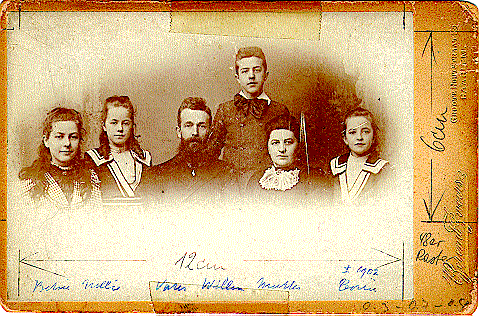
"Family Ten Boom"/ Wikimedia Commons (Public domain).
The Holocaust was a period during World War II when millions of Jews and other groups were persecuted and killed by Nazi Germany. In the face of extreme danger, some non-Jewish individuals chose to risk their own lives to save Jews from murder and deportation. These courageous individuals are honored as the Righteous Among the Nations, a title given by Yad Vashem, Israel’s official Holocaust memorial.
Throughout Nazi-occupied Europe, helping Jews was forbidden and often punished by death. Yet, people from many countries—including Poland, France, the Netherlands, and Denmark—bravely resisted Nazi laws. One famous example is Oskar Schindler, a German industrialist. Schindler used his factory in Kraków, Poland, to employ over 1,200 Jews, protecting them from being sent to concentration camps. Documents and survivor testimonies provide evidence of his actions. Another example is Irena Sendler, a Polish social worker who led efforts to smuggle about 2,500 Jewish children out of the Warsaw Ghetto. Sendler and her helpers provided false identity papers and safe hiding places, often at great personal risk. These stories are supported by records found after the war and the memories of those who survived.
Many rescuers used creative methods to help. In the Netherlands, the Ten Boom family built a secret room in their home to hide Jewish refugees. The diary of Corrie ten Boom, as well as physical evidence of the hiding place, reveal the family’s commitment. In Denmark, ordinary citizens organized boat transports to Sweden, saving nearly 7,200 Danish Jews in 1943. These actions show the power of collective resistance and the importance of solidarity in times of crisis.
The risks were enormous. Many Righteous, like the Ten Boom family, were arrested or killed for their actions. Yet, their moral choices demonstrate the impact of individual decisions within a strict social hierarchy and oppressive regime. While some people chose to obey Nazi orders or remain silent, the Righteous Among the Nations acted on their conscience, often guided by humanitarian beliefs or religious faith. Their stories remind us that even in the darkest times, people can make a difference.
The actions of the Righteous Among the Nations are significant because they challenge us to consider the consequences of our choices and the value of human life. Their bravery continues to inspire new generations to stand against injustice and help those in need.
Learning about these heroes connects to broader themes in world history, such as resistance, moral decision-making, and the struggle for human rights.
Interesting Fact: More than 27,000 people from over 50 countries have been recognized as Righteous Among the Nations by Yad Vashem.
Who was Oskar Schindler?
A German factory ownerA Danish fishermanA French soldierA Dutch writer
What did Irena Sendler do?
Saved Jewish childrenBuilt secret roomsLed Nazi troopsCreated Yad Vashem
Where did the Ten Boom family live?
The NetherlandsPolandDenmarkFrance
Why were the actions of the Righteous dangerous?
Helping Jews was punished by deathThey had no foodThey were soldiersIt was legal to help
How did Danish citizens help Jews?
By organizing boat escapesBy opening factoriesBy writing diariesBy joining the Nazis
What does 'solidarity' mean here?
Working together to helpLiving aloneFollowing ordersBuilding houses
Yad Vashem is in Denmark. True or False?
TrueFalse
What does 'conscience' mean?
Inner sense of right and wrongA type of factoryA secret roomA group of rescuers
Perfect For:
👩🏫 Teachers
• Reading comprehension practice
• Auto-graded assessments
• Literacy skill development
👨👩👧👦 Parents
• Reading practice at home
• Comprehension improvement
• Educational reading time
🏠 Homeschoolers
• Reading curriculum support
• Independent reading practice
• Progress monitoring
Reading Features:
📖
Reading Passage
Engaging fiction or nonfiction text
❓
Comprehension Quiz
Auto-graded questions
📊
Instant Feedback
Immediate results and scoring
📄
Printable Version
Download for offline reading
🔊
Read Aloud
Voice-over with word highlighting
Reviews & Ratings
No reviews yet. Be the first to share your experience!
Related Content
Events Leading to World War II
This passage explores the complex causes of World War II, focusing on the interwar period, the Treaty of Versailles, the...
Causes of World War I
This comprehensive history reading passage explores the complex causes of World War I, focusing on alliances, nationalis...
World War I Impact on America
This engaging history reading passage explores World War I's impact on society and culture, highlighting key changes in ...
Leaders and Decisions in World War II
This passage explores the major leaders of World War II and the critical decisions they made that shaped the course of g...
American Life During World War II
This history reading passage explores life on the home front during World War II, focusing on the experiences of ordinar...
War Bonds: Financing World War II
This passage examines the critical role of war bonds in financing World War II, focusing on how the U.S. government enco...
D2.HIS.2.3-5D2.HIS.3.3-5RI.4.3RI.4.4
Trench Warfare in World War I
This comprehensive history reading passage explores the realities of life in the trenches during World War I, aligned to...
Russia Exits World War I
This comprehensive world history reading passage explores the Russian Revolution and how Russia exited World War I. Stud...
America Enters World War II
This history reading passage analyzes America’s entry into World War II, focusing on the causes, perspectives, and conse...
D2.HIS.2.3-5D2.HIS.3.3-5RI.4.3RI.4.4
World War II Home Front
This rigorous U.S. history reading passage explores the complexities and challenges of the World War II Home Front, focu...
D2.HIS.2.3-5D2.HIS.3.3-5RI.6.3RI.6.4
The Western Front in World War I
This engaging history reading passage explores the major battles of the Western Front during World War I, focusing on th...
Anne Frank's Message to the World
This reading passage explores the life and legacy of Anne Frank, a Jewish teenager who documented her experiences during...
Allied Strategy in the Pacific War
This comprehensive history reading passage dives into the strategic 'island hopping' campaign of World War II in the Pac...
Major Battles Change the War's Course
This engaging history reading passage examines three crucial turning points of World War II: the Battles of Stalingrad, ...
Japan Surrenders: World War II Ends
This comprehensive history reading passage examines the pivotal moment when Japan surrendered in August 1945, bringing W...
D2.HIS.2.3-5D2.HIS.3.3-5RI.4.3RI.4.4
America Enters the War: 1917
This comprehensive history reading passage explores America’s entry into World War I in 1917, examining the causes, even...
Black History Month Word Search
RF.4.3RF.5.3L.4.4L.5.4
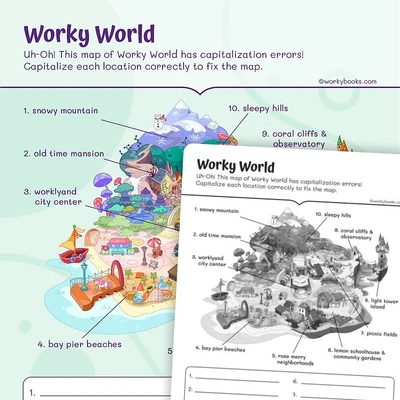
Worky World! Capitalize Locations
This capitalization sheet will help students to practice capitalizing geographic locations. Illustrated on the sheet is ...
L.2.2.AL.2.2
Word Families: —ight Words
This word families worksheet focuses on -ight words and is designed to help 4th-grade students practice their reading an...
RF.4.4
The Atomic Bomb Ends the War
This informative passage explores the role of the atomic bomb in ending World War II, focusing on the events leading up ...