This learning resource is available in interactive and printable formats. The interactive worksheet can be played online and assigned to students. The Printable PDF version can be downloaded and printed for completion by hand.
This engaging science passage for Grades 4-5 introduces students to the Asteroid Belt, a mysterious region between Mars and Jupiter filled with rocky objects called asteroids. The passage explains key scientific concepts such as what asteroids are, how the asteroid belt formed, and why it is important to our understanding of the solar system. Students will learn vocabulary words like 'orbit', 'gravity', and 'planet', each defined within the text. The passage connects science to real-world examples, such as using asteroids for space research, and ends with an interesting fact about the largest asteroid, Ceres. The passage is aligned with NGSS science standards and includes audio integration for accessibility. Activities include a multiple-choice quiz and a writing activity to reinforce comprehension, vocabulary, and critical thinking. This resource is perfect for classroom use or independent study, and supports science learning with clear explanations and assessment opportunities.
CONTENT PREVIEW
Expand content preview
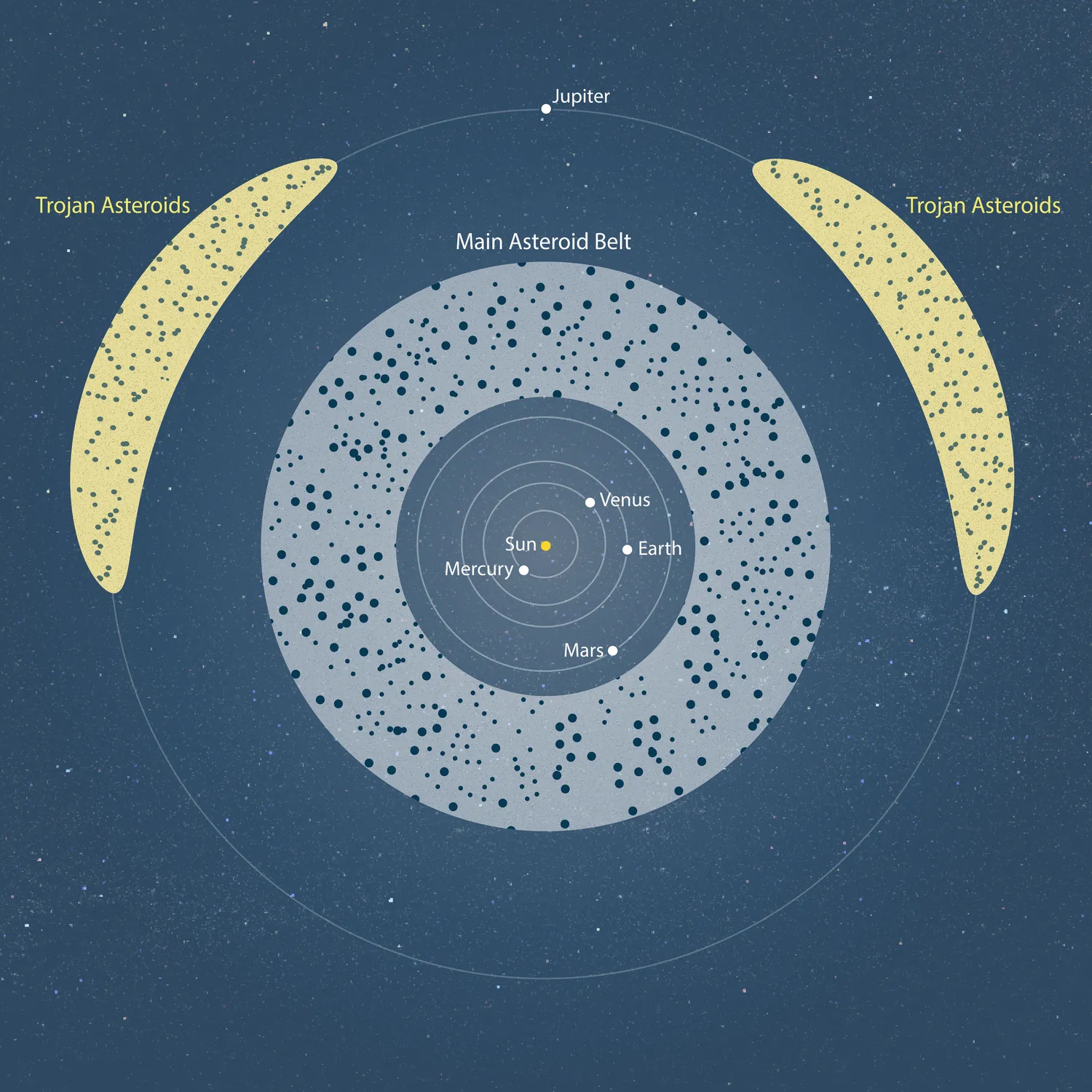
"Asteroid Belts" by NASA Joseph Olmsted / Wikimedia Commons
The Asteroid Belt is a region in our solar system between the planets Mars and Jupiter. It is filled with millions of rocky objects called asteroids. These asteroids are pieces of rock and metal that move around the Sun, just like the planets do. Most asteroids are small, but some are hundreds of kilometers wide.
Scientists think the Asteroid Belt formed over 4.5 billion years ago, around the same time as the planets. They believe that gravity from Jupiter was too strong for the rocks in this region to join together and form a planet. Instead, the rocks stayed broken up and became the Asteroid Belt we know today. This shows how gravity can affect how planets and other objects form in space.
The asteroids in the belt travel in paths called orbits. An orbit is the path an object takes as it moves around the Sun. Some asteroids have orbits that cross paths with planets, while others stay in the belt. Asteroids can be different shapes and sizes, and some even have their own small moons.
Studying the Asteroid Belt helps scientists learn about the early solar system. Some space missions send robots or spacecraft to visit asteroids. By studying their rocks and metals, scientists can discover clues about how planets, including Earth, were made. In the future, people may even mine asteroids for metals that are rare on Earth.
Interesting Fact: The largest object in the Asteroid Belt is called Ceres. It is so big that it is also known as a dwarf planet!
Where is the Asteroid Belt located?
Between Mars and JupiterBetween Earth and MarsBeyond NeptuneAround the Sun only
What are asteroids mostly made of?
Rock and metalIce and gasWaterFire
What is the largest object in the belt?
CeresMarsJupiterEarth
Why did a planet not form in the belt?
Jupiter's gravity was too strongToo coldNo rocks were thereToo close to Earth
What is an orbit?
A path around the SunA type of asteroidA planet's moonA kind of metal
How do scientists study asteroids?
By sending spacecraftBy walking on themBy using telescopes onlyBy guessing
Asteroids can have their own moons.
TrueFalse
What does 'gravity' mean?
A force that pulls thingsA type of planetA space robotA kind of rock
Perfect For:
👩🏫 Teachers
• Reading comprehension practice
• Auto-graded assessments
• Literacy skill development
👨👩👧👦 Parents
• Reading practice at home
• Comprehension improvement
• Educational reading time
🏠 Homeschoolers
• Reading curriculum support
• Independent reading practice
• Progress monitoring
Reading Features:
📖
Reading Passage
Engaging fiction or nonfiction text
❓
Comprehension Quiz
Auto-graded questions
📊
Instant Feedback
Immediate results and scoring
📄
Printable Version
Download for offline reading
🔊
Read Aloud
Voice-over with word highlighting
Reviews & Ratings
No reviews yet. Be the first to share your experience!
Related Content
Earth: Our Home in Space
This engaging Grade 4-5 science passage, aligned to NGSS, introduces students to Earth's special place in the solar syst...
Tools and Technology in Earth Science
This middle school science reading passage explores the wide range of tools and technologies used in Earth science, from...
MS-ESS2-2MS-ESS3-2MS-ETS1-1MS-PS4-3
Earth's Place in the Universe
This reading passage explains Earth's place in the universe, supporting NGSS 1-ESS1-1. It describes how Earth is one of ...
1-ESS1-1
Scientific Inquiry in Earth Science
This passage explores scientific inquiry in Earth science for grades 6-8, aligned with NGSS standards MS-ESS1-4, MS-ESS2...
MS-ESS1-4MS-ESS2-1MS-ESS3-5SEP
What Is Space Weather and How Does It Affect the Earth?
This NGSS-aligned science passage for middle school explains what space weather is and how it affects Earth. Students le...
MS-ESS2-2
Escape Velocity and Space Travel
This middle school science passage introduces students to the concept of escape velocity—the minimum speed required to b...
MS-ESS1-2MS-PS2-4
Space Stations
This informational science reading passage for grades 6-8 explores the complex systems and technology behind space stati...
MS-ESS1-3MS-ETS1-1
What Is Earth Science?
This engaging middle school science passage introduces students to the field of Earth science, aligning with NGSS standa...
MS-ESS1MS-ESS2MS-ESS3SEP
The Space Garden
This innovative passage combines plant science with space exploration, aligning with NGSS standards for life sciences an...
RL.3.1RL.2.1RL.4.9
Measuring Distances in Space
This middle school science passage explores how astronomers measure the vast distances in space, aligning with NGSS stan...
MS-ESS1-3
Earth: Our Home Planet
This comprehensive science passage for grades 6-8 explores Earth’s unique characteristics and the interconnected systems...
MS-ESS1-2
Meteorite Impacts on Earth
This engaging science reading passage for Grades 4-5 explores meteorite impacts on Earth, aligning with NGSS standards. ...
Earth's Rotation
This middle school science passage, aligned with NGSS standard MS-ESS1-1, focuses on Earth's rotation—how Earth spins on...
MS-ESS1-1
Facts About Earth
This engaging science reading passage introduces Grade 4 and 5 students to Earth, our home planet. Aligned with NGSS sta...
Exploring Space: Rockets and Spacecraft
Space exploration has been one of humanity's greatest achievements, made possible by rockets and spacecraft. Rockets act...
RI.4.4RI.4.2
Earth's Moon Facts
This engaging science passage, 'The Moon: Earth's Companion,' is designed for Grade 4-5 students and aligns with NGSS ge...
Earth's Seasons
This comprehensive reading passage for grades 6-8 explains why Earth has seasons, revealing the scientific mechanisms be...
MS-ESS1-1
Venus: Earth's Twin?
This comprehensive science passage for grades 6-8 examines Venus—often called Earth's twin—by exploring its similarities...
MS-ESS1-2MS-ESS1-3
What Makes Earth Perfect for Life?
This Grade 4-5 science passage, aligned with NGSS standards, explores the essential features that make Earth the perfect...
International Space Station
Discover the wonders of the International Space Station with this informative coloring page showcasing the orbiting outpost where astronauts live and work in space. As children color the complex modul...