The Liberation of the Concentration Camps — Reading Comprehension
Rate this
Premium Resource
Present
Present in classroom. No work saved
Assign
Classroom with student accounts, Track progress
Quick Play
No student accounts, assign with a link
Grades
5
6
7
8
PRINT+DIGITAL RESOURCE
This learning resource is available in interactive and printable formats. The interactive worksheet can be played online and assigned to students. The Printable PDF version can be downloaded and printed for completion by hand.
This comprehensive world history reading passage examines the liberation of the concentration camps at the end of World War II. Students will learn about the history and human experiences behind the Holocaust, focusing on the events of 1945 as Allied forces freed prisoners from Nazi camps. The passage incorporates primary sources, cause-and-effect analysis, and vocabulary development aligned with the California History-Social Science Standards (CA HSS 10.8.5, RH.6-8.1, RH.6-8.4). Students will also engage with multiple-choice questions, explanatory writing prompts, and graphic organizers. The resource includes a Spanish translation and audio read-aloud, supporting English Learners and diverse classrooms. By exploring the significance, impact, and legacy of liberation, students will connect this event to broader themes in world history, such as human rights and resistance to oppression.
CONTENT PREVIEW
Expand content preview
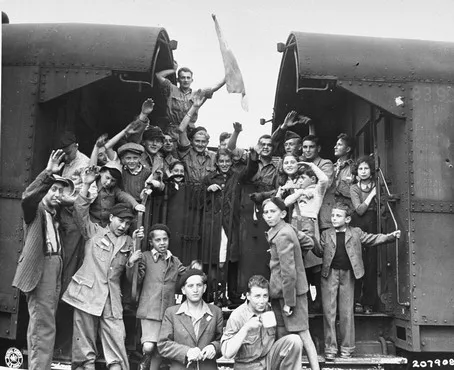
"Buchenwald Children 06499" / Wikimedia Commons (Public domain).
During the final months of World War II, Allied soldiers entered Nazi-occupied territories and discovered concentration camps where millions of people had suffered and died. These concentration camps were established by the Nazi regime throughout Europe to imprison and systematically murder Jews, Roma, disabled people, and others considered enemies of the state. The liberation of the camps in 1945 revealed the full extent of the Holocaust and changed the world's understanding of human rights violations.
The first major concentration camp liberated by the Allies was Majdanek in Poland, freed by the Soviet Red Army in July 1944. As the Soviets advanced westward, they uncovered more camps, including Auschwitz, the largest and most infamous extermination camp. On January 27, 1945, Soviet forces entered Auschwitz and found about 7,000 survivors. Testimonies from survivors, such as Elie Wiesel, and photographs taken by soldiers provided primary sources that documented the horrors inside. American and British forces also liberated camps in Germany, such as Buchenwald, Dachau, and Bergen-Belsen, in the spring of 1945. In Buchenwald, American troops arrived on April 11, 1945, to find thousands of starving prisoners. They immediately provided medical care, food, and comfort, while also recording evidence for future war crimes trials.
The liberation of these camps was a turning point in world history. Survivors described the experience as both a relief and a shock. Many were too weak to celebrate, and some died even after being freed because of disease and starvation. Allied soldiers, deeply affected by what they saw, wrote accounts and took photographs as proof. The evidence collected became crucial for the Nuremberg Trials, where Nazi officials were prosecuted for crimes against humanity. The international community, horrified by the scale of the genocide, began to develop new laws and treaties to protect human rights and prevent future atrocities.
The liberation of the camps changed how the world viewed the Holocaust. It also forced people to confront the consequences of prejudice, propaganda, and unchecked power. Survivors shared their stories, helping future generations understand the dangers of discrimination and the importance of standing up for justice. The memory of these events continues to influence debates about human rights, international law, and the responsibility of nations to protect vulnerable groups.
The events of 1945 connect to broader world history themes, such as the struggle for human rights, the responsibilities of governments, and the consequences of war.
Interesting Fact: Some survivors of the camps went on to rebuild their lives and made important contributions in fields like science, literature, and human rights activism.
Which camp was liberated first?
MajdanekAuschwitzBuchenwaldDachau
Who liberated Auschwitz?
Soviet Red ArmyAmerican ArmyBritish ArmyFrench Army
When was Buchenwald liberated?
April 11, 1945January 27, 1945July 1944May 1945
What was a major effect of liberation?
Proof of Nazi crimesStart of the warMore camps builtEnd of World War I
What does 'genocide' mean?
Planned killing of a groupA type of governmentA battle tacticA medical cure
Why did soldiers take photos in camps?
To record evidenceFor funTo decorate campsTo send home
Liberation meant setting people free. True or false?
TrueFalse
What is a 'primary source'?
Original document or witness accountA modern news storyA textbook summaryA government law
Perfect For:
👩🏫 Teachers
• Reading comprehension practice
• Auto-graded assessments
• Literacy skill development
👨👩👧👦 Parents
• Reading practice at home
• Comprehension improvement
• Educational reading time
🏠 Homeschoolers
• Reading curriculum support
• Independent reading practice
• Progress monitoring
Reading Features:
📖
Reading Passage
Engaging fiction or nonfiction text
❓
Comprehension Quiz
Auto-graded questions
📊
Instant Feedback
Immediate results and scoring
📄
Printable Version
Download for offline reading
🔊
Read Aloud
Voice-over with word highlighting
Reviews & Ratings
No reviews yet. Be the first to share your experience!
Related Content
Events Leading to World War II
This passage explores the complex causes of World War II, focusing on the interwar period, the Treaty of Versailles, the...
Causes of World War I
This comprehensive history reading passage explores the complex causes of World War I, focusing on alliances, nationalis...
World War I Impact on America
This engaging history reading passage explores World War I's impact on society and culture, highlighting key changes in ...
Leaders and Decisions in World War II
This passage explores the major leaders of World War II and the critical decisions they made that shaped the course of g...
American Life During World War II
This history reading passage explores life on the home front during World War II, focusing on the experiences of ordinar...
War Bonds: Financing World War II
This passage examines the critical role of war bonds in financing World War II, focusing on how the U.S. government enco...
D2.HIS.2.3-5D2.HIS.3.3-5RI.4.3RI.4.4
Trench Warfare in World War I
This comprehensive history reading passage explores the realities of life in the trenches during World War I, aligned to...
Russia Exits World War I
This comprehensive world history reading passage explores the Russian Revolution and how Russia exited World War I. Stud...
America Enters World War II
This history reading passage analyzes America’s entry into World War II, focusing on the causes, perspectives, and conse...
D2.HIS.2.3-5D2.HIS.3.3-5RI.4.3RI.4.4
World War II Home Front
This rigorous U.S. history reading passage explores the complexities and challenges of the World War II Home Front, focu...
D2.HIS.2.3-5D2.HIS.3.3-5RI.6.3RI.6.4
The Western Front in World War I
This engaging history reading passage explores the major battles of the Western Front during World War I, focusing on th...
Anne Frank's Message to the World
This reading passage explores the life and legacy of Anne Frank, a Jewish teenager who documented her experiences during...
Allied Strategy in the Pacific War
This comprehensive history reading passage dives into the strategic 'island hopping' campaign of World War II in the Pac...
Major Battles Change the War's Course
This engaging history reading passage examines three crucial turning points of World War II: the Battles of Stalingrad, ...
Japan Surrenders: World War II Ends
This comprehensive history reading passage examines the pivotal moment when Japan surrendered in August 1945, bringing W...
D2.HIS.2.3-5D2.HIS.3.3-5RI.4.3RI.4.4
America Enters the War: 1917
This comprehensive history reading passage explores America’s entry into World War I in 1917, examining the causes, even...
Black History Month Word Search
RF.4.3RF.5.3L.4.4L.5.4
Worky World! Capitalize Locations
This capitalization sheet will help students to practice capitalizing geographic locations. Illustrated on the sheet is ...
L.2.2.AL.2.2
Word Families: —ight Words
This word families worksheet focuses on -ight words and is designed to help 4th-grade students practice their reading an...
RF.4.4
The Atomic Bomb Ends the War
This informative passage explores the role of the atomic bomb in ending World War II, focusing on the events leading up ...