The Relationship Between Anticyclones, Air Sinking, and Temperature Inversions
Interactive passage with audio narration, comprehension questions, and printable PDF.
By completing this purchase you agree to our Terms of Use and Privacy Policy. Your subscription renews automatically until you cancel. You can cancel anytime from your account settings. All sales are final and non-refundable. Digital content is available for download in your account immediately upon purchase.
What's included
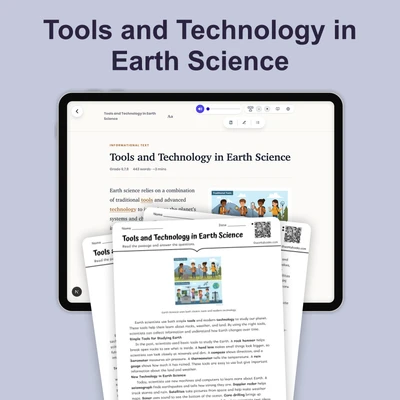
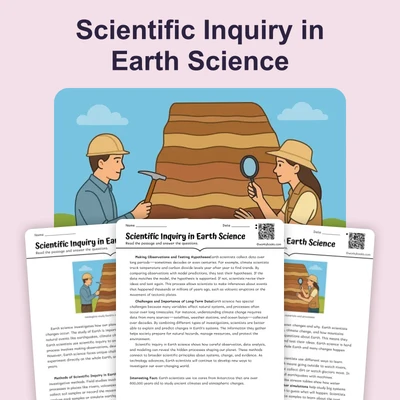
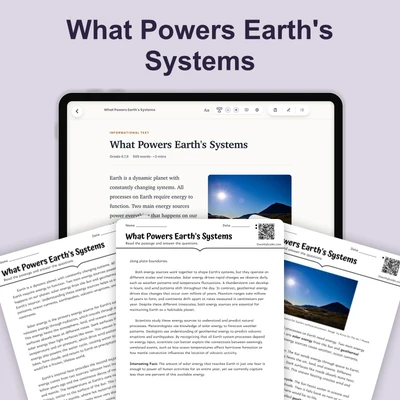
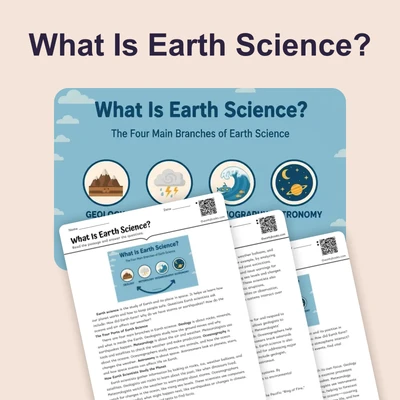
The Relationship Between Anticyclones, Air Sinking, and Temperature Inversions preview and details
About this printable The Relationship Between Anticyclones, Air Sinking, and Temperature Inversions science reading passage, NGSS-aligned (Grade 6)
Sample passage and quiz from The Relationship Between Anticyclones, Air Sinking, and Temperature Inversions
Reading passage and comprehension quiz preview
The Relationship Between Anticyclones, Air Sinking, and Temperature Inversions
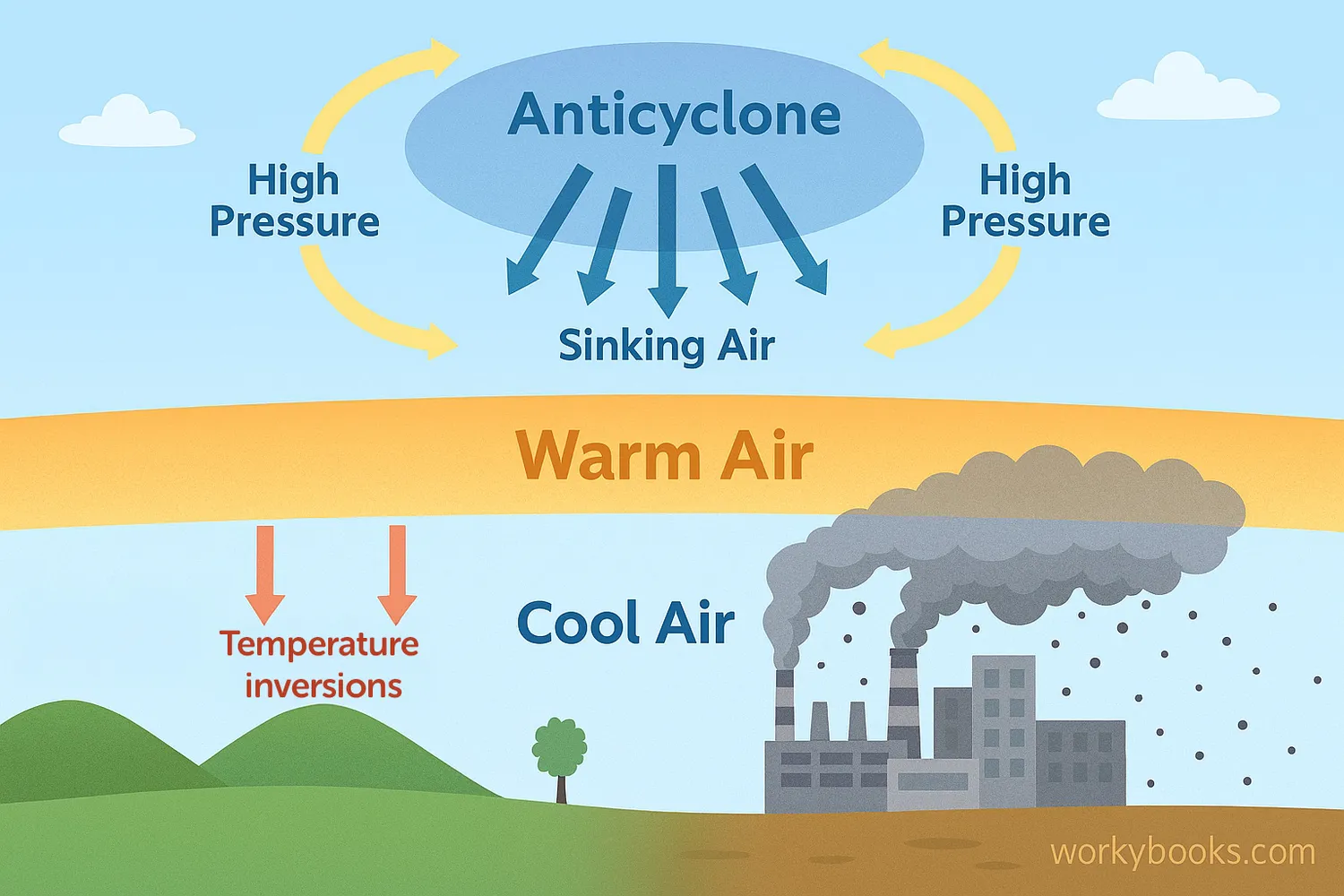
Have you ever wondered why some days feel calm and clear, while others are hazy and still? Often, it has to do with something called an anticyclone, which is a big area of high pressure in the atmosphere. Think of it like a giant invisible bubble of heavy air pushing down on the Earth's surface. These anticyclones are an important part of global atmospheric circulation and impact regional climates.
Inside an anticyclone, air does something special: it sinks. This means the air high up in the atmosphere slowly moves downwards towards the ground. As air sinks, it gets compressed and warms up. This warming prevents clouds from forming, which is why areas under anticyclones often have clear skies and sunny weather. This phenomenon is a key part of how unequal heating and rotation of the Earth create weather patterns.
Now, let's talk about something called a temperature inversion. Normally, as you go higher up into the atmosphere, the air gets colder. This is because the Earth's surface heats the air closest to it. However, during a temperature inversion, the opposite happens. A layer of warm air sits on top of a layer of colder air closer to the ground. This creates a kind of lid or trap in the atmosphere.
Anticyclones are often involved in creating these temperature inversions. When air sinks in an anticyclone, it warms up as it gets closer to the ground. If the ground is very cold (maybe from a clear, still night), the air right above the ground might stay cooler than the sinking, warming air above it. This sets up the warm-over-cold condition that defines a temperature inversion.
Why is this important? Temperature inversions can trap air pollution close to the ground. Normally, warm air near the surface rises, carrying pollutants away and mixing them with cleaner air higher up. But with an inversion, the cooler air at the bottom can't rise through the warmer air above it. So, things like car exhaust and factory smoke get stuck, leading to poor air quality and smog. This is a common environmental problem in cities located in basins or valleys during periods of high pressure. Understanding these connections helps us predict and manage environmental conditions.
Interesting Fact: Temperature inversions can sometimes cause a phenomenon called superior mirages, making distant objects appear to float above their actual position!
Comprehension quiz (10 questions)
1. What is an anticyclone?
2. What happens to air inside an anticyclone?
3. True or False: Sinking air in an anticyclone usually leads to cloudy skies.
4. Which atmospheric condition traps air pollution?
5. What happens to sinking air as it gets closer to the ground?
6. Why do anticyclones often cause clear skies?
7. What is the normal temperature pattern in the atmosphere?
8. What is the main danger of a temperature inversion for cities?
9. If a city experiences a long period of anticyclonic weather with cold nights, what might happen to its air?
10. What is another term for 'smog' as mentioned in the passage?
Perfect for the way you teach
- Build comprehension skills
- Auto-graded quiz
- Differentiated reading
- Read together at home
- Improve fluency
- Quiet reading time
- Reading curriculum support
- Independent practice
- Track Lexile growth