Reading PassagePremium

Tundra Biomes of the World

Interactive passage with audio narration, comprehension questions, and printable PDF.

No ratings yet
Grades 5–8ScienceElaEnglish · SpanishInteractive · Printable
Aligned toMS-LS2-1MS-ESS2-6
Just this resource
$1.50
One-time purchase
Best value
Unlock everything
$49.99$29.99/yr
40% off until Oct 31 — 10,000+ resources
Renews at $49.99/year.

By completing this purchase you agree to our Terms of Use and Privacy Policy. Your subscription renews automatically until you cancel. You can cancel anytime from your account settings. All sales are final and non-refundable. Digital content is available for download in your account immediately upon purchase.

Unlock above to use these actions

What's included

Reading passage
Audio narration
Comprehension quiz
Writing activity
Glossary & flashcards
Differentiated version
Spanish translation

Tundra Biomes of the World preview and details

About this printable Tundra Biomes of the World science reading passage, NGSS-aligned (Grades 5-8)

This passage provides a comprehensive overview of the tundra biome for middle school students, aligning with NGSS standards MS-LS2-1 and MS-ESS2-6. Students will learn how the tundra is defined by permafrost and the inability to support tree growth, making it the coldest biome on Earth. The passage explores the mechanisms behind permafrost formation, the short growing season, and the key differences between Arctic and alpine tundra. Through scientific explanations, real-world examples, and connections to broader ecological principles, students gain insight into the unique challenges and adaptations of tundra life. Activities include quizzes, writing prompts, and graphic organizers to deepen understanding. Audio integration supports diverse learning needs. This resource is valuable for science classrooms focusing on ecosystems, climate, and environmental adaptation.
Written by Workybooks TeamPublished by Workybooks
Preview

Sample passage and quiz from Tundra Biomes of the World

Reading passage and comprehension quiz preview

Tundra Biomes of the World
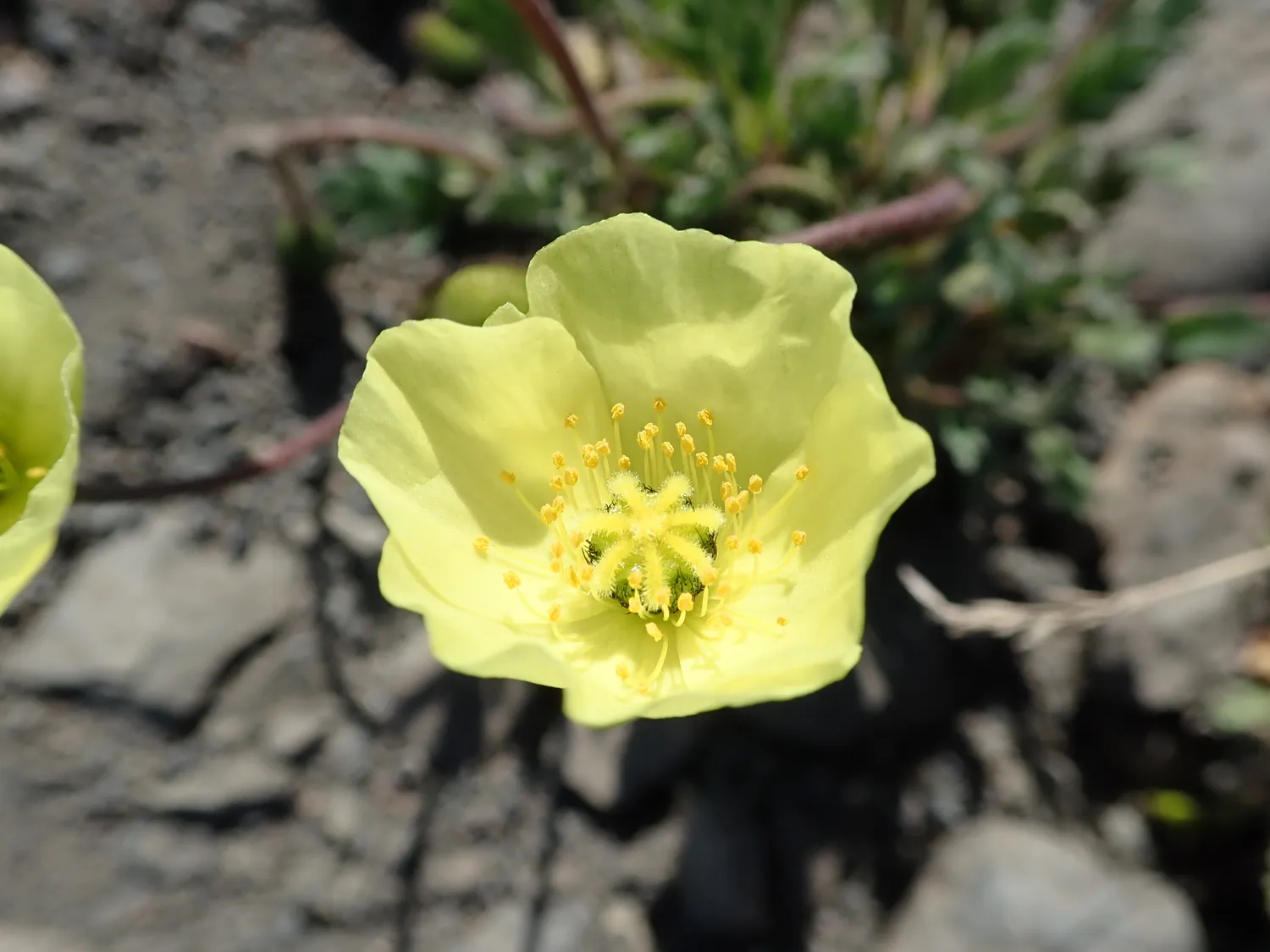
Arctic Poppy imported from iNaturalist photo 41380722 on 1 January 2024

"Arctic Poppy imported from iNaturalist photo 41380722 on 1 January 2024" by no rights reserved / Wikimedia Commons

Tundra is the coldest biome on Earth, covering about 10% of the planet’s surface. It is defined by the presence of permafrost, a thick layer of soil that remains frozen year-round. This frozen ground prevents trees from growing, creating vast, open landscapes. The word "tundra" comes from the Finnish term for "treeless plain," highlighting one of its most important features. Scientists study the tundra to understand how life survives under harsh environmental conditions and to learn about the impacts of climate change.

Permafrost and the Tundra Environment
What makes the tundra unique is its permafrost. Permafrost is ground that stays at or below 0°C (32°F) for at least two years in a row. In the Arctic tundra, permafrost can be hundreds of meters deep. The upper layer may thaw slightly during the short summer, but the soil beneath remains frozen. This frozen soil blocks the roots of trees and most plants, so only low-growing plants like mosses, lichens, and small shrubs can survive. The tundra experiences an extremely short growing season—usually only 50 to 60 days—when temperatures briefly rise above freezing and plants can photosynthesize and reproduce. Scientists know this from direct measurements of soil temperature and satellite images showing vegetation patterns.

Types of Tundra and Adaptations
There are two main types of tundra: Arctic tundra and alpine tundra. The Arctic tundra circles the North Pole, including parts of Alaska, Canada, Russia, and Greenland. Alpine tundra is found on high mountain tops around the world, where cold temperatures and strong winds create similar conditions to the Arctic. Both types have thin soils and low biodiversity, but the plants and animals that live there have special adaptations to survive. For example, Arctic foxes have thick fur, and plants grow close to the ground to avoid wind and conserve heat. Researchers observe these adaptations through field studies and by comparing tundra organisms to those in other biomes.

Ecological Importance and Global Impact
The tundra biome plays a crucial role in Earth’s climate system. Because permafrost stores large amounts of carbon in frozen organic matter, melting permafrost can release greenhouse gases like carbon dioxide and methane, which contribute to climate change. This process is being studied using satellite data, air sampling, and computer models. The tundra also provides important habitat for migratory birds and unique wildlife. Understanding how the tundra functions helps scientists predict global changes and develop strategies to protect these fragile ecosystems.

In summary, the tundra is a system shaped by extreme cold, frozen soil, and short summers. Its existence demonstrates how life can adapt to some of the harshest conditions on the planet. The tundra’s sensitivity to climate makes it a key indicator for environmental scientists studying changes on Earth.

Interesting Fact: Some tundra plants, like Arctic poppies, can track the sun’s movement to maximize photosynthesis during the brief summer period.

Comprehension quiz (10 questions)

1. What is the main reason why trees cannot grow in the tundra?

The ground is frozen (permafrost) and blocks their roots.
There is too much sunlight all year.
Animals eat all the tree seedlings.
There is never any rain in the tundra.

2. What does the word 'tundra' mean?

"Cold mountain"
"Treeless plain"
"Frozen river"
"Windy valley"

3. How long is the typical growing season in the tundra?

About 10-20 days
50-60 days
6 months
All year

4. Which of the following is NOT a type of tundra?

Arctic tundra
Alpine tundra
Desert tundra
Both Arctic and alpine tundra

5. What is permafrost?

A layer of soil that stays frozen all year
A type of animal found in the tundra
A plant that grows in the Arctic
A summer storm

6. What does 'adaptation' mean in the context of the tundra?

A change in climate
A special feature or behavior that helps an organism survive
The melting of permafrost
A type of bird

7. Why is the tundra important for Earth's climate?

It stores carbon in permafrost, which affects greenhouse gases and climate change.
It produces most of the world's oxygen.
It has the most biodiversity of any biome.
It is always warm.

8. If the permafrost melts, what can happen?

More trees will grow.
Greenhouse gases like methane and carbon dioxide will be released.
The tundra will become a desert.
There will be no effect.

9. True or False: Alpine tundra is found at the North Pole.

True
False

10. True or False: The tundra biome covers about 10% of Earth's surface.

True
False
Who it's for

Perfect for the way you teach

Teachers
  • Build comprehension skills
  • Auto-graded quiz
  • Differentiated reading
Parents
  • Read together at home
  • Improve fluency
  • Quiet reading time
Homeschoolers
  • Reading curriculum support
  • Independent practice
  • Track Lexile growth
Topics

Reviews & Ratings

No reviews yet. Be the first to share your experience!

More reading you might love

20 more
Passage
Koppen Climate Classification System reading passage for grades 5 to 8
Grades 5–8

Koppen Climate Classification System

weather and climate · MS-ESS2-6+1

$1.50
Passage
Humid Continental Climate Countries reading passage for grades 5 to 8
Grades 5–8

Humid Continental Climate Countries

weather and climate · MS-ESS2-6

Free
Passage
How Do Highland Climates Differ from Polar Climates reading passage for grades 5 to 8
Grades 5–8

How Do Highland Climates Differ from Polar Climates

weather and climate · MS-ESS2-6

$1.50
Passage
What Are Natural Causes That Lead to Increased CO₂ Levels in the Carbon Cycle? reading passage for grades 5 to 8
Grades 5–8

What Are Natural Causes That Lead to Increased CO₂ Levels in the Carbon Cycle?

weather and climate · MS-ESS2-6

$1.50
Passage
Global vs. Local Temperature reading passage for grade 6
Grade 6

Global vs. Local Temperature

weather and climate · MS-ESS2-6+3

$1.50
Passage
How Land and Water Heat Differently reading passage for grade 6
Grade 6

How Land and Water Heat Differently

weather and climate · MS-ESS2-6

$1.50
Passage
Earth's Spheres reading passage for grades 5 to 8
Grades 5–8

Earth's Spheres

earth and space science · MS-ESS2-4+1

$1.50
Passage
Factors Affecting Climate reading passage for grades 5 to 8
Grades 5–8

Factors Affecting Climate

science · MS-ESS2-6

$1.50
Passage
Global Wind Patterns reading passage for grades 5 to 8
Grades 5–8

Global Wind Patterns

science · MS-ESS2-6

$1.50
Passage
Wind reading passage for grades 5 to 8
Grades 5–8

Wind

science · MS-ESS2-5+1

$1.50
Passage
El Niño reading passage for grades 5 to 8
Grades 5–8

El Niño

weather and climate · MS-ESS2-6+1

$1.50
Passage
Hurricanes and Ocean Heat reading passage for grades 5 to 8
Grades 5–8

Hurricanes and Ocean Heat

science · MS-ESS2-6+1

$1.50
Passage
ENSO and Global Climate reading passage for grades 5 to 8
Grades 5–8

ENSO and Global Climate

weather and climate · MS-ESS2-6+1

$1.50
Passage
Earth's Energy Balance reading passage for grades 5 to 8
Grades 5–8

Earth's Energy Balance

weather and climate · MS-ESS2-6

$1.50
Passage
Reflection, Absorption, and Albedo reading passage for grades 5 to 8
Grades 5–8

Reflection, Absorption, and Albedo

weather and climate · MS-ESS2-6

$1.50
Passage
Natural Climate Variability reading passage for grades 5 to 8
Grades 5–8

Natural Climate Variability

weather and climate · MS-ESS2-6+1

$1.50
Passage
Climate Through Earth's History reading passage for grades 5 to 8
Grades 5–8

Climate Through Earth's History

weather and climate · MS-ESS1-4+1

$1.50
Passage
Proxy vs. Real Temperature Data reading passage for grade 6
Grade 6

Proxy vs. Real Temperature Data

weather and climate · MS-ESS2-6+3

$1.50
Passage
What Are Climate Zones reading passage for grades 5 to 8
Grades 5–8

What Are Climate Zones

weather and climate · MS-ESS2-6

$1.50
Passage
The Sahara Desert reading passage for grades 5 to 8
Grades 5–8

The Sahara Desert

life science · MS-LS2-1+1

$1.50
Copyright © 2026 Workybooks Classroom. Made with ♥ in California.