Reading PassagePremium

What Are Dark Sky Preserves

Interactive passage with audio narration, comprehension questions, and printable PDF.

No ratings yet
Grades 5–8ScienceElaEnglish · SpanishInteractive · Printable
Aligned toMS-ESS1-1
Just this resource
$1.50
One-time purchase
Best value
Unlock everything
$49.99$29.99/yr
40% off until Aug 1 — 10,000+ resources
Renews at $49.99/year.
Unlock above to use these actions

What's included

Reading passage
Audio narration
Comprehension quiz
Writing activity
Glossary & flashcards
Differentiated version
Spanish translation

What Are Dark Sky Preserves preview and details

About this printable What Are Dark Sky Preserves science reading passage, NGSS-aligned (Grades 5-8)

science,ela
Written by Workybooks TeamPublished by Workybooks
Preview

Sample passage and quiz from What Are Dark Sky Preserves

Reading passage and comprehension quiz preview

What Are Dark Sky Preserves
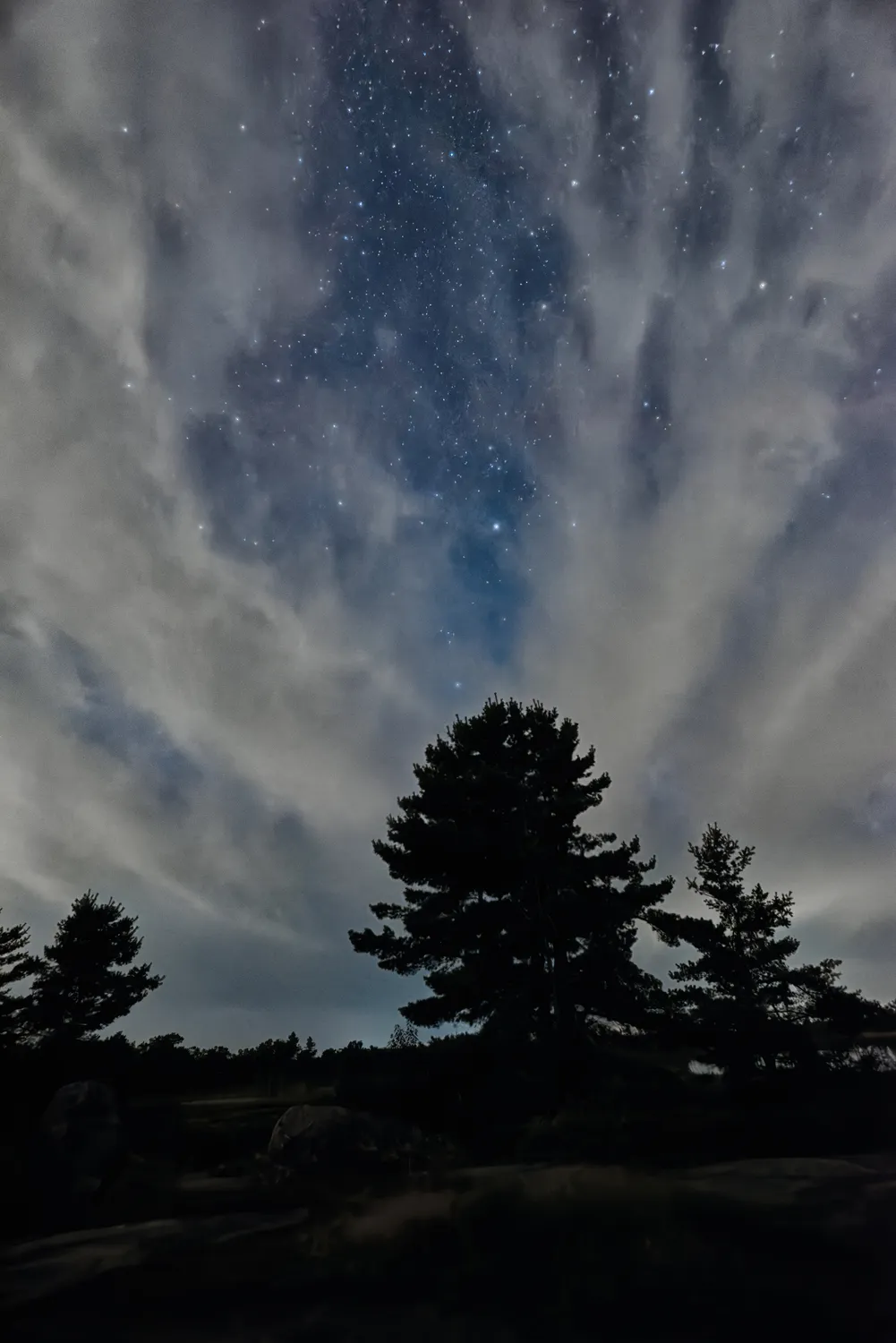
Torrance Barrens Dark-Sky Preserve, Ontario - 54740211686

Torrance Barrens Dark-Sky Preserve, Ontario - Image by Mustang Joe / Wikimedia Commons.

Dark sky preserves are protected areas where artificial light is strictly limited. These special places allow people to see thousands of stars overhead. In most cities and towns, light pollution from streetlights, buildings, and cars makes it difficult to see stars. Scientists explain that this excess light scatters in the atmosphere and creates a glow that blocks our view of the night sky. Dark sky preserves solve this problem by controlling outdoor lighting within their boundaries.

The International Dark-Sky Association certifies dark sky preserves around the world. This organization evaluates locations based on sky darkness and lighting policies. Evidence shows that certified preserves must meet strict standards for outdoor lighting. Communities near these areas agree to use special fixtures that direct light downward instead of upward. They also limit the brightness and color of lights to reduce their impact on the night sky. These efforts help protect the natural darkness that allows clear views of celestial objects like stars, planets, and galaxies.

Places like Death Valley National Park in California, Big Bend National Park in Texas, and Cherry Springs State Park in Pennsylvania draw stargazers and astronomers from around the world. Death Valley offers some of the darkest skies in the United States. Visitors can see the Milky Way stretching across the sky and observe distant galaxies through telescopes. Big Bend's remote location far from major cities provides excellent conditions for astronomical observation. Cherry Springs has become famous among amateur astronomers for its exceptionally dark skies in the eastern United States. Scientists observe that these preserves support important research about stars, planets, and other space objects.

Dark sky preserves matter because they protect our ability to study and appreciate the universe. Astronomers need dark skies to observe faint objects and collect accurate data. Light pollution can interfere with telescopes and make certain observations impossible. These preserves also help people understand Earth's place in the solar system and beyond. When humans can see thousands of stars instead of just a few dozen, they gain a better sense of the vast universe around them. Protecting dark skies also benefits nocturnal animals that depend on natural darkness for hunting, navigation, and reproduction.

Interesting Fact: The International Dark-Sky Association has certified dark sky preserves on every continent except Antarctica. Some preserves are so dark that visitors need time for their eyes to adjust before they can see well enough to walk safely at night.

Comprehension quiz (10 questions)

1. What are dark sky preserves?

Areas where all outdoor lights are completely banned
Protected areas where artificial light is strictly limited
Places where only astronomers are allowed to visit
National parks that are open only at night

2. According to the passage, what causes light pollution?

Natural moonlight reflecting off clouds
Stars that are too bright in the night sky
Excess artificial light from streetlights, buildings, and cars
Telescopes used by astronomers

3. What does the term 'celestial objects' mean in the passage?

Outdoor lighting fixtures used in dark sky preserves
Natural objects in space such as stars, planets, and galaxies
Tools that astronomers use to study the sky
Animals that are active during the night

4. Which organization certifies dark sky preserves around the world?

National Park Service
International Space Station
International Dark-Sky Association
World Wildlife Fund

5. Why do communities near dark sky preserves use special light fixtures?

To make the lights brighter for safety
To direct light downward instead of upward into the sky
To change the color of streetlights to blue
To turn off all lights automatically at sunset

6. Based on the passage, why is Death Valley mentioned as an example?

It has the most telescopes in the United States
It is the largest national park in America
It offers some of the darkest skies in the United States
It was the first dark sky preserve ever created

7. How does light pollution affect astronomical observations?

It helps astronomers see more clearly
It can interfere with telescopes and make certain observations impossible
It has no effect on scientific research
It only affects observations during the daytime

8. What can visitors see at dark sky preserves that they cannot see in most cities?

The sun setting in the west
Thousands of stars and the Milky Way galaxy
Artificial satellites orbiting Earth
The moon during its different phases

9. Dark sky preserves have been certified on every continent except Antarctica.

True
False

10. Light pollution only affects human activities and has no impact on wildlife.

True
False
Who it's for

Perfect for the way you teach

Teachers
  • Build comprehension skills
  • Auto-graded quiz
  • Differentiated reading
Parents
  • Read together at home
  • Improve fluency
  • Quiet reading time
Homeschoolers
  • Reading curriculum support
  • Independent practice
  • Track Lexile growth
Topics

Reviews & Ratings

No reviews yet. Be the first to share your experience!

More reading you might love

20 more
Passage
What is Solar Radiation - reading educational content
Grades 3–7

What is Solar Radiation

science · MS-ESS1-1

Free
Passage
How Incoming Solar Radiation Changes with Latitude - reading educational content
Grades 3–7

How Incoming Solar Radiation Changes with Latitude

science · MS-ESS1-1

$1.50
Passage
Tides and Tidal Forces - reading educational content
Grades 5–8

Tides and Tidal Forces

science · MS-ESS1-1

$1.50
Passage
The Night Sky - reading educational content
Grades 5–8

The Night Sky

earth science · MS-ESS1-1

$1.50
Passage
Ancient Astronomy - reading educational content
Grades 5–8

Ancient Astronomy

earth science · MS-ESS1-1

$1.50
Passage
Tools of Modern Astronomy - reading educational content
Grades 5–8

Tools of Modern Astronomy

earth science · MS-ESS1-1

$1.50
Passage
How Astronomy Became a Science - reading educational content
Grades 5–8

How Astronomy Became a Science

earth science · MS-ESS1-1

$1.50
Passage
Earth's Rotation - reading educational content
Grades 5–8

Earth's Rotation

science · MS-ESS1-1

$1.50
Passage
Earth's Revolution - reading educational content
Grades 5–8

Earth's Revolution

science · MS-ESS1-1

$1.50
Passage
Why We Have Seasons - reading educational content
Grades 5–8

Why We Have Seasons

science · MS-ESS1-1

$1.50
Passage
Earth's Seasons - reading educational content
Grades 5–8

Earth's Seasons

science · MS-ESS1-1

$1.50
Passage
The Moon's Characteristics - reading educational content
Grades 5–8

The Moon's Characteristics

science · MS-ESS1-1

$1.50
Passage
The Sun's Characteristics - reading educational content
Grades 5–8

The Sun's Characteristics

science · MS-ESS1-1

$1.50
Passage
What Is a Galaxy? - reading educational content
Grades 5–8

What Is a Galaxy?

earth science · MS-ESS1-1

$1.50
Passage
The Milky Way: Our Home Galaxy - reading educational content
Grades 5–8

The Milky Way: Our Home Galaxy

earth science · MS-ESS1-1

$1.50
Passage
Types of Galaxies - reading educational content
Grades 5–8

Types of Galaxies

earth science · MS-ESS1-1

$1.50
Passage
The Expanding Universe - reading educational content
Grades 5–8

The Expanding Universe

earth science · MS-ESS1-1

$1.50
Passage
The Big Bang - reading educational content
Grades 5–8

The Big Bang

earth science · MS-ESS1-1

$1.50
Passage
Dark Matter and Dark Energy - reading educational content
Grades 5–8

Dark Matter and Dark Energy

earth science · MS-ESS1-1

$1.50
Passage
How Do Stars Die - reading educational content
Grades 5–8

How Do Stars Die

science · MS-ESS1-1

$1.50
Copyright © 2026 Workybooks. Made with ♥ in California.