Reading PassagePremium

What Are Estuaries

Interactive passage with audio narration, comprehension questions, and printable PDF.

No ratings yet
Grades 5–8ScienceElaEnglish · SpanishInteractive · Printable
Aligned toMS-LS2-1
Just this resource
$1.50
One-time purchase
Best value
Unlock everything
$49.99$29.99/yr
40% off until Aug 1 — 10,000+ resources
Renews at $49.99/year.
Unlock above to use these actions

What's included

Reading passage
Audio narration
Comprehension quiz
Writing activity
Glossary & flashcards
Differentiated version
Spanish translation

What Are Estuaries preview and details

About this printable What Are Estuaries science reading passage, NGSS-aligned (Grades 5-8)

This engaging middle school science passage explores estuaries—areas where freshwater from rivers and streams meets saltwater from the ocean. Students learn about the unique properties of brackish water, salinity gradients, and the crucial ecological roles estuaries play. The passage explains why estuaries are some of the most productive ecosystems on Earth, providing nursery habitats for fish and shellfish. Examples such as Chesapeake Bay and San Francisco Bay illustrate these concepts in real-world contexts. With a focus on systems thinking and cause-effect relationships, the passage aligns with NGSS standard MS-LS2-1 and supports the development of scientific literacy. The resource includes a glossary, Spanish translation, differentiated version, multiple-choice and writing activities, and graphic organizers, with audio integration for accessibility. This comprehensive package helps students build vocabulary and deepen understanding of ecosystem interactions.
Written by Workybooks TeamPublished by Workybooks
Preview

Sample passage and quiz from What Are Estuaries

Reading passage and comprehension quiz preview

Estuary Biomes
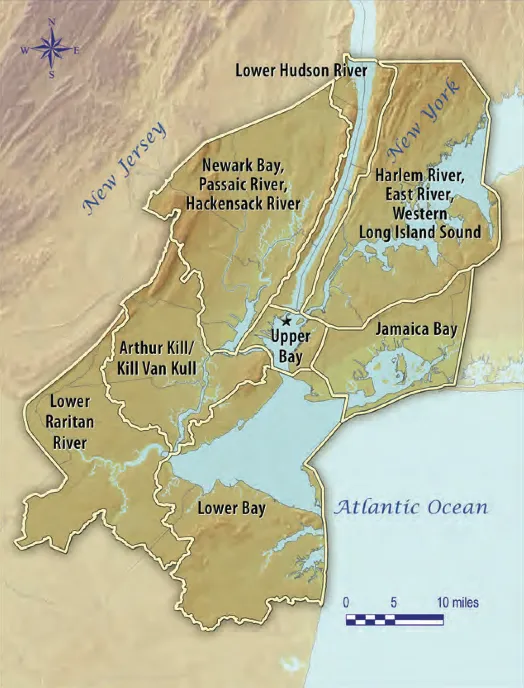
Hudson-Raritan Estuary USACEregionsmap
Hudson-Raritan Estuary (NY-NY Harbor Estuary) restoration studies map United States Army Corps of Engineers. Image by USACE/ Wikimedia Commons (Public domain).

Estuaries are among the most dynamic and vital environments on Earth. These areas form along coastlines where rivers carrying freshwater flow into the ocean's saltwater. This meeting of waters creates unique conditions not found in pure river or ocean habitats. Scientists study estuaries to understand how different types of water interact and support high levels of life. Estuaries are important because they serve as bridges between land and sea, shaping coastal ecosystems and supporting human communities.

Brackish Water and Salinity Gradients
What makes estuaries special is the brackish water—a term for water that is saltier than river water but not as salty as the ocean. The mixture of freshwater and saltwater creates a salinity gradient, which means the amount of salt changes from one part of the estuary to another. For example, salinity near a river’s mouth might be as low as 0.5 parts per thousand, while closer to the sea, it can reach 30 parts per thousand. This gradient supports a wide range of plants and animals, each adapted to specific salinity levels. Scientists measure these changes using sensors and water samples, helping us understand how life survives in shifting conditions.

High Productivity and Nutrient Input
Estuaries are some of the most productive ecosystems on the planet. Rivers bring in nutrients like nitrogen and phosphorus, which act as fertilizers for aquatic plants and algae. These nutrients fuel rapid growth, supporting large populations of small animals such as shrimp and crabs. The abundance of food attracts larger animals, creating a complex food web. Studies show that a single square meter of estuary can produce more plant matter each year than a similar area of farmland or forest. The movement of tides also helps mix nutrients, making them available to more organisms.

Nursery Grounds and Real-World Examples
Estuaries provide essential nursery grounds for many species of fish and shellfish. The sheltered waters, abundant food, and changing salinity make estuaries ideal places for young animals to grow before moving into the open sea. For example, the Chesapeake Bay in the United States supports blue crabs, oysters, and striped bass. On the West Coast, the San Francisco Bay acts as a nursery for salmon and Dungeness crab. Research shows that up to 75% of commercial fish species in the U.S. spend part of their life cycle in estuaries, highlighting their economic and ecological importance.

Connecting Estuaries to Larger Ecosystems
Estuaries link land, rivers, and oceans, making them crucial for broader ecosystem health. They filter pollutants, protect coastlines from storms, and store carbon, which helps regulate the climate. However, estuaries are sensitive to pollution, overfishing, and habitat loss. Scientists use monitoring and restoration projects to help maintain estuary health. Understanding estuaries teaches us about the interconnectedness of Earth's systems and the need to protect these valuable environments for future generations.

Interesting Fact:
Some of the world’s largest cities, including New York, London, and Shanghai, developed near estuaries because of their rich resources and easy access to both land and sea.

Comprehension quiz (10 questions)

1. What is an estuary?

A place where freshwater and saltwater mix.
A deep part of the ocean.
A river that flows into a lake.
A forest near the coast.

2. Why do estuaries have brackish water?

Because only saltwater is present.
Because freshwater and saltwater mix.
Because rivers bring sand.
Because the water is always fresh.

3. What does the term 'salinity gradient' mean in the passage?

A way to measure water temperature.
A change in salt levels in water from one area to another.
A type of shellfish.
A river that flows very fast.

4. Which word in the passage means 'a system of interconnected food chains'?

Estuary
Nursery grounds
Food web
Ecosystem

5. What is one reason estuaries are highly productive?

They receive many nutrients from rivers.
They are always cold.
They have only saltwater.
They have no animal life.

6. Why are estuaries important for young fish and shellfish?

They provide safe nursery grounds and food.
They are very deep and dark.
They have no plants.
They only have freshwater.

7. According to the passage, up to what percent of commercial fish species in the U.S. spend part of their lives in estuaries?

25%
50%
75%
100%

8. True or False: Estuaries help protect coastlines from storms.

True
False

9. True or False: Only plants can live in estuaries due to the changing salinity.

True
False

10. If pollution in rivers increases, how might this affect estuaries?

It could harm the plants and animals that live there.
It will have no effect.
It will make estuaries bigger.
Estuaries will become freshwater only.
Who it's for

Perfect for the way you teach

Teachers
  • Build comprehension skills
  • Auto-graded quiz
  • Differentiated reading
Parents
  • Read together at home
  • Improve fluency
  • Quiet reading time
Homeschoolers
  • Reading curriculum support
  • Independent practice
  • Track Lexile growth
Topics

Reviews & Ratings

No reviews yet. Be the first to share your experience!

More reading you might love

20 more
Passage
The Leafy Sea Dragon: Nature's Living Seaweed - reading educational content
Grades 5–8

The Leafy Sea Dragon: Nature's Living Seaweed

science · MS-LS2-1

Free
Passage
The Narwhal: Arctic’s Unicorn of the Sea - reading educational content
Grades 5–8

The Narwhal: Arctic’s Unicorn of the Sea

science · MS-LS2-1

Free
Passage
The Blue-Ringed Octopus - reading educational content
Grades 5–8

The Blue-Ringed Octopus

science · MS-LS2-1

Free
Passage
Tardigrades: Microscopic Superheroes - reading educational content
Grades 5–8

Tardigrades: Microscopic Superheroes

science · MS-LS2-1

Free
Passage
What Do Axolotls Eat? - reading educational content
Grades 3–8

What Do Axolotls Eat?

science · MS-LS2-1

$1.50
Passage
Where Do Axolotls Live? - reading educational content
Grades 3–8

Where Do Axolotls Live?

science · MS-LS4-D

$1.50
Passage
The Blobfish - reading educational content
Grades 3–8

The Blobfish

science · MS-LS4-D

$1.50
Passage
What Do Blobfish Eat? - reading educational content
Grades 3–8

What Do Blobfish Eat?

science · MS-LS2-1

$1.50
Passage
Where Do Penguins Live?  - reading educational content
Grades 3–8

Where Do Penguins Live?

science · MS-LS2-1

$1.50
Passage
The Emperor Penguin - reading educational content
Grades 3–8

The Emperor Penguin

science · MS-LS2-1

$1.50
Passage
The Adélie Penguin - reading educational content
Grades 3–8

The Adélie Penguin

science · MS-LS2-1

$1.50
Passage
How Does Global Warming Affect Adélie Penguins? - reading educational content
Grades 3–8

How Does Global Warming Affect Adélie Penguins?

science · MS-LS2-1

$1.50
Passage
Desert Birds - reading educational content
Grades 5–8

Desert Birds

science · MS-LS2-1

$1.50
Passage
Abiotic Factors in Ecosystems - reading educational content
Grades 5–8

Abiotic Factors in Ecosystems

life science · MS-LS2-1

$1.50
Passage
Biomes: Terrestrial Ecosystems - reading educational content
Grades 5–8

Biomes: Terrestrial Ecosystems

life science · MS-LS2-1

$1.50
Passage
Biomes: Aquatic Ecosystems - reading educational content
Grades 5–8

Biomes: Aquatic Ecosystems

life science · MS-LS2-1

$1.50
Passage
Galápagos Islands - reading educational content
Grades 5–8

Galápagos Islands

weather and climate · MS-LS2-1

$1.50
Passage
Florida Everglades - reading educational content
Grades 5–8

Florida Everglades

weather and climate · MS-LS2-1

$1.50
Passage
Great Barrier Reef - reading educational content
Grades 5–8

Great Barrier Reef

weather and climate · MS-LS2-1

$1.50
Passage
Intertidal Zone - reading educational content
Grades 5–8

Intertidal Zone

weather and climate · MS-LS2-1

$1.50
Copyright © 2026 Workybooks. Made with ♥ in California.