What Is a Lunar Eclipse
Interactive passage with audio narration, comprehension questions, and printable PDF.
By completing this purchase you agree to our Terms of Use and Privacy Policy. Your subscription renews automatically until you cancel. You can cancel anytime from your account settings. All sales are final and non-refundable. Digital content is available for download in your account immediately upon purchase.
What's included
What Is a Lunar Eclipse preview and details
About this printable What Is a Lunar Eclipse science reading passage, NGSS-aligned (Grades 5-8)
Sample passage and quiz from What Is a Lunar Eclipse
Reading passage and comprehension quiz preview
What Is a Lunar Eclipse
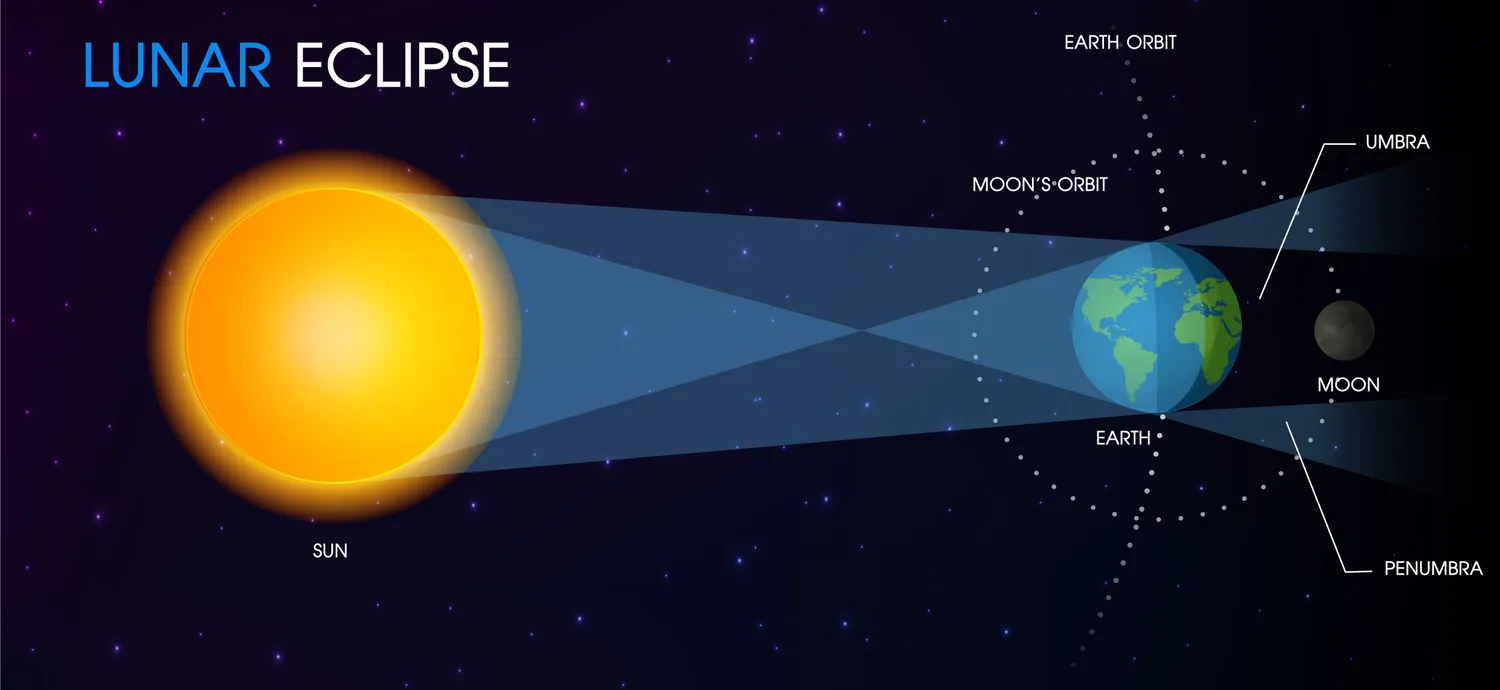
A lunar eclipse is an event that happens when Earth moves directly between the Sun and the Moon. During this alignment, Earth blocks sunlight from reaching the Moon. Earth's shadow falls on the Moon's surface, causing the Moon to darken temporarily. This celestial event creates a stunning sight visible from anywhere on Earth's night side.
Lunar eclipses can only occur during a full moon phase. Scientists explain that this is because the Moon must be on the opposite side of Earth from the Sun. When the three bodies align in space, Earth casts a shadow into space behind it. The Moon passes through this shadow as it orbits Earth. Earth's shadow has two parts: the darker inner shadow called the umbra and the lighter outer shadow called the penumbra. When the Moon enters the umbra, observers see the Moon turn dark red or orange.
The reddish color during a total lunar eclipse happens because Earth's atmosphere bends some sunlight around our planet. This bent light filters through Earth's atmosphere, removing blue wavelengths and allowing red light to reach the Moon. Evidence shows that lunar eclipses can last several hours from start to finish. The Moon moves slowly through Earth's shadow, taking time to pass through each region. A total lunar eclipse, when the Moon is completely in the umbra, can last over an hour.
Unlike solar eclipses, lunar eclipses are safe to watch without special glasses or equipment. Anyone on the night side of Earth can observe the entire event. On January 31, 2018, observers across North America witnessed a total lunar eclipse that lasted 77 minutes. Scientists use lunar eclipses to study Earth's atmosphere and the Moon's surface properties. These events also helped early astronomers understand that Earth is round, as they observed Earth's curved shadow on the Moon.
Understanding lunar eclipses matters because they demonstrate how objects in our solar system interact. These events show the predictable motion of Earth and the Moon. They remind us that we live on a planet moving through space. Lunar eclipses connect us to the larger solar system and help scientists test their models of planetary motion.
Interesting Fact: Ancient cultures often feared lunar eclipses and created myths to explain them. The ancient Mesopotamians kept detailed records of lunar eclipses over 4,000 years ago, helping them predict future events.
Comprehension quiz (10 questions)
1. What causes a lunar eclipse to occur?
2. During which Moon phase can a lunar eclipse occur?
3. What is the umbra?
4. Why does the Moon appear red or orange during a total lunar eclipse?
5. How long can a total lunar eclipse last?
6. What is one difference between lunar and solar eclipses mentioned in the passage?
7. How did early astronomers use lunar eclipses to learn about Earth?
8. Based on the passage, why can anyone on Earth's night side see a lunar eclipse?
9. True or False: Lunar eclipses can happen during any phase of the Moon.
10. True or False: The penumbra is the darkest part of Earth's shadow.
Perfect for the way you teach
- Build comprehension skills
- Auto-graded quiz
- Differentiated reading
- Read together at home
- Improve fluency
- Quiet reading time
- Reading curriculum support
- Independent practice
- Track Lexile growth