What is an Anticyclone?
Interactive passage with audio narration, comprehension questions, and printable PDF.
By completing this purchase you agree to our Terms of Use and Privacy Policy. Your subscription renews automatically until you cancel. You can cancel anytime from your account settings. All sales are final and non-refundable. Digital content is available for download in your account immediately upon purchase.
What's included
What is an Anticyclone? preview and details
About this printable What is an Anticyclone? science reading passage, NGSS-aligned (Grade 6)
Sample passage and quiz from What is an Anticyclone?
Reading passage and comprehension quiz preview
What is an Anticyclone?
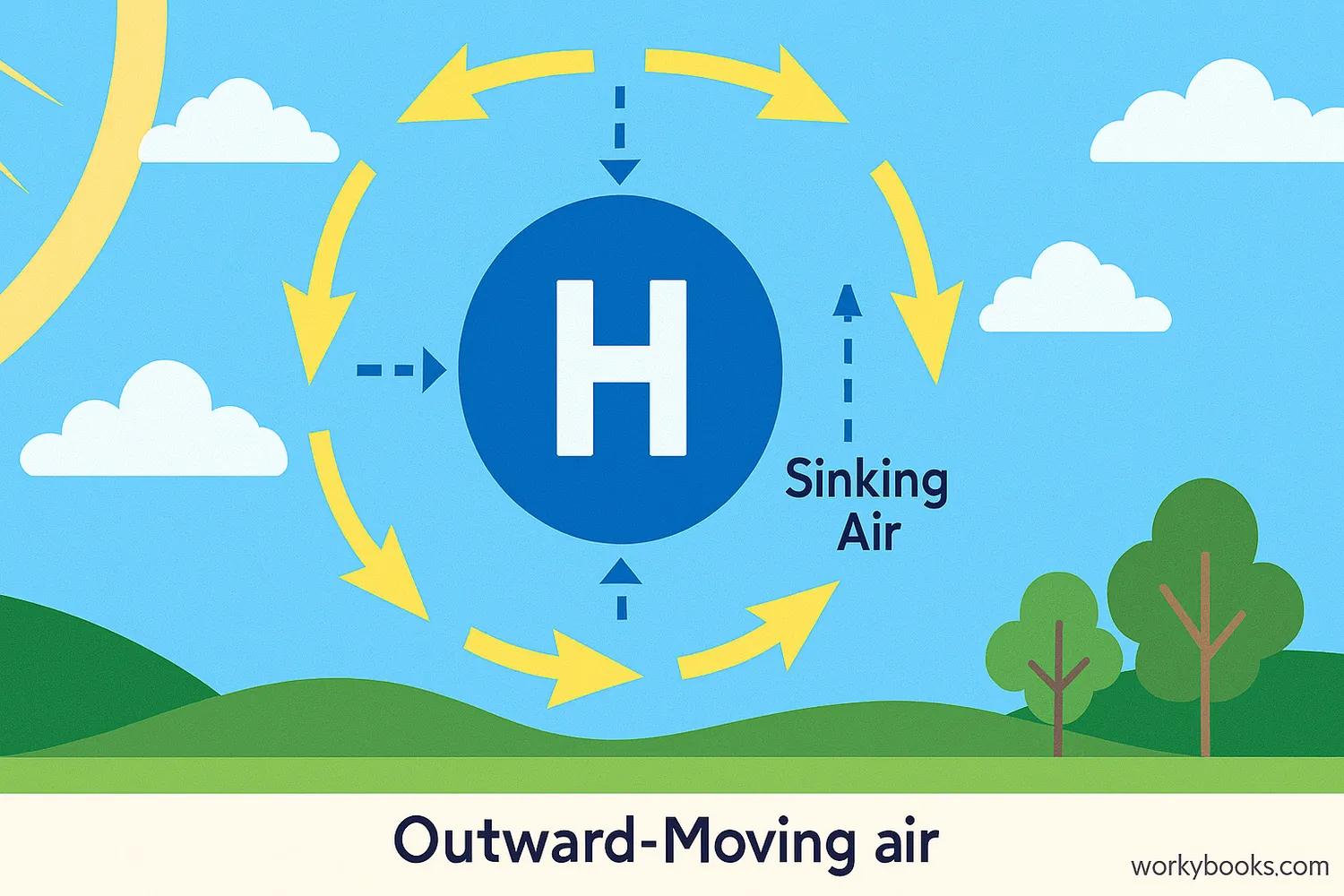
Have you ever wondered why some days are sunny and calm, while others are stormy? A big part of the answer lies in understanding anticyclones. An anticyclone is a weather system that brings clear, stable weather. It's often called a "high-pressure system" because of the way air moves within it.
Imagine a huge column of air in the atmosphere. In an anticyclone, air from high up in the atmosphere sinks down towards the Earth's surface. As this air sinks, it warms up and becomes drier. This sinking motion prevents clouds from forming, which is why anticyclones are usually associated with bright, sunny skies and light winds. Because the air is sinking, it pushes down on the Earth's surface with more force, creating higher atmospheric pressure.
On a weather map, you'll often see an anticyclone marked with a large 'H', indicating high pressure. The air in an anticyclone doesn't just sink; it also spreads outwards once it reaches the ground. In the Northern Hemisphere, this outward-moving air rotates clockwise due to the Coriolis effect, a force caused by Earth's rotation. In the Southern Hemisphere, it rotates counter-clockwise. This gentle outward flow of air is why winds are typically light and calm around an anticyclone.
Anticyclones are important for understanding weather conditions. When an anticyclone is in control, we can expect a period of settled weather. This means fewer clouds, little to no rain, and generally pleasant temperatures. They are the opposite of low-pressure systems, also known as cyclones, which typically bring cloudy, rainy, and stormy weather.
The interaction between different air masses – large bodies of air with similar temperature and humidity – and these pressure systems is what causes our daily weather changes. So, next time you see a clear, sunny day, you'll know that an anticyclone is likely overhead, creating those ideal conditions! Understanding anticyclones helps us predict and explain various weather phenomena, making meteorology a fascinating science.
Interesting Fact: The largest anticyclones can cover millions of square miles, bringing stable weather across entire continents for days or even weeks!
Comprehension quiz (10 questions)
1. What type of weather does an anticyclone typically bring?
2. What symbol marks an anticyclone on a weather map?
3. Why do clouds usually not form in an anticyclone?
4. In the Northern Hemisphere, which way does air rotate in an anticyclone?
5. What causes the Coriolis effect?
6. Anticyclones are the opposite of low-pressure systems.
7. What is another name for a low-pressure system?
8. If an anticyclone brings sunny days, what type of weather would you expect from a low-pressure system?
9. How might an anticyclone affect a farmer's work?
10. What does 'atmospheric pressure' refer to?
Perfect for the way you teach
- Build comprehension skills
- Auto-graded quiz
- Differentiated reading
- Read together at home
- Improve fluency
- Quiet reading time
- Reading curriculum support
- Independent practice
- Track Lexile growth