What Is Basalt
Interactive passage with audio narration, comprehension questions, and printable PDF.
By completing this purchase you agree to our Terms of Use and Privacy Policy. Your subscription renews automatically until you cancel. You can cancel anytime from your account settings. All sales are final and non-refundable. Digital content is available for download in your account immediately upon purchase.
What's included
What Is Basalt preview and details
About this printable What Is Basalt science reading passage, NGSS-aligned (Grades 5-8)
Sample passage and quiz from What Is Basalt
Reading passage and comprehension quiz preview
What Is Basalt
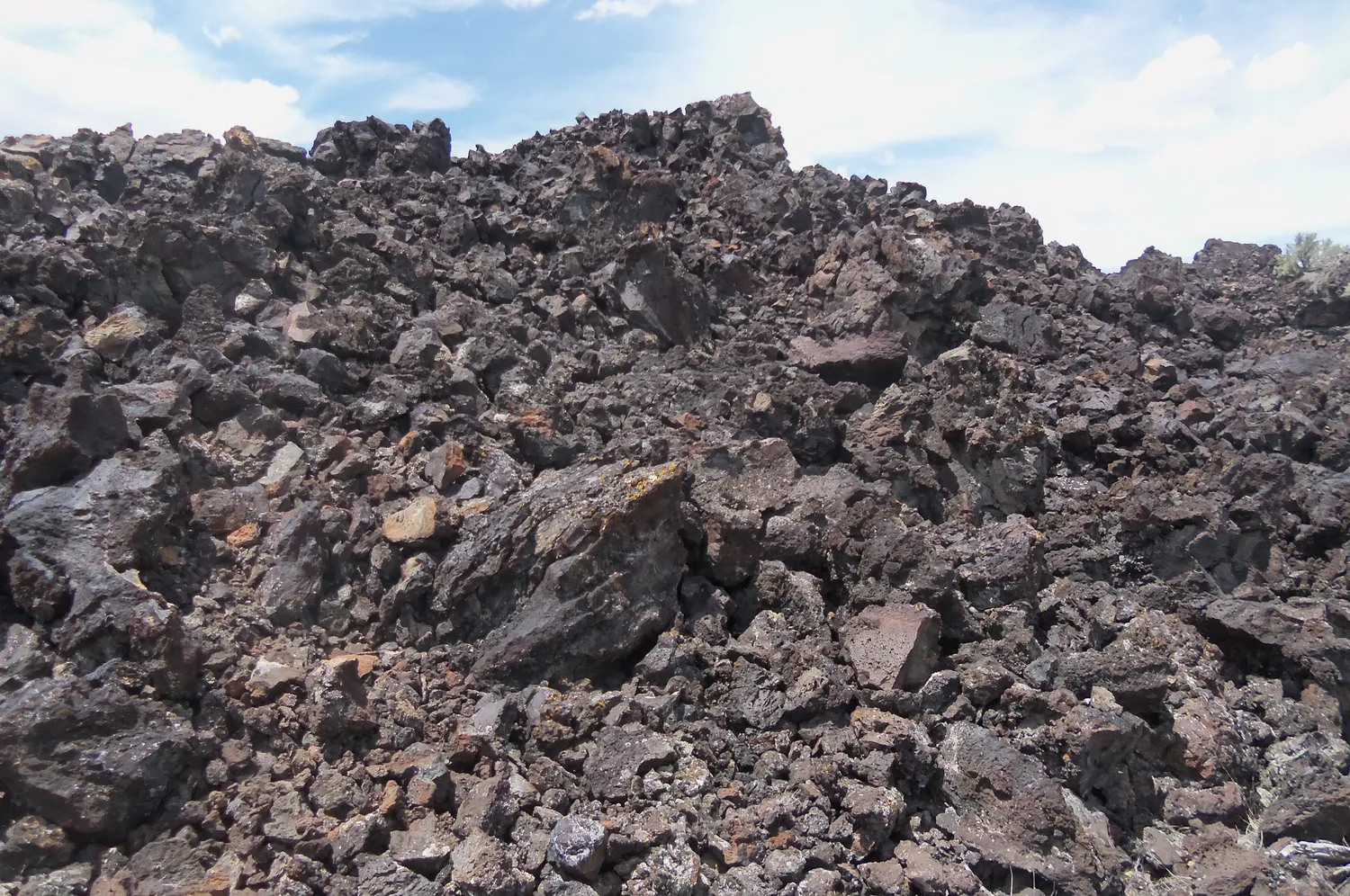
Basalt of the Ice Springs Volcanics, Utah / Wikimedia Commons
Basalt is the most common rock on Earth's surface. This dark igneous rock forms when lava erupts from volcanoes and cools quickly at the surface. Scientists explain that rapid cooling prevents large crystals from growing. The result is a smooth, fine-grained texture with crystals too tiny to see without a microscope.
Basalt is rich in iron and magnesium, making it a mafic rock. These elements give basalt its characteristic dark color, usually black or dark gray. Evidence shows that basalt's chemical composition differs greatly from lighter rocks like granite. While granite is felsic and rich in silica, basalt contains less silica and more dense minerals. This difference affects not only color but also density and melting temperature.
The formation process of basalt contrasts sharply with granite's formation. Granite forms when magma cools slowly deep underground, allowing large crystals to develop. Basalt, however, cools in minutes to days at the surface. Both rocks belong to the igneous family, but their cooling rates and locations create opposite characteristics. Fast surface cooling produces basalt's fine grains, while slow underground cooling creates granite's coarse, visible crystals.
Basalt covers the entire ocean floor, making it one of Earth's most abundant rocks. When tectonic plates pull apart at mid-ocean ridges, magma rises and solidifies into new basalt. Volcanic islands like Hawaii are built entirely from basalt flows. Even the dark patches visible on the Moon are ancient basalt flows from billions of years ago. Scientists observe that basalt can form thick layers through repeated eruptions over time.
Understanding basalt helps scientists explain Earth's surface processes and plate tectonics. Basalt formation at ocean ridges drives seafloor spreading and continental drift. The rock's properties also affect soil formation and landscape development in volcanic regions. Comparing basalt to granite reinforces key concepts about igneous rocks: cooling rate determines texture, and chemical composition determines color and density.
Interesting Fact: Some basalt formations cool so quickly that they form unique six-sided columns, like the famous Giant's Causeway in Northern Ireland. These geometric pillars form when lava contracts evenly as it cools.
Comprehension quiz (10 questions)
1. What is basalt?
2. Why does basalt have a fine-grained texture?
3. What does the term 'mafic' mean when describing basalt?
4. How does basalt formation differ from granite formation?
5. According to the passage, where is basalt commonly found?
6. What process creates new basalt at mid-ocean ridges?
7. Why is understanding basalt important for studying Earth's processes?
8. What causes the six-sided columns in some basalt formations?
9. Basalt and granite are both igneous rocks.
10. Basalt is lighter in color than granite because it contains more silica.
Perfect for the way you teach
- Build comprehension skills
- Auto-graded quiz
- Differentiated reading
- Read together at home
- Improve fluency
- Quiet reading time
- Reading curriculum support
- Independent practice
- Track Lexile growth