What Is Granite
Interactive passage with audio narration, comprehension questions, and printable PDF.
By completing this purchase you agree to our Terms of Use and Privacy Policy. Your subscription renews automatically until you cancel. You can cancel anytime from your account settings. All sales are final and non-refundable. Digital content is available for download in your account immediately upon purchase.
What's included
What Is Granite preview and details
About this printable What Is Granite science reading passage, NGSS-aligned (Grades 5-8)
Sample passage and quiz from What Is Granite
Reading passage and comprehension quiz preview
What Is Granite?
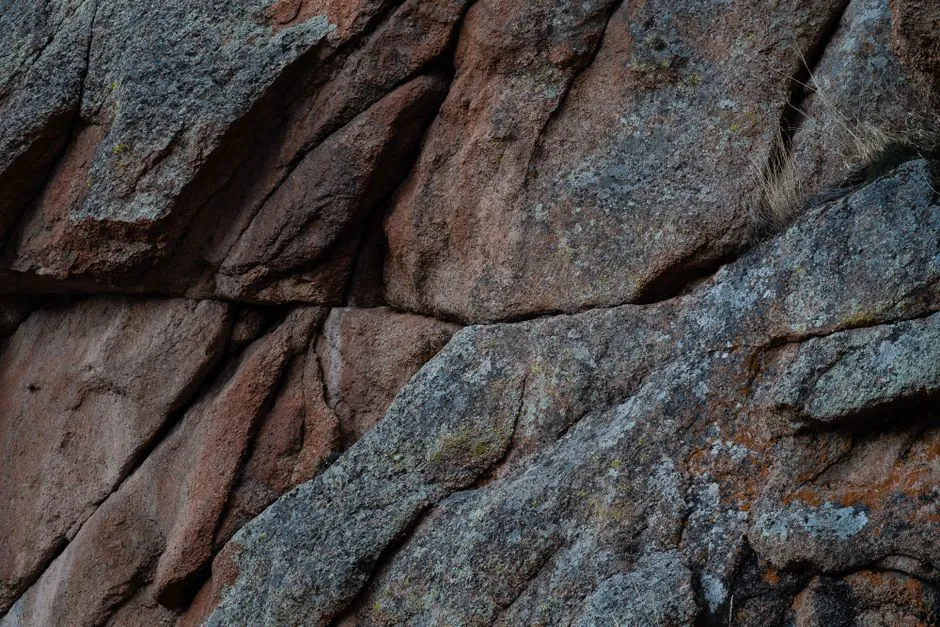
"Detailed view of a rugged granite rock surface showing textures and patterns." by Marina Leonova / Pexels.
Granite is an intrusive igneous rock that forms deep beneath Earth's surface. It develops when magma cools slowly underground, giving mineral crystals plenty of time to grow large and visible. Scientists explain that this slow cooling process can take thousands or even millions of years. The result is a hard, speckled rock that students can examine closely to see individual mineral grains.
Looking at a piece of granite, observers can identify three main minerals. Glassy gray quartz appears as clear or smoky grains. Pink or white feldspar makes up much of the rock's volume. Dark flecks of mica add black or brown spots throughout. These minerals interlock tightly because they all crystallized together from the cooling magma. Evidence shows that feldspar and quartz dominate granite's composition. Because both minerals are light-colored, granite is classified as a felsic rock. This classification explains why granite typically appears pale with a speckled pattern rather than dark and uniform.
Granite plays an important role in Earth's structure. It makes up much of the continental crust and forms the cores of major mountain ranges. Scientists observe granite in places like Yosemite National Park, where massive granite formations tower thousands of feet high. The rock's durability means it can resist weathering for millions of years. This hardness also makes granite valuable for human use. Builders choose granite for countertops, monuments, and building facades because it can withstand heavy use and harsh weather.
Understanding granite helps scientists explain how continents form and change over time. The rock's mineral composition provides clues about the conditions deep underground where it formed. Granite's presence in mountain ranges shows where ancient magma chambers once existed. Students who recognize granite in everyday settings connect classroom learning to the real world around them.
Interesting Fact: Some granite formations are over 2.5 billion years old, making them among the oldest rocks on Earth's surface.
Comprehension quiz (10 questions)
1. What type of rock is granite?
2. Where does granite form?
3. What does the term 'felsic rock' mean in the passage?
4. Which mineral in granite appears as dark flecks?
5. Why do granite crystals grow large and visible?
6. Based on the passage, what can scientists infer from granite found in mountain ranges?
7. Why is granite valuable for building materials?
8. If a student found a rock with large, visible crystals, what could they conclude about how it formed?
9. True or False: Granite is classified as a felsic rock because it contains mostly dark-colored minerals.
10. True or False: Some granite formations are over 2.5 billion years old.
Perfect for the way you teach
- Build comprehension skills
- Auto-graded quiz
- Differentiated reading
- Read together at home
- Improve fluency
- Quiet reading time
- Reading curriculum support
- Independent practice
- Track Lexile growth