What Is The Difference Between Stratosphere And Troposphere?
Interactive passage with audio narration, comprehension questions, and printable PDF.
By completing this purchase you agree to our Terms of Use and Privacy Policy. Your subscription renews automatically until you cancel. You can cancel anytime from your account settings. All sales are final and non-refundable. Digital content is available for download in your account immediately upon purchase.
What's included
What Is The Difference Between Stratosphere And Troposphere? preview and details
About this printable What Is The Difference Between Stratosphere And Troposphere? science reading passage, NGSS-aligned (Grade 6)
Sample passage and quiz from What Is The Difference Between Stratosphere And Troposphere?
Reading passage and comprehension quiz preview
What Is The Difference Between Stratosphere And Troposphere?
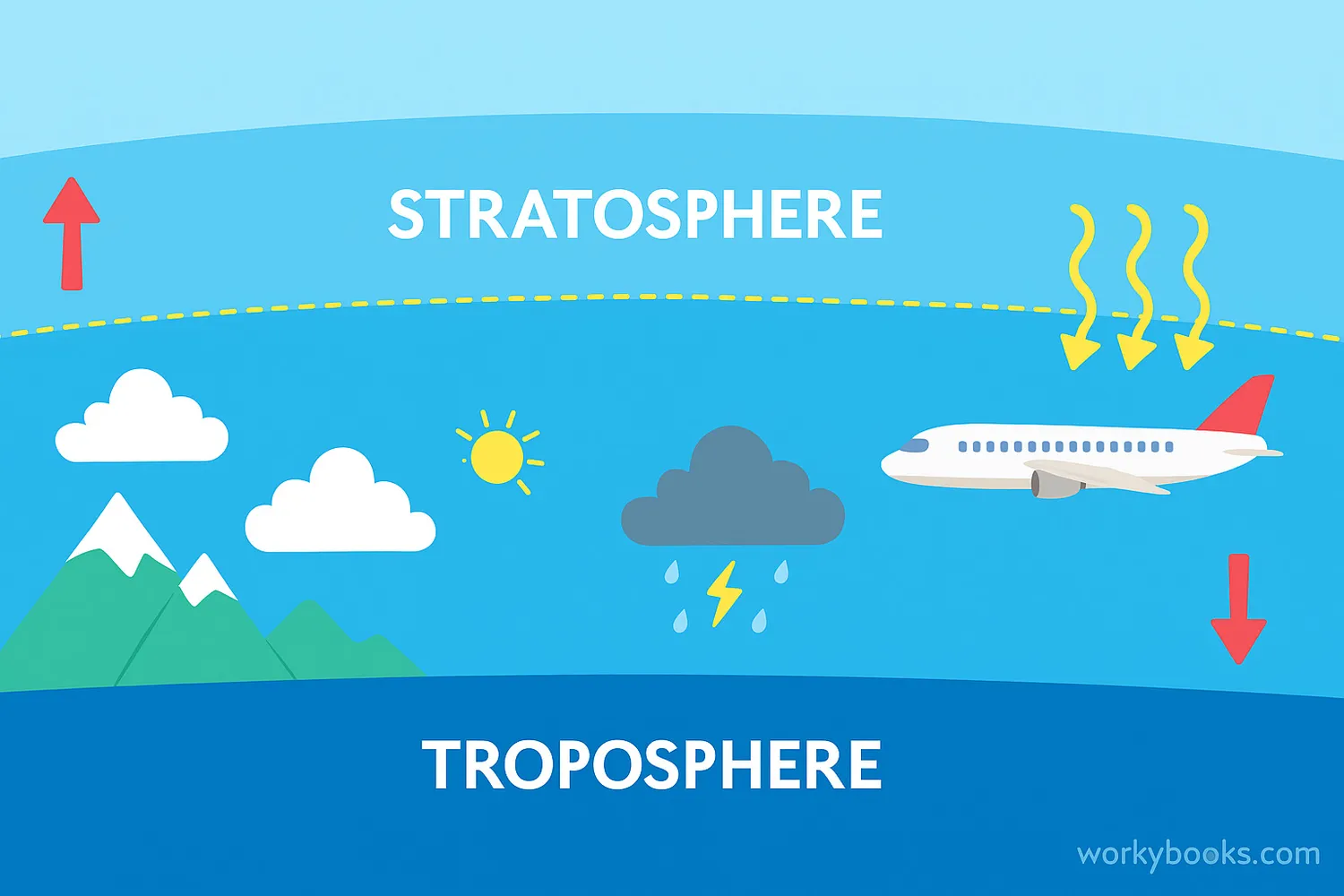
Our Earth is surrounded by a blanket of air called the atmosphere. This atmosphere is made up of several layers, each with its own unique features. Two of the most important layers are the troposphere and the stratosphere. Understanding these layers helps us learn about weather and climate, which is part of studying Earth's systems.
The troposphere is the lowest layer of Earth's atmosphere, and it's where we live! It extends from the ground up to about 8 to 15 kilometers (5 to 9 miles) high. This is where almost all of Earth's weather happens, from sunny days to thunderstorms and snow. The air in the troposphere is constantly moving, creating air masses that interact and cause changes in weather conditions. As you go higher in the troposphere, the temperature generally gets colder. This is why mountaintops are often chilly, even in summer. The air pressure also decreases as you go higher.
Above the troposphere is the stratosphere. This layer extends from the top of the troposphere up to about 50 kilometers (31 miles) high. Unlike the troposphere, the temperature in the stratosphere actually gets warmer as you go higher. This is because the stratosphere contains the ozone layer. The ozone layer is like Earth's natural sunscreen; it absorbs harmful ultraviolet (UV) radiation from the sun, protecting living things on the planet. This absorption of UV light is what causes the temperature to increase in the stratosphere. Most commercial airplanes fly in the lower part of the stratosphere to avoid the turbulence and weather disturbances found in the troposphere.
So, the main differences are where they are located, how their temperatures change with height, and what important things happen in each. The troposphere is for weather and where we live, getting colder as you go up. The stratosphere is home to the ozone layer and gets warmer with height. Both layers are vital for life on Earth and are important parts of our planet's complex atmospheric system.
Interesting Fact: The boundary between the troposphere and the stratosphere is called the tropopause, and it's where the temperature stops decreasing and starts increasing.
Comprehension quiz (10 questions)
1. Which atmospheric layer is closest to Earth's surface?
2. What layer contains the ozone layer?
3. True or False: Most weather occurs in the stratosphere.
4. What is the main function of the ozone layer?
5. Why does temperature get warmer higher in the stratosphere?
6. In which layer do commercial airplanes typically fly to avoid turbulence?
7. What generally happens to temperature as you go higher in the troposphere?
8. What are 'air masses' primarily responsible for in the troposphere?
9. If a scientist observes a rapid decrease in temperature with increasing altitude, which layer are they most likely studying?
10. Which term describes the blanket of air surrounding Earth?
Perfect for the way you teach
- Build comprehension skills
- Auto-graded quiz
- Differentiated reading
- Read together at home
- Improve fluency
- Quiet reading time
- Reading curriculum support
- Independent practice
- Track Lexile growth