What Is the Polar Vortex
Interactive passage with audio narration, comprehension questions, and printable PDF.
By completing this purchase you agree to our Terms of Use and Privacy Policy. Your subscription renews automatically until you cancel. You can cancel anytime from your account settings. All sales are final and non-refundable. Digital content is available for download in your account immediately upon purchase.
What's included
What Is the Polar Vortex preview and details
About this printable What Is the Polar Vortex science reading passage, NGSS-aligned (Grades 5-8)
Sample passage and quiz from What Is the Polar Vortex
Reading passage and comprehension quiz preview
What Is the Polar Vortex
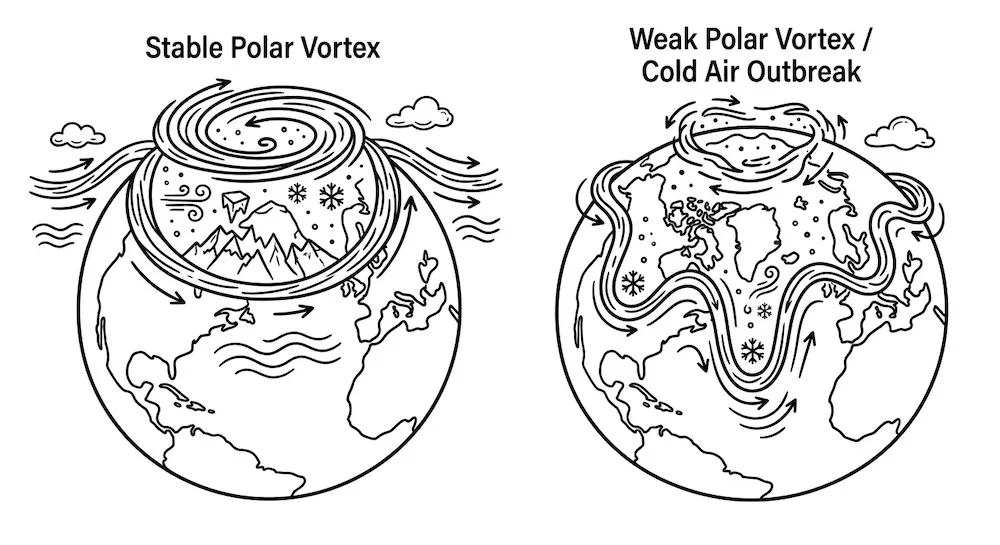
The polar vortex is a large area of cold air that rotates over each of Earth's poles. This rotating air mass stays high in the atmosphere, typically in a layer called the stratosphere. The polar vortex exists all year long, but it becomes stronger during winter months. Scientists explain that the vortex acts like a fence, keeping extremely cold Arctic air trapped near the poles.
The strength of the polar vortex depends on temperature differences between the Arctic and warmer regions to the south. A strong jet stream helps keep the polar vortex tightly packed around the pole. The jet stream is a fast-moving river of air that flows from west to east. When the jet stream remains strong and stable, cold air stays locked in the Arctic. However, when the jet stream weakens or becomes wavy, the polar vortex can stretch and distort. This allows Arctic air to spill southward into areas that normally experience milder temperatures.
Evidence shows that a disrupted polar vortex can cause extreme cold weather events far from the poles. In February 2021, a weakened polar vortex brought Arctic conditions to the Gulf Coast. Texas experienced record-breaking cold temperatures, with some areas dropping below zero degrees Fahrenheit. The state's power grid failed, leaving millions without electricity or heat. This event demonstrated how atmospheric circulation patterns can affect regions thousands of miles away from their origin.
Understanding the polar vortex matters because it helps scientists predict unusual weather patterns. When researchers observe changes in the polar vortex, they can issue warnings about potential cold snaps. Climate scientists also study how warming Arctic temperatures may affect the polar vortex's stability. Some research suggests that a warming Arctic could lead to a weaker, more unstable polar vortex. This might cause more frequent southward movements of cold air, bringing extreme winter weather to populated areas.
Interesting Fact: The polar vortex can reach speeds of over 200 miles per hour during winter, making it one of the fastest wind systems on Earth.
Comprehension quiz (10 questions)
1. What is the polar vortex?
2. When does the polar vortex become stronger?
3. What does the term 'jet stream' mean in this passage?
4. According to the passage, what happens when the jet stream weakens?
5. What real-world event is used as an example of a disrupted polar vortex?
6. Based on the passage, why do scientists study the polar vortex?
7. If a warming Arctic causes a weaker polar vortex, what might happen more frequently?
8. How does atmospheric circulation affect weather patterns according to the passage?
9. The polar vortex exists all year long.
10. The 2021 Texas cold snap was caused by a strengthened polar vortex.
Perfect for the way you teach
- Build comprehension skills
- Auto-graded quiz
- Differentiated reading
- Read together at home
- Improve fluency
- Quiet reading time
- Reading curriculum support
- Independent practice
- Track Lexile growth