Reading PassagePremium

What Is the Sun

Interactive passage with audio narration, comprehension questions, and printable PDF.

No ratings yet
Grades 5–8ScienceElaEnglish · SpanishInteractive · Printable
Aligned toMS-ESS1-1
Just this resource
$1.50
One-time purchase
Best value
Unlock everything
$49.99$29.99/yr
40% off until Aug 1 — 10,000+ resources
Renews at $49.99/year.
Unlock above to use these actions

What's included

Reading passage
Audio narration
Comprehension quiz
Writing activity
Glossary & flashcards
Differentiated version
Spanish translation

What Is the Sun preview and details

About this printable What Is the Sun science reading passage, NGSS-aligned (Grades 5-8)

science,ela
Written by Workybooks TeamPublished by Workybooks
Preview

Sample passage and quiz from What Is the Sun

Reading passage and comprehension quiz preview

What Is the Sun
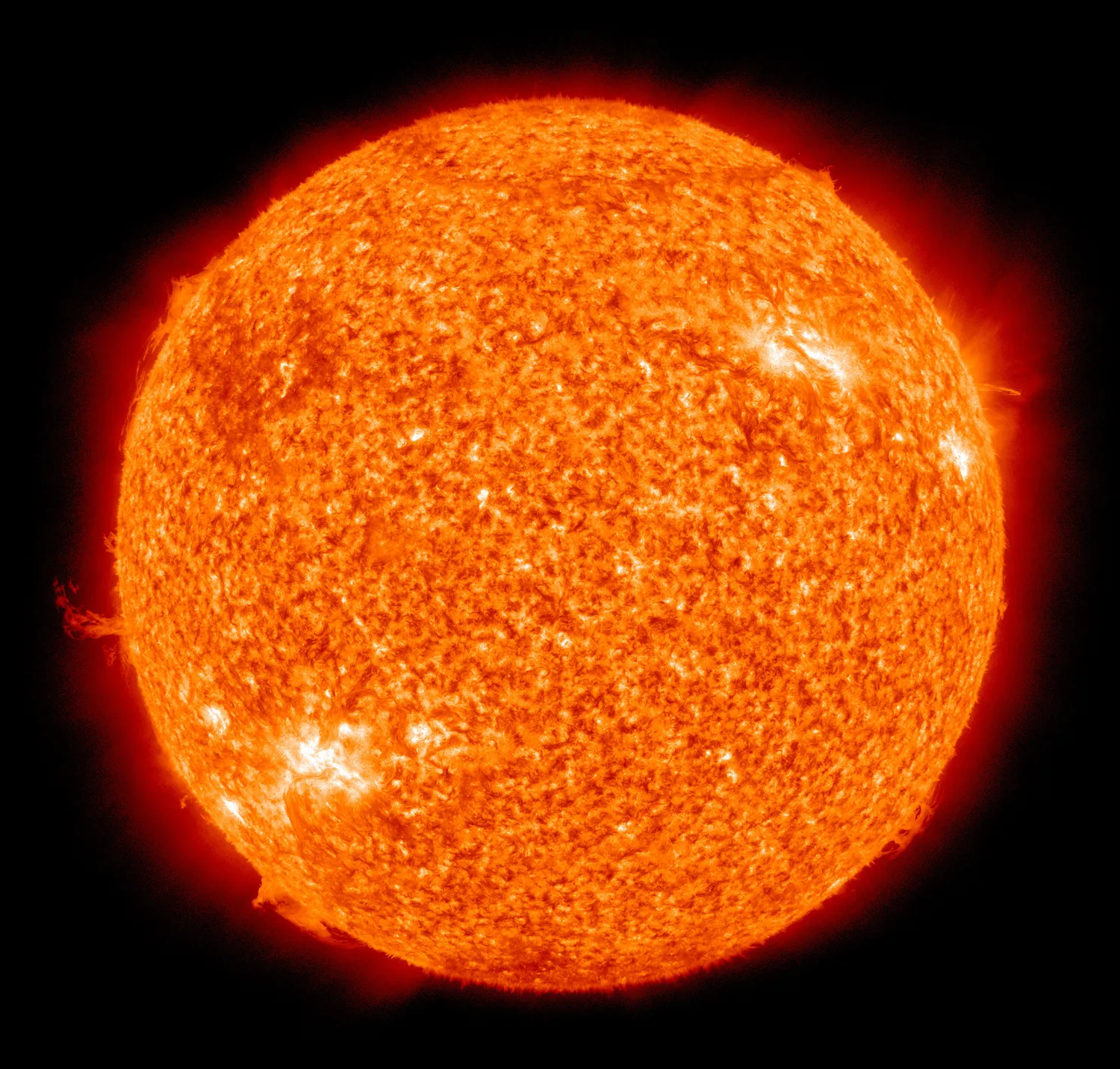
The Sun by the Atmospheric Imaging Assembly of NASA's Solar Dynamics Observatory - 20100819

"The Sun by the Atmospheric Imaging Assembly of NASA's Solar Dynamics Observatory - 20100819" by NASA/SDO (AIA) / Wikimedia Commons.

The Sun is the star at the center of our solar system. It is a giant ball of hot gas made mostly of hydrogen and helium. Scientists estimate the Sun is about 4.6 billion years old. The Sun provides nearly all the energy that powers life on Earth.

The Sun contains an enormous amount of matter. Evidence shows it accounts for 99.8% of the mass in our entire solar system. This means the Sun has more mass than all the planets, moons, asteroids, and comets combined. The Sun's diameter measures about 1.4 million kilometers. That is roughly 109 times wider than Earth.

Inside the Sun's core, extreme heat and pressure cause nuclear fusion to occur. During nuclear fusion, hydrogen atoms combine to form helium atoms. This process releases tremendous amounts of energy. The energy travels outward from the core through different layers. Eventually, it reaches the Sun's surface and radiates into space as light and heat.

The Sun's surface temperature reaches about 5,500 degrees Celsius. The outer atmosphere, called the corona, can be much hotter. Scientists observe that temperatures in the corona may reach several million degrees Celsius. The Sun's gases exist in a state of matter called plasma. Plasma forms when gas becomes so hot that electrons separate from atoms.

Earth receives only a tiny fraction of the Sun's total energy output. However, this small amount is essential for life. Solar energy drives Earth's weather patterns and ocean currents. Plants use sunlight to make food through photosynthesis. Animals depend on plants for energy. Without the Sun's energy, Earth would be a frozen, lifeless planet.

Scientists study the Sun to understand how stars work and change over time. They use special telescopes and spacecraft to observe solar activity. These observations help scientists predict space weather that can affect satellites and power grids on Earth. Understanding the Sun also helps scientists learn about other stars in the universe.

Interesting Fact: The Sun converts about 4 million tons of matter into energy every second through nuclear fusion. Despite this enormous loss, the Sun has enough hydrogen to continue shining for another 5 billion years.

Comprehension quiz (10 questions)

1. What is the Sun?

A planet at the center of our solar system
A star at the center of our solar system
A moon orbiting Earth
A comet passing through space

2. What two gases make up most of the Sun?

Oxygen and nitrogen
Carbon and oxygen
Hydrogen and helium
Helium and nitrogen

3. What does the term 'nuclear fusion' mean in the context of the passage?

The process of atoms splitting apart
The process of hydrogen atoms combining to form helium
The cooling of gases in space
The rotation of the Sun on its axis

4. What is plasma?

A liquid form of water
A solid form of matter
A state of matter where electrons separate from atoms
A type of energy from the Sun

5. Based on the passage, why is the Sun important for life on Earth?

It provides the gravity that holds Earth in place
It provides nearly all the energy that powers life on Earth
It creates oxygen for animals to breathe
It prevents asteroids from hitting Earth

6. How does the Sun's mass compare to the rest of the solar system?

The Sun has about half the mass of the solar system
The Sun has the same mass as all the planets combined
The Sun accounts for 99.8% of the solar system's mass
The Sun has less mass than Jupiter

7. If the Sun stopped producing energy, what would most likely happen to Earth?

Earth would become warmer
Earth would become a frozen, lifeless planet
Earth would start producing its own light
Nothing would change on Earth

8. Why do scientists study the Sun using special telescopes and spacecraft?

To measure the distance to other galaxies
To predict space weather that can affect satellites and power grids
To find new planets in our solar system
To create artificial sunlight

9. True or False: The Sun is approximately 4.6 billion years old.

True
False

10. True or False: The Sun's corona is cooler than its surface.

True
False
Who it's for

Perfect for the way you teach

Teachers
  • Build comprehension skills
  • Auto-graded quiz
  • Differentiated reading
Parents
  • Read together at home
  • Improve fluency
  • Quiet reading time
Homeschoolers
  • Reading curriculum support
  • Independent practice
  • Track Lexile growth
Topics

Reviews & Ratings

No reviews yet. Be the first to share your experience!

More reading you might love

20 more
Passage
What is Solar Radiation - reading educational content
Grades 3–7

What is Solar Radiation

science · MS-ESS1-1

Free
Passage
How Incoming Solar Radiation Changes with Latitude - reading educational content
Grades 3–7

How Incoming Solar Radiation Changes with Latitude

science · MS-ESS1-1

$1.50
Passage
Tides and Tidal Forces - reading educational content
Grades 5–8

Tides and Tidal Forces

science · MS-ESS1-1

$1.50
Passage
The Night Sky - reading educational content
Grades 5–8

The Night Sky

earth science · MS-ESS1-1

$1.50
Passage
Ancient Astronomy - reading educational content
Grades 5–8

Ancient Astronomy

earth science · MS-ESS1-1

$1.50
Passage
Tools of Modern Astronomy - reading educational content
Grades 5–8

Tools of Modern Astronomy

earth science · MS-ESS1-1

$1.50
Passage
How Astronomy Became a Science - reading educational content
Grades 5–8

How Astronomy Became a Science

earth science · MS-ESS1-1

$1.50
Passage
Earth's Rotation - reading educational content
Grades 5–8

Earth's Rotation

science · MS-ESS1-1

$1.50
Passage
Earth's Revolution - reading educational content
Grades 5–8

Earth's Revolution

science · MS-ESS1-1

$1.50
Passage
Why We Have Seasons - reading educational content
Grades 5–8

Why We Have Seasons

science · MS-ESS1-1

$1.50
Passage
Earth's Seasons - reading educational content
Grades 5–8

Earth's Seasons

science · MS-ESS1-1

$1.50
Passage
The Moon's Characteristics - reading educational content
Grades 5–8

The Moon's Characteristics

science · MS-ESS1-1

$1.50
Passage
The Sun's Characteristics - reading educational content
Grades 5–8

The Sun's Characteristics

science · MS-ESS1-1

$1.50
Passage
What Is a Galaxy? - reading educational content
Grades 5–8

What Is a Galaxy?

earth science · MS-ESS1-1

$1.50
Passage
The Milky Way: Our Home Galaxy - reading educational content
Grades 5–8

The Milky Way: Our Home Galaxy

earth science · MS-ESS1-1

$1.50
Passage
Types of Galaxies - reading educational content
Grades 5–8

Types of Galaxies

earth science · MS-ESS1-1

$1.50
Passage
The Expanding Universe - reading educational content
Grades 5–8

The Expanding Universe

earth science · MS-ESS1-1

$1.50
Passage
The Big Bang - reading educational content
Grades 5–8

The Big Bang

earth science · MS-ESS1-1

$1.50
Passage
Dark Matter and Dark Energy - reading educational content
Grades 5–8

Dark Matter and Dark Energy

earth science · MS-ESS1-1

$1.50
Passage
How Do Stars Die - reading educational content
Grades 5–8

How Do Stars Die

science · MS-ESS1-1

$1.50
Copyright © 2026 Workybooks. Made with ♥ in California.