Why Are Eclipses Rare
Interactive passage with audio narration, comprehension questions, and printable PDF.
By completing this purchase you agree to our Terms of Use and Privacy Policy. Your subscription renews automatically until you cancel. You can cancel anytime from your account settings. All sales are final and non-refundable. Digital content is available for download in your account immediately upon purchase.
What's included
Why Are Eclipses Rare preview and details
About this printable Why Are Eclipses Rare science reading passage, NGSS-aligned (Grades 5-8)
Sample passage and quiz from Why Are Eclipses Rare
Reading passage and comprehension quiz preview
Why Are Eclipses Rare
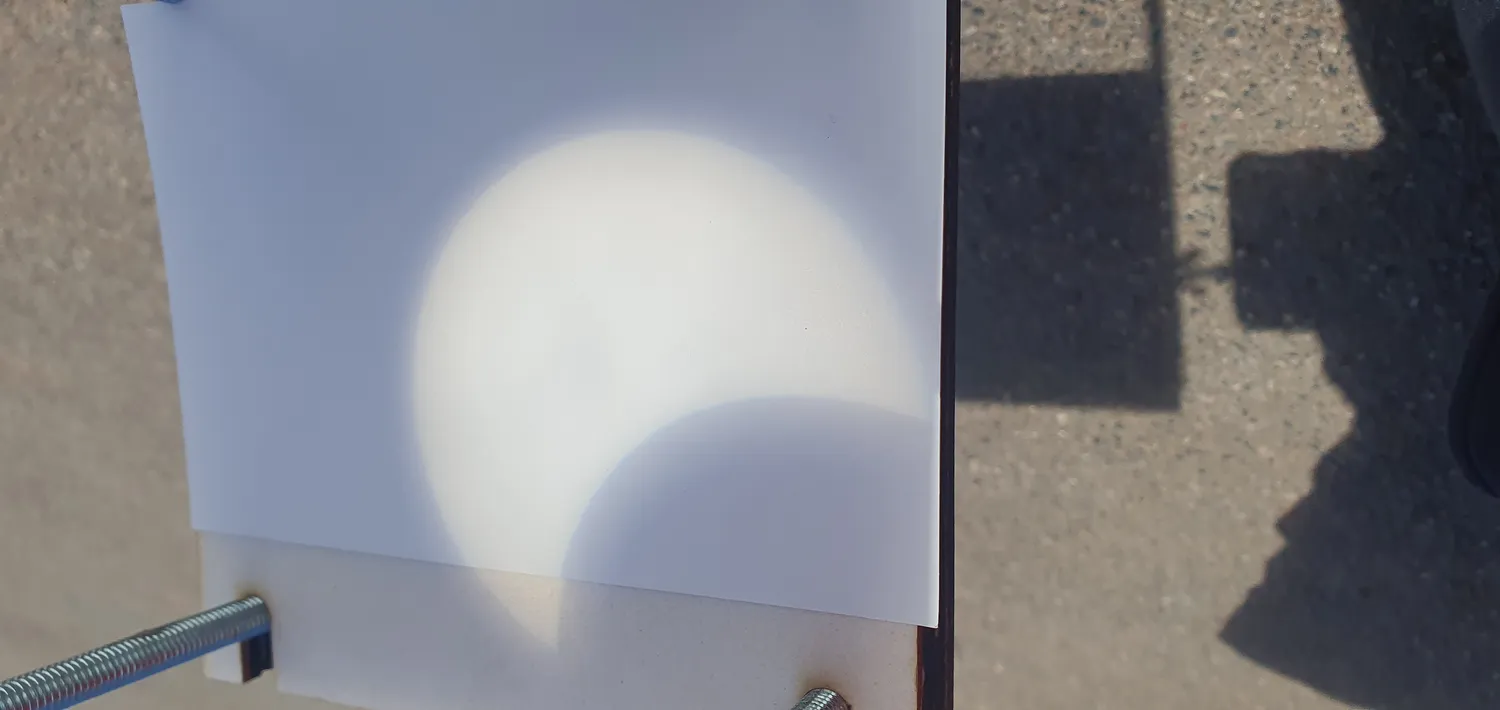
"2025, 29th March partial solar eclipse. Projected in Torquay, Devon. 06" by Thespacechaser / Wikimedia Commons.
Eclipses are rare because the Moon's orbit tilts compared to Earth's path around the Sun. The Moon circles Earth about once each month. During this time, we see new moons and full moons regularly. You might think eclipses should happen twice monthly. However, most months pass without any eclipses at all. Scientists explain this puzzle by studying how the Moon moves through space.
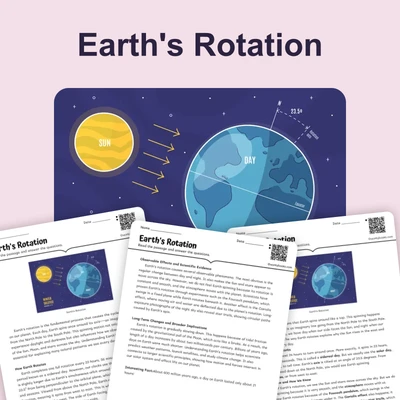
Earth travels around the Sun in a flat path called an orbital plane. The Moon orbits Earth, but its path tilts about 5 degrees from Earth's orbital plane. This small tilt makes a big difference. During most new moons, the Moon passes slightly above or below the Sun in our sky. During most full moons, Earth's shadow misses the Moon entirely. The Moon must cross Earth's orbital plane at precisely the right moment for an eclipse to occur.
The two points where the Moon's tilted orbit crosses Earth's orbital plane are called nodes. Solar eclipses can only happen when a new moon occurs near a node. Lunar eclipses can only happen when a full moon occurs near a node. These special alignment periods are called eclipse seasons. Eclipse seasons occur roughly twice each year and last only a few weeks. Evidence shows that Earth experiences between two and five eclipses annually.
Scientists observe that the Moon's orbit gradually shifts over time. The nodes move westward, completing a full cycle every 18.6 years. This movement creates a pattern called the Saros cycle. Astronomers use this cycle to predict future eclipses with great accuracy. In August 2017, millions of people across the United States witnessed a total solar eclipse. Scientists had predicted this event decades in advance by tracking orbital positions and node locations.
Understanding eclipse rarity matters because it helps us appreciate Earth's place in the solar system. The specific tilt of the Moon's orbit creates our unique eclipse patterns. Other planets with moons experience different eclipse frequencies based on their orbital arrangements. Studying these patterns helps scientists understand how gravity shapes motion in space. Eclipse predictions also demonstrate how mathematical models can describe natural phenomena accurately.
Interesting Fact: The Moon moves about 3.8 centimeters farther from Earth each year. In millions of years, the Moon will appear too small to completely cover the Sun, making total solar eclipses impossible from Earth's surface.
Comprehension quiz (10 questions)
1. What is the main reason eclipses are rare?
2. According to the passage, how many eclipses does Earth typically experience each year?
3. What are nodes in the context of the Moon's orbit?
4. What does the term 'orbital plane' mean as used in the passage?
5. Based on the passage, why don't eclipses occur during every new moon and full moon?
6. What is an eclipse season?
7. How do scientists predict future eclipses accurately?
8. If another planet had a moon with an orbit that did NOT tilt compared to the planet's orbital plane, what would likely happen?
9. The Moon is gradually moving farther from Earth each year.
10. Eclipse seasons occur about four times each year.
Perfect for the way you teach
- Build comprehension skills
- Auto-graded quiz
- Differentiated reading
- Read together at home
- Improve fluency
- Quiet reading time
- Reading curriculum support
- Independent practice
- Track Lexile growth