Why Is Earth Tilted
Interactive passage with audio narration, comprehension questions, and printable PDF.
By completing this purchase you agree to our Terms of Use and Privacy Policy. Your subscription renews automatically until you cancel. You can cancel anytime from your account settings. All sales are final and non-refundable. Digital content is available for download in your account immediately upon purchase.
What's included
Why Is Earth Tilted preview and details
About this printable Why Is Earth Tilted science reading passage, NGSS-aligned (Grades 5-8)
Sample passage and quiz from Why Is Earth Tilted
Reading passage and comprehension quiz preview
Why Is Earth Tilted
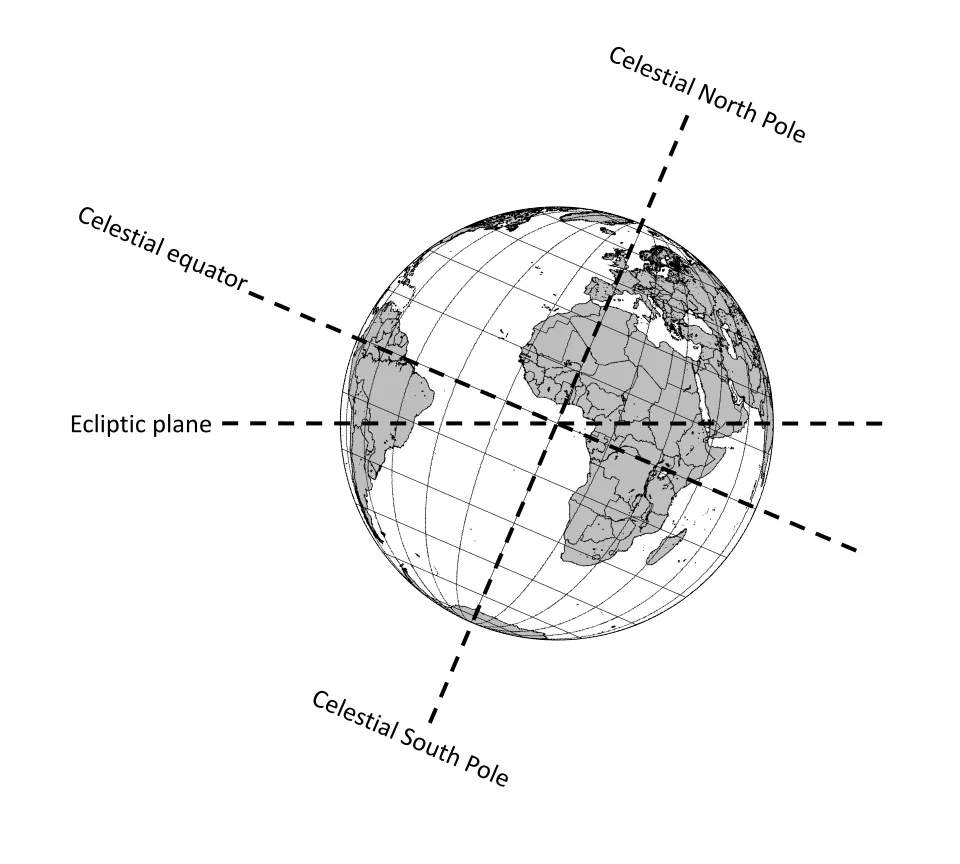
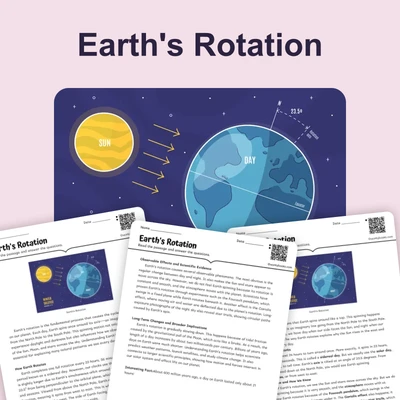
Earth tilts at an angle of 23.5 degrees on its axis. Scientists explain that this tilt likely resulted from a massive collision billions of years ago. Evidence shows that a planet-sized object struck Earth during the early formation of our solar system. This impact was so powerful that it knocked Earth sideways and sent debris into space.
The debris from this collision eventually came together to form the Moon. Scientists call this explanation the giant impact hypothesis. Computer models show that such a collision could produce both the Moon and Earth's tilt. The impact changed Earth's rotation and created the angle we observe today. Since that ancient event, Earth's tilt has remained remarkably stable over billions of years.
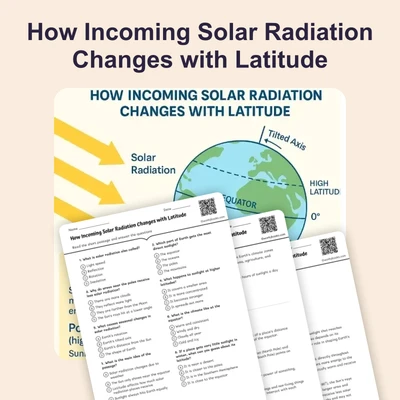
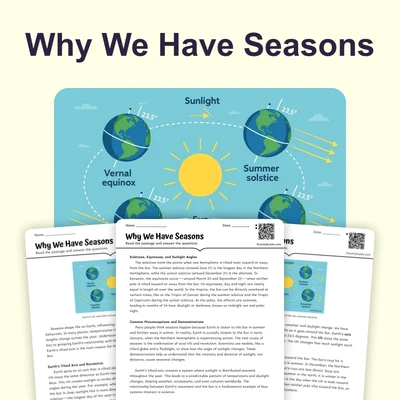
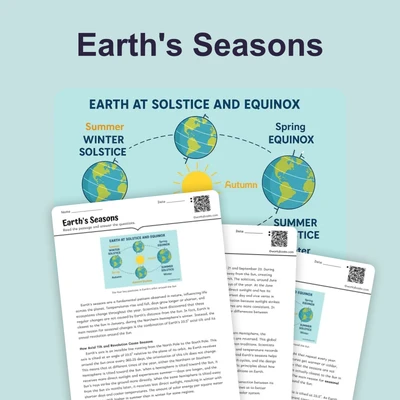
Earth's tilt affects how sunlight reaches different parts of our planet throughout the year. As Earth moves in its orbit around the Sun, different hemispheres receive more direct sunlight at different times. This creates the seasons we experience. When the Northern Hemisphere tilts toward the Sun, it experiences summer while the Southern Hemisphere has winter. Six months later, the situation reverses. Without this tilt, every location on Earth would receive the same amount of sunlight year-round.
The tilt also creates Earth's different climate zones. Regions near the equator receive direct sunlight throughout the year and stay warm. Areas near the poles receive sunlight at a sharp angle and remain cold. The middle latitudes experience the greatest seasonal changes. This variety in climate allows diverse ecosystems to exist across the planet. Different plants and animals have adapted to these varied conditions over millions of years.
Understanding Earth's tilt helps scientists explain patterns in weather, ocean currents, and life distribution. The tilt influences where precipitation falls and how temperatures change across the globe. It affects growing seasons for crops and migration patterns for animals. Without Earth's tilt, our planet would be a very different place with less climate diversity and possibly less variety of life.
Interesting Fact: Earth's axis wobbles slightly over a 26,000-year cycle, but the 23.5-degree tilt stays nearly constant. This wobble changes which star appears as the North Star over thousands of years.
Comprehension quiz (10 questions)
1. What is the angle of Earth's tilt on its axis?
2. According to the passage, what caused Earth's tilt?
3. What does the term 'orbit' mean in the context of this passage?
4. What is the 'giant impact hypothesis'?
5. Why do we have seasons on Earth?
6. What would happen if Earth had no tilt?
7. Which regions on Earth experience the greatest seasonal changes?
8. How does Earth's tilt affect climate zones?
9. True or False: Earth's tilt has changed dramatically over billions of years.
10. True or False: The collision that tilted Earth also helped form the Moon.
Perfect for the way you teach
- Build comprehension skills
- Auto-graded quiz
- Differentiated reading
- Read together at home
- Improve fluency
- Quiet reading time
- Reading curriculum support
- Independent practice
- Track Lexile growth