Why Mariana Trench Is So Deep
Interactive passage with audio narration, comprehension questions, and printable PDF.
By completing this purchase you agree to our Terms of Use and Privacy Policy. Your subscription renews automatically until you cancel. You can cancel anytime from your account settings. All sales are final and non-refundable. Digital content is available for download in your account immediately upon purchase.
What's included
Why Mariana Trench Is So Deep preview and details
About this printable Why Mariana Trench Is So Deep science reading passage, NGSS-aligned (Grades 5-8)
Sample passage and quiz from Why Mariana Trench Is So Deep
Reading passage and comprehension quiz preview
Why Mariana Trench Is So Deep
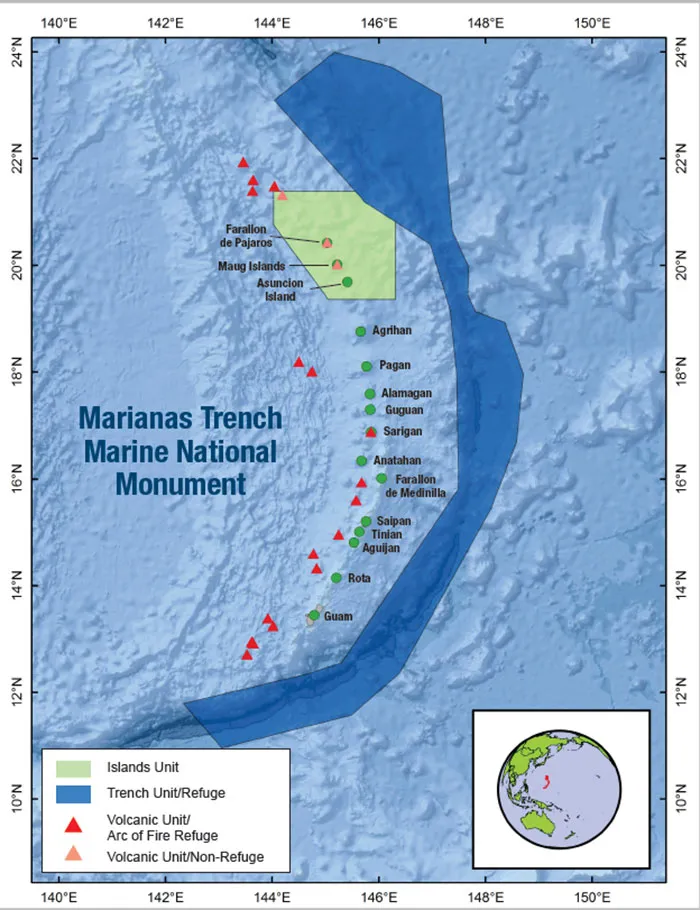
"Map Marianas Trench Marine National Monument" by NOAA / Wikimedia Commons
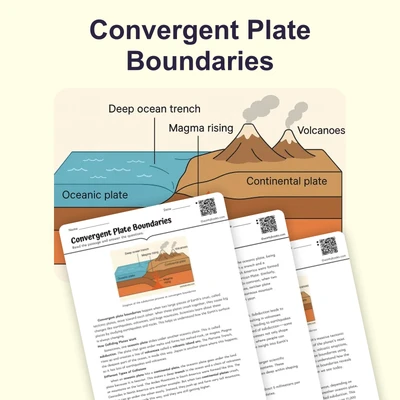
The Mariana Trench is the deepest place on Earth. It plunges nearly 11 kilometers below the ocean surface in the western Pacific Ocean. Scientists explain that this extreme depth results from a process called subduction. Subduction occurs when two tectonic plates collide at a convergent boundary. One plate slides beneath the other and sinks into Earth's interior.
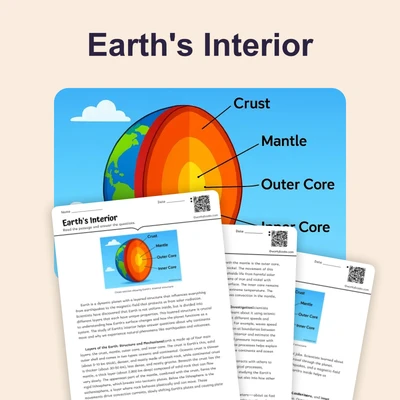
Earth's outer layer consists of large slabs of rock called tectonic plates. These plates move slowly across the planet's surface, only a few centimeters each year. When an oceanic plate meets another plate, the denser oceanic plate bends downward. The bending plate creates a deep groove in the ocean floor called a trench. The sinking plate descends into the mantle, the hot layer of rock beneath Earth's crust. This downward movement pulls the ocean floor to incredible depths.
The Mariana Trench formed where the Pacific Plate collides with the smaller Philippine Plate. The Pacific Plate is older and cooler than the Philippine Plate. Cold rock is denser than warm rock, so the Pacific Plate sinks beneath the Philippine Plate. Evidence shows that this collision has been occurring for millions of years. The trench continues to deepen as the Pacific Plate slowly descends into the mantle. Scientists have measured the deepest point at about 10,994 meters below sea level.
Subduction zones like the Mariana Trench are common around the Pacific Ocean. They form part of the Pacific Ring of Fire, a region known for earthquakes and volcanoes. Understanding how trenches form helps scientists explain many features of Earth's surface. These deep zones also affect ocean circulation and provide unique habitats for specialized organisms. The study of subduction zones reveals how plate tectonics shapes our planet over millions of years.
Interesting Fact: If Mount Everest were placed in the Mariana Trench, its peak would still be more than 2 kilometers underwater.
Comprehension quiz (10 questions)
1. What is the main reason the Mariana Trench is so deep?
2. How deep is the Mariana Trench?
3. What does the term 'convergent boundary' mean in the passage?
4. Based on the passage, what is the mantle?
5. Why does the Pacific Plate sink beneath the Philippine Plate?
6. Which plates collide to form the Mariana Trench?
7. What can scientists learn from studying subduction zones?
8. If Mount Everest were placed in the Mariana Trench, what would happen according to the passage?
9. True or False: Tectonic plates move several meters each year.
10. True or False: The Mariana Trench is part of the Pacific Ring of Fire region.
Perfect for the way you teach
- Build comprehension skills
- Auto-graded quiz
- Differentiated reading
- Read together at home
- Improve fluency
- Quiet reading time
- Reading curriculum support
- Independent practice
- Track Lexile growth