Reading PassagePremium

Why Summer Days Are Longer

Interactive passage with audio narration, comprehension questions, and printable PDF.

No ratings yet
Grades 5–8ScienceElaEnglish · SpanishInteractive · Printable
Aligned toMS-ESS1-1
Just this resource
$1.50
One-time purchase
Best value
Unlock everything
$49.99$29.99/yr
40% off until Aug 1 — 10,000+ resources
Renews at $49.99/year.
Unlock above to use these actions

What's included

Reading passage
Audio narration
Comprehension quiz
Writing activity
Glossary & flashcards
Differentiated version
Spanish translation

Why Summer Days Are Longer preview and details

About this printable Why Summer Days Are Longer science reading passage, NGSS-aligned (Grades 5-8)

This 400-500 word informational passage explains why days get longer during summer months, aligned with NGSS standard MS-ESS1-1 and disciplinary core idea MS-ESS1.B. Students in grades 6-8 will explore the cause-and-effect relationship between Earth's axial tilt and seasonal changes in daylight hours. The passage examines how the hemisphere tilted toward the Sun experiences more daylight during each rotation, with specific examples from northern cities near the summer solstice. Audio-integrated content supports diverse learners, including English Language Learners and struggling readers. The curriculum includes a simplified differentiated version, Spanish translations, vocabulary glossary, multiple-choice questions, writing activities, and graphic organizers. Students will understand how latitude affects the dramatic nature of seasonal daylight changes and why some locations experience over 16 hours of daylight in summer. This comprehensive resource provides teachers with standards-aligned materials that develop scientific literacy and reasoning skills through engaging, age-appropriate content about Earth's motion and seasonal patterns.
Written by Workybooks TeamPublished by Workybooks
Preview

Sample passage and quiz from Why Summer Days Are Longer

Reading passage and comprehension quiz preview

Why Days Get Longer in Summer
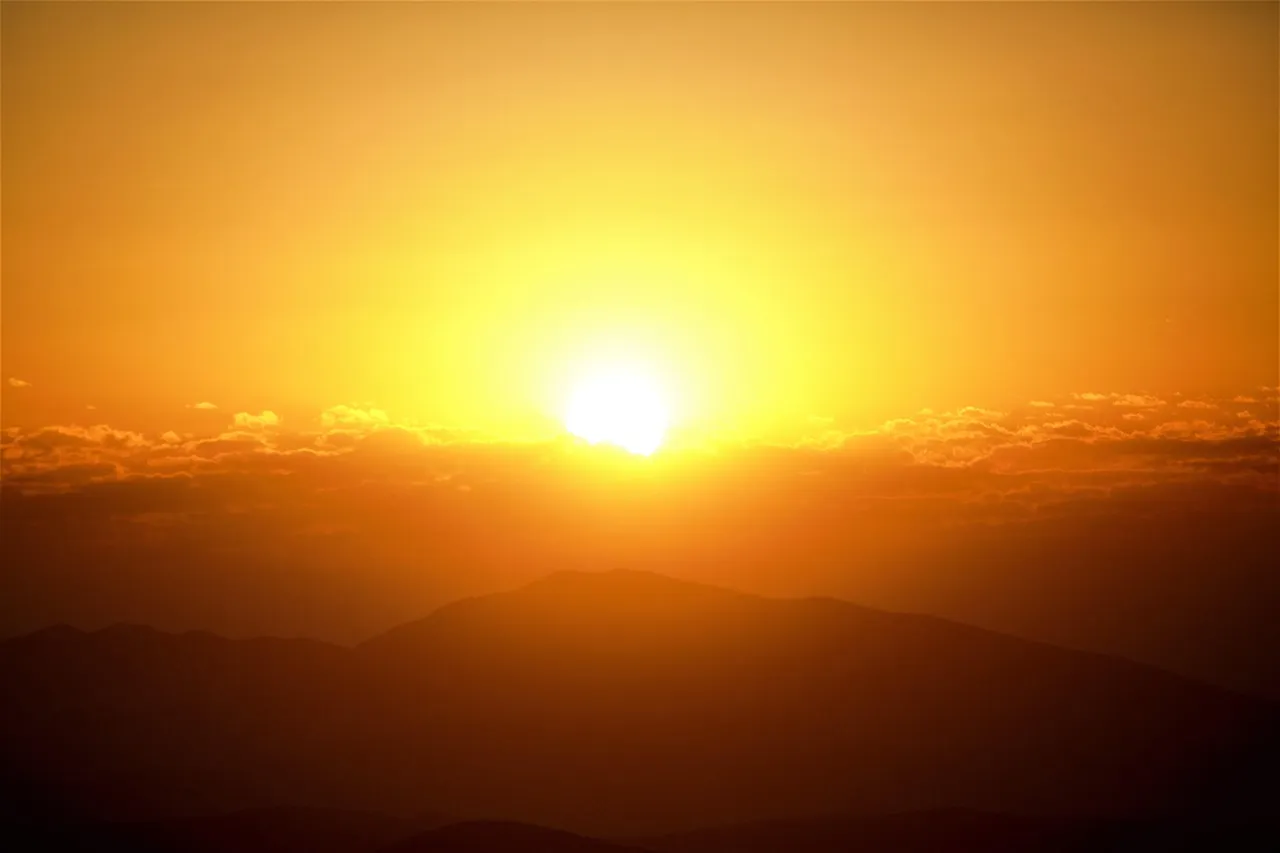
day nativity, morning, nature, light, sky, mountains, sun, horizon, sunrise, clouds, day

"day nativity, morning, nature, light, sky, mountains, sun, horizon, sunrise, clouds, day" by Konevi / Pixabay.

Summer days last longer because of Earth's tilt. Our planet rotates on an imaginary line called an axis. This axis tilts at about 23.5 degrees. As Earth orbits the Sun, this tilt causes different parts of the planet to receive varying amounts of sunlight throughout the year.

When a hemisphere tilts toward the Sun, it experiences summer. During this season, more of that hemisphere's surface stays in sunlight during each rotation. Earth completes one full rotation every 24 hours. The tilted hemisphere spends more of those 24 hours facing the Sun. This results in longer periods of daylight and shorter nights.

Scientists explain this pattern by observing Earth's position relative to the Sun. Near the summer solstice, the Northern Hemisphere reaches its maximum tilt toward the Sun. Cities in northern locations experience dramatic changes. For example, Anchorage, Alaska, receives over 19 hours of daylight on the longest day. Seattle, Washington, gets about 16 hours. Even cities at lower latitudes like New York receive nearly 15 hours of sunlight.

The further north a location sits, the more extreme the seasonal change becomes. Evidence shows that places near the Arctic Circle can experience nearly 24 hours of continuous daylight in summer. This happens because the tilt angles these regions toward the Sun throughout the entire rotation. Meanwhile, the Southern Hemisphere tilts away from the Sun during this same period. It experiences winter with shorter days and longer nights.

Understanding this pattern matters for many reasons. Longer summer days affect plant growth, animal behavior, and human activities. Farmers use extended daylight to grow crops. Wildlife adjusts feeding and migration patterns. People plan outdoor activities around available sunlight. The predictable nature of these changes demonstrates how Earth's motion creates regular patterns that influence life on our planet.

Interesting Fact: During the summer solstice at the Arctic Circle, the Sun never fully sets below the horizon. This phenomenon is called the midnight sun.

Comprehension quiz (10 questions)

1. What causes summer days to last longer?

Earth's tilt as it orbits the Sun
Earth moving closer to the Sun
The Sun producing more light in summer
Earth rotating faster in summer

2. At what angle does Earth's axis tilt?

15.5 degrees
23.5 degrees
30.5 degrees
45 degrees

3. What does the term 'rotation' mean in the passage?

Earth's path around the Sun
The tilt of Earth's axis
Earth spinning on its axis
The change of seasons

4. According to the passage, how many hours of daylight does Anchorage, Alaska receive on the longest day?

About 15 hours
About 16 hours
Over 19 hours
Exactly 24 hours

5. Why do places farther north experience more dramatic seasonal changes in daylight?

They are closer to the Sun
The tilt angles them toward the Sun for more of the rotation
They rotate faster than other locations
They have different weather patterns

6. What happens to the Southern Hemisphere when the Northern Hemisphere experiences summer?

It also experiences summer
It experiences winter with shorter days
It has the same amount of daylight
It stops rotating

7. Which activity is mentioned as being affected by longer summer days?

Building construction
Ocean currents
Crop growth
Mountain formation

8. What is the 'midnight sun' phenomenon?

When the Sun appears at midnight in all locations
When the Sun never fully sets below the horizon at the Arctic Circle
When the Sun is brightest at midnight
When two suns appear in the sky

9. True or False: Earth completes one full rotation every 12 hours.

True
False

10. True or False: The summer solstice is when a hemisphere reaches its maximum tilt toward the Sun.

True
False
Who it's for

Perfect for the way you teach

Teachers
  • Build comprehension skills
  • Auto-graded quiz
  • Differentiated reading
Parents
  • Read together at home
  • Improve fluency
  • Quiet reading time
Homeschoolers
  • Reading curriculum support
  • Independent practice
  • Track Lexile growth
Topics

Reviews & Ratings

No reviews yet. Be the first to share your experience!

More reading you might love

20 more
Passage
What is Solar Radiation - reading educational content
Grades 3–7

What is Solar Radiation

science · MS-ESS1-1

Free
Passage
How Incoming Solar Radiation Changes with Latitude - reading educational content
Grades 3–7

How Incoming Solar Radiation Changes with Latitude

science · MS-ESS1-1

$1.50
Passage
Tides and Tidal Forces - reading educational content
Grades 5–8

Tides and Tidal Forces

science · MS-ESS1-1

$1.50
Passage
The Night Sky - reading educational content
Grades 5–8

The Night Sky

earth science · MS-ESS1-1

$1.50
Passage
Ancient Astronomy - reading educational content
Grades 5–8

Ancient Astronomy

earth science · MS-ESS1-1

$1.50
Passage
Tools of Modern Astronomy - reading educational content
Grades 5–8

Tools of Modern Astronomy

earth science · MS-ESS1-1

$1.50
Passage
How Astronomy Became a Science - reading educational content
Grades 5–8

How Astronomy Became a Science

earth science · MS-ESS1-1

$1.50
Passage
Earth's Rotation - reading educational content
Grades 5–8

Earth's Rotation

science · MS-ESS1-1

$1.50
Passage
Earth's Revolution - reading educational content
Grades 5–8

Earth's Revolution

science · MS-ESS1-1

$1.50
Passage
Why We Have Seasons - reading educational content
Grades 5–8

Why We Have Seasons

science · MS-ESS1-1

$1.50
Passage
Earth's Seasons - reading educational content
Grades 5–8

Earth's Seasons

science · MS-ESS1-1

$1.50
Passage
The Moon's Characteristics - reading educational content
Grades 5–8

The Moon's Characteristics

science · MS-ESS1-1

$1.50
Passage
The Sun's Characteristics - reading educational content
Grades 5–8

The Sun's Characteristics

science · MS-ESS1-1

$1.50
Passage
What Is a Galaxy? - reading educational content
Grades 5–8

What Is a Galaxy?

earth science · MS-ESS1-1

$1.50
Passage
The Milky Way: Our Home Galaxy - reading educational content
Grades 5–8

The Milky Way: Our Home Galaxy

earth science · MS-ESS1-1

$1.50
Passage
Types of Galaxies - reading educational content
Grades 5–8

Types of Galaxies

earth science · MS-ESS1-1

$1.50
Passage
The Expanding Universe - reading educational content
Grades 5–8

The Expanding Universe

earth science · MS-ESS1-1

$1.50
Passage
The Big Bang - reading educational content
Grades 5–8

The Big Bang

earth science · MS-ESS1-1

$1.50
Passage
Dark Matter and Dark Energy - reading educational content
Grades 5–8

Dark Matter and Dark Energy

earth science · MS-ESS1-1

$1.50
Passage
How Do Stars Die - reading educational content
Grades 5–8

How Do Stars Die

science · MS-ESS1-1

$1.50
Copyright © 2026 Workybooks. Made with ♥ in California.