Why the Moon Turns Red
Interactive passage with audio narration, comprehension questions, and printable PDF.
By completing this purchase you agree to our Terms of Use and Privacy Policy. Your subscription renews automatically until you cancel. You can cancel anytime from your account settings. All sales are final and non-refundable. Digital content is available for download in your account immediately upon purchase.
What's included
Why the Moon Turns Red preview and details
About this printable Why the Moon Turns Red science reading passage, NGSS-aligned (Grades 5-8)
Sample passage and quiz from Why the Moon Turns Red
Reading passage and comprehension quiz preview
Why the Moon Turns Red
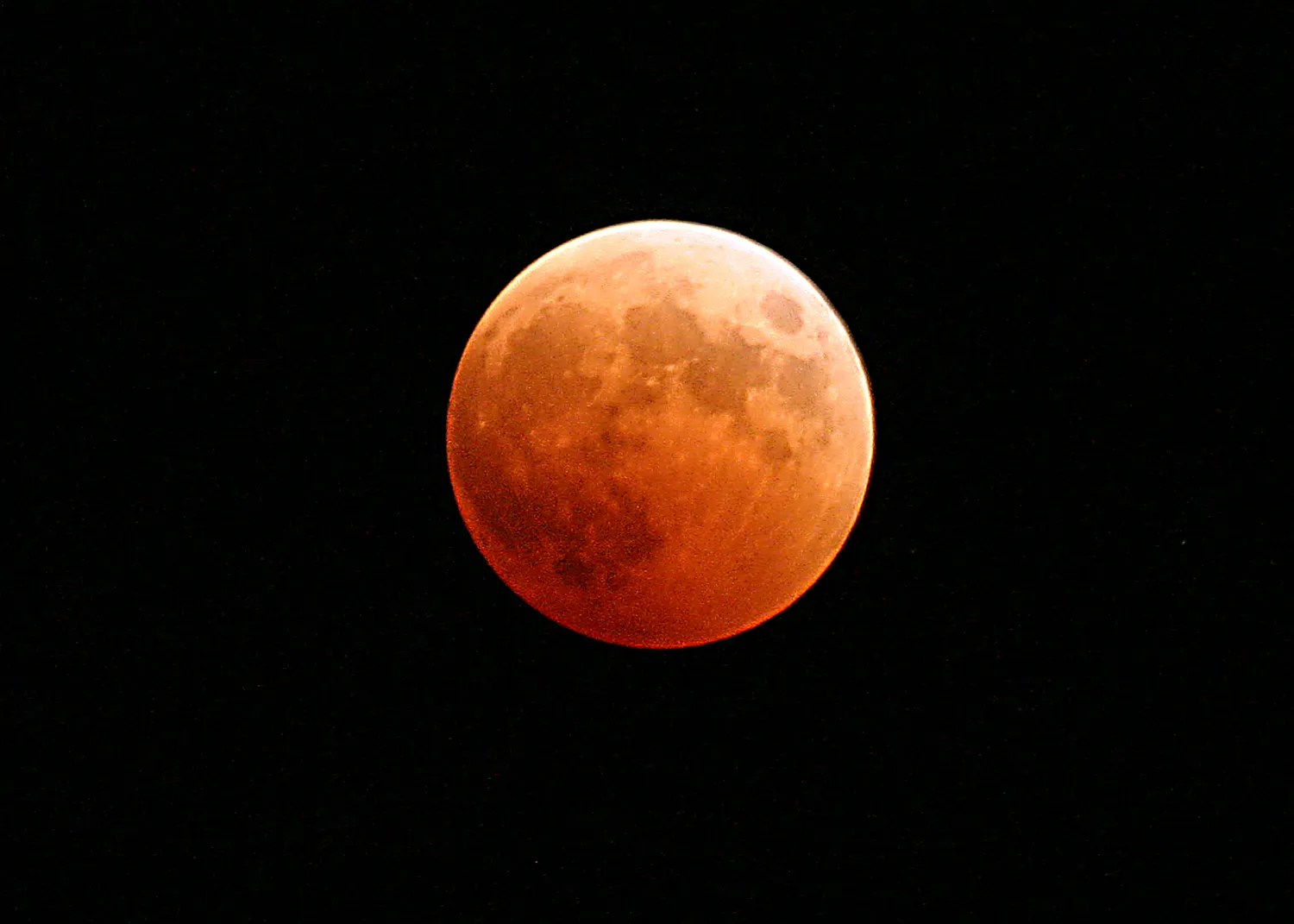
"US Navy 041027-N-9500T-001 The moon turns red and orange during a total lunar eclipse" by U.S. Navy photo by Photographer's Mate 2nd Class Scott Taylor / Wikimedia Commons
A blood moon is the name people use for the Moon's deep red appearance during a total lunar eclipse. This happens when Earth moves directly between the Sun and the Moon. Earth's shadow falls across the Moon's surface. Instead of disappearing completely, the Moon glows with a reddish-orange color that can look quite dramatic.
The red color occurs because of how Earth's atmosphere affects sunlight. When sunlight passes through the atmosphere, it bends in a process called refraction. The atmosphere also filters the light. Blue and green wavelengths scatter away into space. Red wavelengths pass through more easily. These red wavelengths bend around Earth and reach the Moon's surface. Scientists explain that this is the same effect that makes sunsets appear red or orange.
Evidence shows that blood moons occur several times each decade. For example, a total lunar eclipse visible across North America happened on May 15, 2022. The Moon turned a deep copper-red color for over an hour. Unlike solar eclipses, lunar eclipses are completely safe to view without special equipment. People can watch the entire event with just their eyes.
Understanding blood moons helps scientists study Earth's atmosphere and the movement of objects in space. The exact shade of red can vary depending on atmospheric conditions. Dust, pollution, and volcanic ash in the atmosphere can make the Moon appear darker or brighter. Blood moons also remind us that Earth, the Moon, and the Sun are constantly moving in predictable patterns. This knowledge connects to how we understand Earth's place in the solar system.
Interesting Fact: The term "blood moon" is not a scientific name but rather a cultural term used throughout history. Astronomers simply call it a total lunar eclipse.
Comprehension quiz (10 questions)
1. What causes a blood moon to appear red?
2. When does a blood moon occur?
3. What does the term 'refraction' mean in the passage?
4. According to the passage, what happens to blue and green wavelengths during a blood moon?
5. Why does the passage compare blood moons to sunsets?
6. What can affect the exact shade of red during a blood moon?
7. If you wanted to observe a blood moon, what would you need to do?
8. Based on the passage, how often do blood moons typically occur?
9. True or False: 'Blood moon' is the official scientific name for this phenomenon.
10. True or False: Lunar eclipses are safe to view without special equipment.
Perfect for the way you teach
- Build comprehension skills
- Auto-graded quiz
- Differentiated reading
- Read together at home
- Improve fluency
- Quiet reading time
- Reading curriculum support
- Independent practice
- Track Lexile growth