This learning resource is available in interactive and printable formats. The interactive worksheet can be played online and assigned to students. The Printable PDF version can be downloaded and printed for completion by hand.
This passage for grades 6-8 introduces students to the concept of coevolution, where two or more species evolve in response to each other over time. Students learn how interactions like predator-prey, parasite-host, and mutualism drive evolutionary changes, using examples such as cheetahs and gazelles, milkweed and monarch butterflies, and plants and their pollinators. The passage aligns with NGSS standards MS-LS4-4 and MS-LS4-6, focusing on systems, mechanisms, and scientific thinking. Activities include a glossary, reading comprehension quiz, writing prompts, and graphic organizers for deeper engagement. Audio integration supports diverse learners. This resource helps students understand how interconnected life is and how changes in one species can lead to changes in another, impacting entire ecosystems.
CONTENT PREVIEW
Expand content preview
Coevolution is a powerful process in nature where two or more species influence each other's evolution over generations. When organisms interact closely, their traits can change in response to each other, leading to adaptations that are tightly linked. This process helps explain why certain animals, plants, and even microbes develop special features that seem perfectly matched. Scientists study coevolution to understand how life forms create complex webs of relationships and how these connections drive biodiversity.
Mechanisms of Coevolution: How Species Shape Each Other
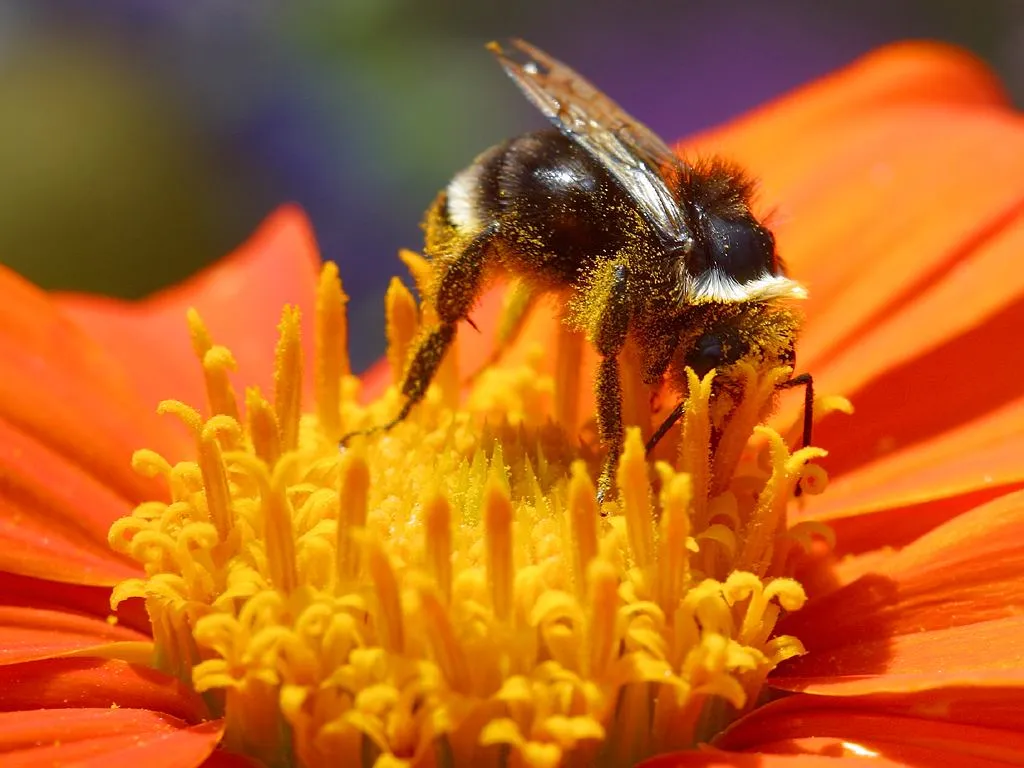
Coevolution happens when the success of one species depends on changes in another. For example, in predator-prey interactions, predators like cheetahs and prey like gazelles have both evolved to run faster. If cheetahs become quicker, only the fastest gazelles survive and reproduce. This is called an evolutionary arms race, where each side develops new ways to outcompete the other. Another example is plant-pollinator relationships. Some flowers have evolved shapes that match the bodies of their specific pollinators, like Darwin’s orchid with its long tube and the hawk moth with its long tongue. When a flower changes shape, only pollinators with the right anatomy can access its nectar, so both plant and pollinator evolve together.
Types and Examples of Coevolution
Coevolution takes many forms, including mutualism, parasitism, and host-pathogen interactions. In mutualism, both species benefit. The clownfish and sea anemone are classic partners: the fish gains protection from predators, while the anemone gets food scraps. In parasitism, like between a parasite and its host, coevolution can lead to stronger host immune systems and more advanced parasite strategies. For example, monarch butterflies and milkweed plants are locked in coevolution. Milkweed produces toxins to deter insects, but monarch caterpillars have evolved to tolerate and store these chemicals, making themselves poisonous to predators. This cycle of adaptation and counter-adaptation can continue for thousands or even millions of years. In host-pathogen coevolution, human immune systems and viruses constantly change in response to each other—a real-world example is the ongoing evolution of influenza viruses.
Broader Implications and Scientific Significance
Coevolution is a key driver of biodiversity on Earth. It can lead to highly specialized species and ecosystems. Scientists use field observations, genetic studies, and experiments to trace coevolutionary changes, measuring things like speed, toxin levels, or pollination rates. Understanding coevolution helps us protect endangered species, manage diseases, and improve agriculture. For example, knowing how pests adapt to crops lets farmers develop better strategies to protect food supplies. Coevolution also shows how dynamic and interconnected life is—no species evolves in complete isolation.
In summary, coevolution is a process where the traits of one species drive changes in another, shaping the diversity and complexity of life. Studying these relationships helps us grasp the fundamental principles of natural selection, adaptation, and ecosystem balance.
Interesting Fact: Some orchids have evolved flowers that only one insect species can pollinate, making them totally dependent on each other for survival!
What is coevolution?
A process where two or more species influence each other's evolution.A change in only one species over time.The process of one animal eating another.A single mutation in a plant.
Which of the following pairs is an example of predator-prey coevolution?
Cheetahs and gazellesClownfish and sea anemoneMilkweed and monarch butterfliesHuman and influenza virus
What is meant by an 'evolutionary arms race'?
A competition where each side develops new adaptations to outcompete the other.A peaceful partnership between species.The slow disappearance of species.Plants growing taller than animals.
True or False: In mutualism, both species benefit from the relationship.
TrueFalse
True or False: All coevolution happens quickly over a few years.
TrueFalse
What adaptation allows monarch butterfly caterpillars to eat milkweed?
They have evolved to tolerate and store milkweed’s toxins.They can fly very fast.They dig tunnels underground.They have sharp teeth.
According to the passage, how do scientists study coevolution?
Through field observations, genetic studies, and experiments.By guessing about animal behavior.By only watching animals in zoos.Through computer games.
What is one result of coevolution in ecosystems?
Increased biodiversity and specialized species.All species become identical.Animals stop interacting.Plants stop making flowers.
Which example from the passage shows mutualism?
Clownfish and sea anemoneCheetah and gazelleMilkweed and monarchHuman and influenza virus
What is the main idea of the passage?
Coevolution shapes the traits and relationships of species, leading to biodiversity.All plants are pollinated by moths.Only predators benefit from evolution.Species do not affect each other.
Perfect For:
👩🏫 Teachers
• Reading comprehension practice
• Auto-graded assessments
• Literacy skill development
👨👩👧👦 Parents
• Reading practice at home
• Comprehension improvement
• Educational reading time
🏠 Homeschoolers
• Reading curriculum support
• Independent reading practice
• Progress monitoring
Reading Features:
📖
Reading Passage
Engaging fiction or nonfiction text
❓
Comprehension Quiz
Auto-graded questions
📊
Instant Feedback
Immediate results and scoring
📄
Printable Version
Download for offline reading
🔊
Read Aloud
Voice-over with word highlighting
Reviews & Ratings
No reviews yet. Be the first to share your experience!
Related Content
The Giant Isopod: Biological Evolution
This NGSS passage examines how giant isopods evolved for deep-sea survival, including slow metabolism for food scarcity,...
MS-LS4-4RI.6.3RI.7.3RI.8.8
What Is Biodiversity?
This comprehensive science reading passage for grades 6-8 introduces students to biodiversity and explores its importanc...
MS-LS2-5MS-LS4-4
Vertebrates: Fishes
This middle school science reading passage offers an in-depth look at fishes, a major group of vertebrates. It covers fi...
MS-LS4-2MS-LS4-4
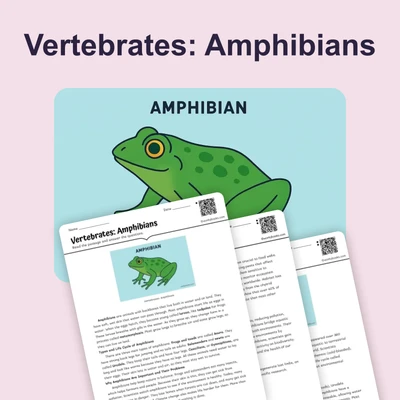
Vertebrates: Amphibians
This comprehensive middle school science passage dives into the fascinating world of amphibians, a group of vertebrates ...
MS-LS4-2MS-LS4-4
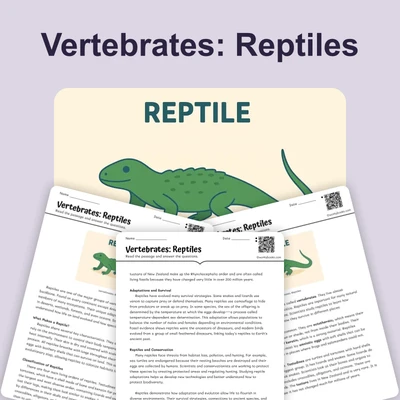
Vertebrates: Reptiles
This comprehensive science passage for grades 6-8 introduces students to reptiles, a fascinating class of vertebrates. A...
MS-LS4-2MS-LS4-4
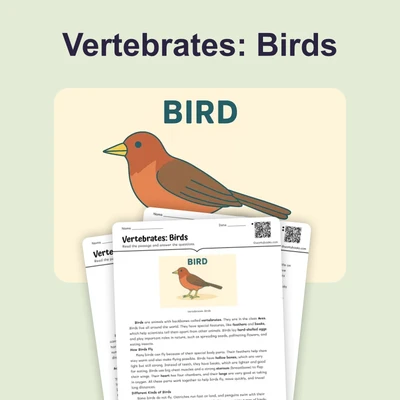
Vertebrates: Birds
This middle school science passage explores birds as vertebrates, focusing on their unique adaptations such as feathers,...
MS-LS4-2MS-LS4-4
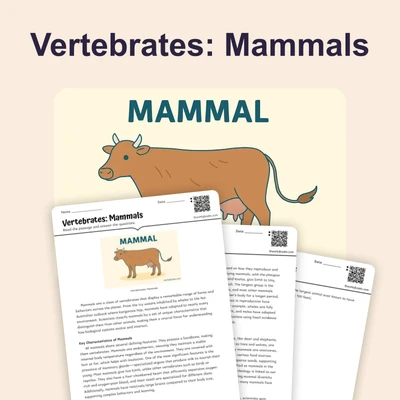
Vertebrates: Mammals
This comprehensive passage introduces middle school students to the class Mammalia and their defining characteristics, i...
MS-LS4-2MS-LS4-4
Invertebrates: Arthropods
This comprehensive science passage introduces middle school students to the phylum Arthropoda, the largest and most dive...
MS-LS4-2MS-LS4-4
Biodiversity and Its Importance
This comprehensive middle school science passage explores the concept of biodiversity at the genetic, species, and ecosy...
MS-LS4-4MS-LS2-5
Galápagos Islands
This engaging science passage explores the Galápagos Islands, a volcanic archipelago located off the coast of Ecuador in...
MS-LS2-1MS-LS4-4MS-ESS3-4
Intertidal Zone
This middle school science reading passage introduces students to the intertidal zone, the area between high and low tid...
MS-LS2-1MS-LS4-4
Natural Selection
This comprehensive passage introduces middle school students (grades 6-8) to the concept of natural selection, aligning ...
MS-LS4-4MS-LS4-6
Speciation
This comprehensive science passage introduces middle school students to the concept of speciation, the process by which ...
MS-LS4-4
Adaptation
This engaging middle school science passage explores adaptation, focusing on how inherited traits enable organisms to su...
MS-LS4-4MS-LS4-6
Extinction and Biodiversity
This comprehensive middle school science passage explores the concepts of extinction and biodiversity, aligned to NGSS s...
MS-LS4-1MS-LS4-4
Environmental Change and Species Survival
This middle school science passage explores how environmental changes, such as climate change, habitat destruction, the ...
MS-LS4-4MS-LS4-6
Climate Change: Species Responses
This middle school science passage explores how species respond to climate change, aligning with NGSS standards MS-LS4-4...
MS-LS4-4MS-LS4-6
Effects of Climate Change
This comprehensive middle school science passage explores the effects of climate change on Earth's systems and life, ali...
MS-ESS3-5MS-LS4-4
How Climate Change Affects Seasons
This passage explores the science of shifting seasons and their effects on ecosystems, aligning with NGSS standards MS-E...