This learning resource is available in interactive and printable formats. The interactive worksheet can be played online and assigned to students. The Printable PDF version can be downloaded and printed for completion by hand.
This comprehensive middle school science passage explains the phases of the Moon, focusing on the mechanisms behind the lunar cycle as aligned with NGSS MS-ESS1-1. Students will learn how sunlight reflects off the Moon and why we see different phases, from new moon to full moon and back. The passage addresses key scientific concepts such as illumination, the synodic month, and the difference between waxing and waning, along with the rise/set times of each phase. Real-world applications and common misconceptions, like the incorrect belief that Earth's shadow causes the phases, are also discussed. Integrated audio support and Spanish translations make the material accessible for diverse learners, while glossary terms, comprehension questions, and graphic organizers promote deep understanding. This resource is ideal for middle school classrooms aiming to build scientific literacy and critical thinking skills about Earth's place in the universe.
CONTENT PREVIEW
Expand content preview
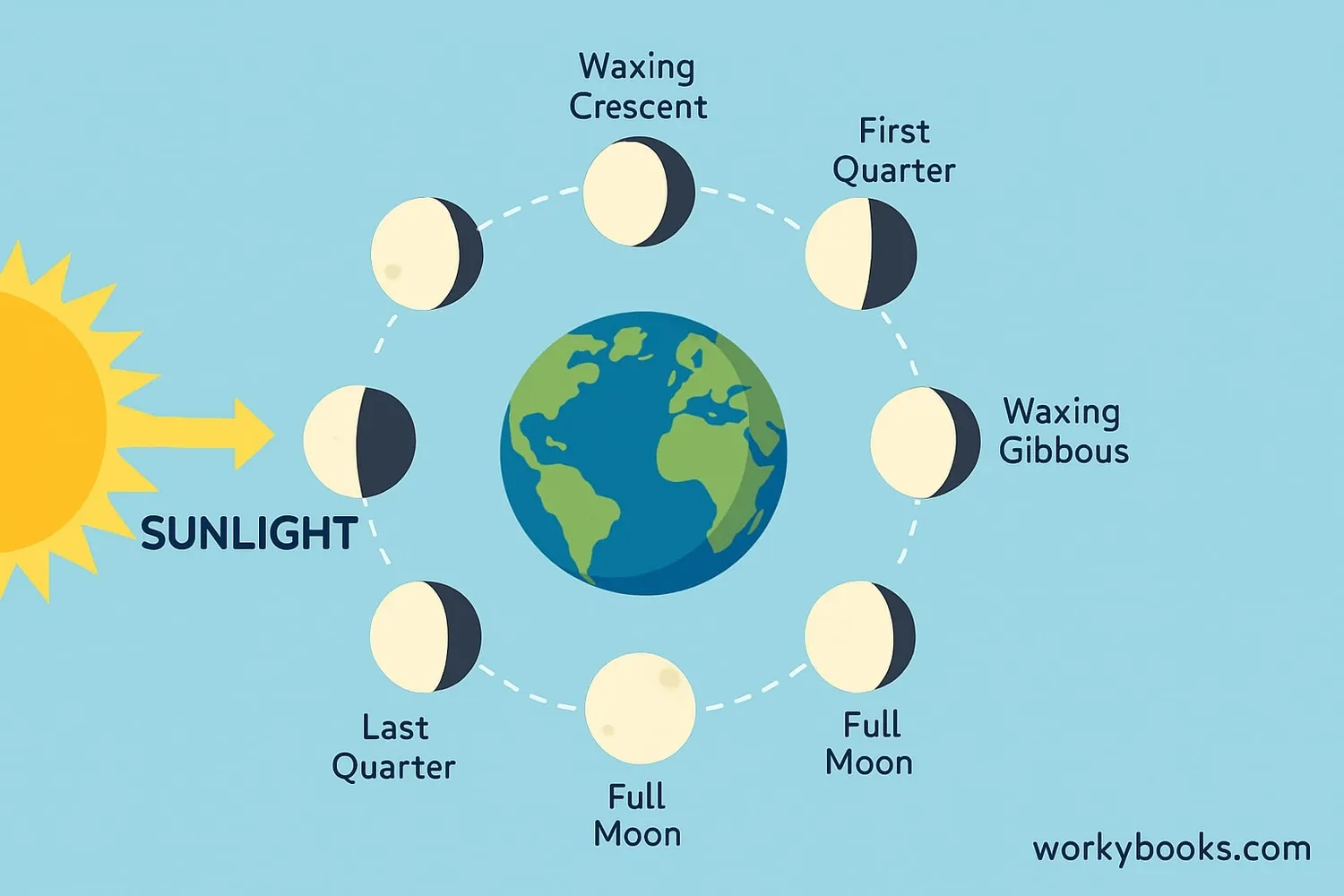
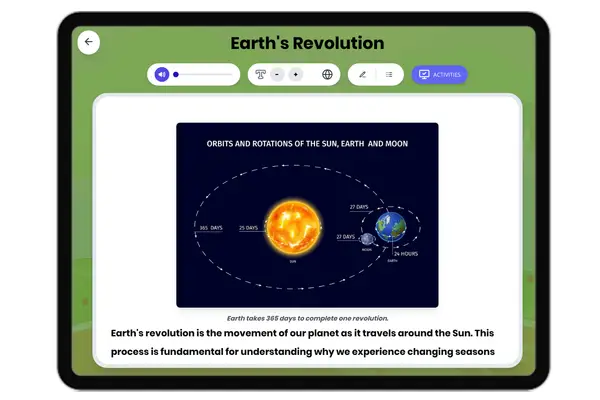
Diagram showing the moon's orbit around Earth and how sunlight creates phases
The phases of the Moon are a familiar sight in the night sky. Over the course of about 29.5 days, the Moon appears to change shape, cycling from a thin crescent to a full circle and back again. This repeating pattern is called the lunar cycle. Understanding these phases helps scientists study Earth, its seasons, and even how ancient people tracked time.
How the Lunar Phases Occur
The Moon does not produce its own light. Instead, it reflects sunlight. As the Moon orbits Earth, we see different portions of its sunlit half. This changing view creates the phases. The cycle begins with the new moon, when the side facing Earth is in darkness. As the Moon moves, we see a thin crescent called the waxing crescent. 'Waxing' means the visible part is getting larger. About a week in, half the Moon appears lit—this is the first quarter. The lit area continues to grow (waxing gibbous) until the full moon, when the entire visible face shines. Afterward, the Moon's light decreases, or 'wanes.' The phases reverse: waning gibbous, third quarter (another half-lit phase), and finally waning crescent before returning to new moon. The complete cycle takes about 29.5 days, known as a synodic month.
Observing the Moon and Common Misconceptions
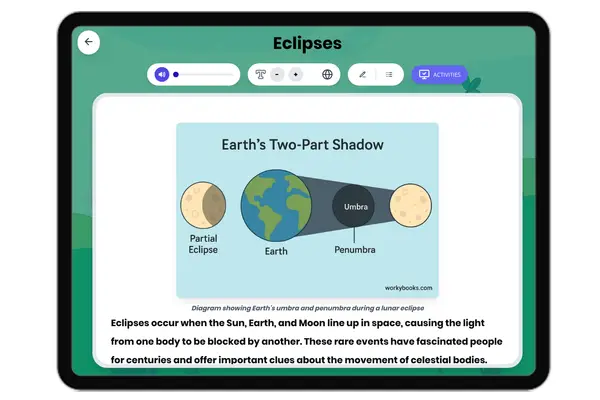
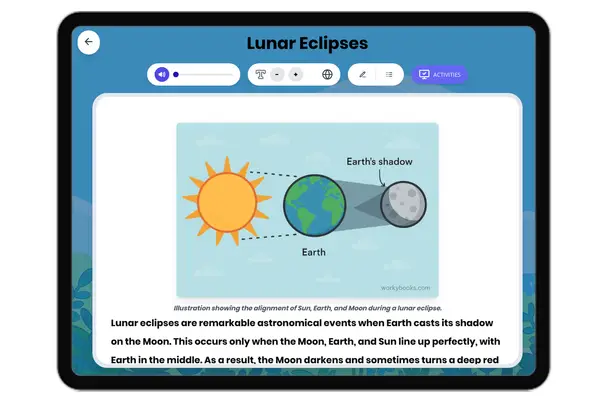
Each phase has its own typical rise and set times. For example, the full moon rises at sunset and sets at sunrise, while a first quarter moon rises around noon and sets at midnight. Sometimes, the dark part of the Moon is faintly visible due to earthshine—sunlight reflected from Earth back onto the Moon. It's important to note that Moon phases are not caused by Earth's shadow. Only a lunar eclipse, which is rare, involves Earth's shadow covering the Moon. The phases result solely from the Moon's changing position in its orbit and how sunlight falls on its surface.
Scientific Methods and Applications
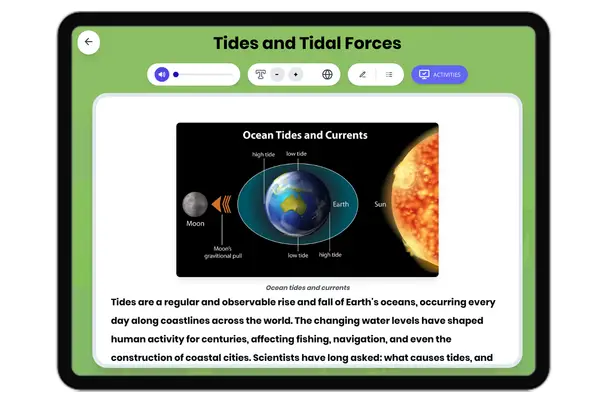
Scientists observe the Moon's phases to understand Earth's orbit and seasons. Ancient cultures used the lunar cycle to create calendars and mark important events. Today, tracking the phases helps astronomers plan observations. Modern research uses precise measurements of the lunar cycle to study tidal patterns and even subtle changes in Earth's rotation. By observing and recording the Moon's phases over time, scientists build evidence for models of the solar system and the interactions between Earth, Moon, and Sun.
Understanding the phases of the Moon connects to broader scientific principles, such as patterns, cycles, and the movement of celestial bodies. This knowledge helps us make sense of time, navigation, and Earth's place in the universe.
Interesting Fact: During earthshine, you can sometimes see the outline of the entire Moon, even when only a crescent is lit!
What causes the phases of the Moon?
The changing position of the Moon in its orbit and how sunlight hits it.Earth's shadow passing over the Moon every night.Clouds covering the Moon at different times.The Moon making its own light.
How long does the full lunar cycle take to complete?
24 hours7 days29.5 days365 days
Which phase comes immediately after the new moon?
Full moonWaning crescentWaxing crescentFirst quarter
What does 'waxing' mean when describing the Moon's phases?
The visible part is getting larger.The Moon is disappearing.The Moon is moving away from Earth.The Moon is being covered by Earth's shadow.
What is 'earthshine'?
A glow on the dark part of the Moon caused by sunlight reflected from Earth.The Moon's own light shining in the sky.A type of lunar eclipse.A meteor shower that hits the Moon.
Which statement is TRUE about the phases of the Moon?
They are caused by how sunlight shines on the Moon as it orbits Earth.They are caused by Earth's shadow covering the Moon each month.
The full moon rises at sunset and sets at sunrise.
TrueFalse
The term 'synodic month' refers to:
The time for the Moon to orbit Earth once and complete all its phases.The time it takes for Earth to orbit the Sun.The time between two full moons on Earth.A month on the calendar.
Why did ancient cultures use the lunar cycle?
To create calendars and mark important events.To predict earthquakes.To find gold on the Moon.To make the days shorter.
Which of the following is NOT a phase of the Moon?