This learning resource is available in interactive and printable formats. The interactive worksheet can be played online and assigned to students. The Printable PDF version can be downloaded and printed for completion by hand.
This engaging science passage for grades 6-8 introduces students to the topic of climate refugees and human migration. Aligned with NGSS standards, it explains how environmental changes like droughts, floods, and rising sea levels force people to leave their homes, making them climate refugees. The passage defines key terms such as migration, climate change, and adaptation, and provides real-world examples, including Pacific Island nations and drought-affected regions in Africa. Students will learn about the science behind climate change, how it impacts human populations, and the global response to this growing challenge. The resource includes a glossary, Spanish translation, multiple-choice quiz, and writing prompts that develop critical thinking. Audio integration supports diverse learners, making this passage an excellent tool for classrooms exploring human impacts on Earth systems and the interconnectedness of environmental science and society.
CONTENT PREVIEW
Expand content preview
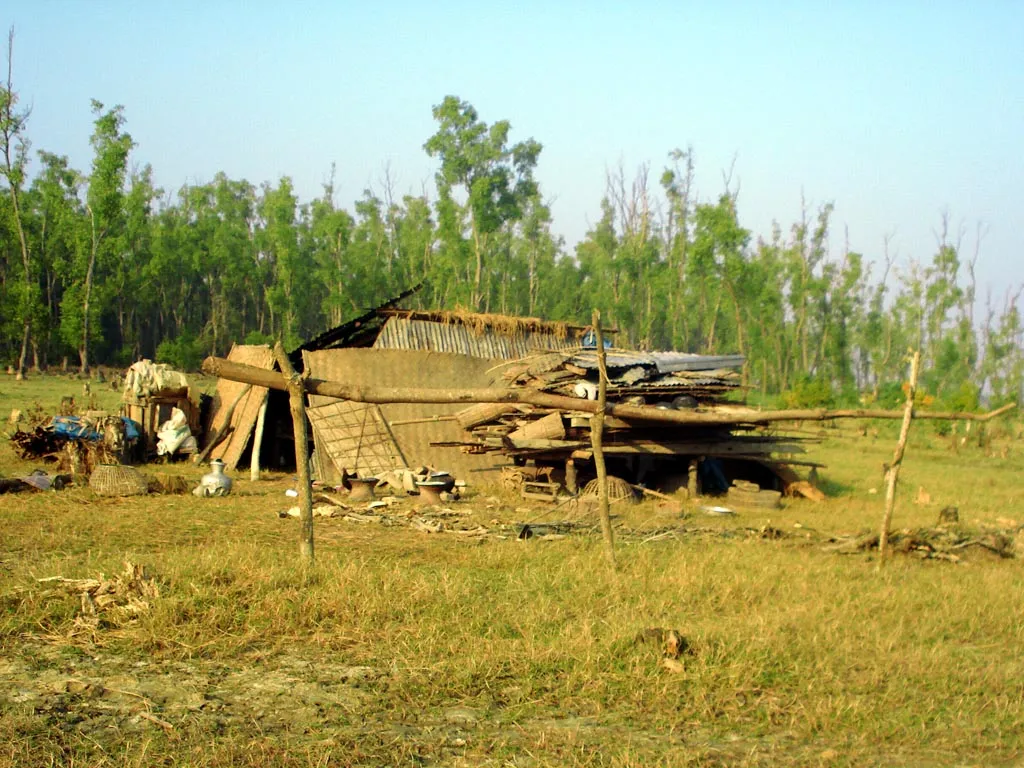
Cyclone Aila Climate Change Nijhum Dwip 2009 Dec Bangladesh.jpg Source: Wikimedia Commons - Mayeenul Islam
Climate change is causing big changes on our planet. Sometimes, these changes make it difficult for people to live in their homes. When people are forced to leave their homes because of changes in the environment, they are called climate refugees.
Climate change means long-term changes in temperature, rainfall, and weather patterns on Earth. It is often caused by too many greenhouse gases, like carbon dioxide, being released from cars, factories, and power plants. These gases trap heat in the atmosphere, which makes the planet warmer.
As the climate changes, some places get too hot, too dry, or too wet. For example, rising sea levels can flood homes near the coast. Droughts can dry up farmland, making it hard to grow food. Hurricanes and wildfires, which are getting stronger because of climate change, can destroy houses and force people to move.
When people move to find safer places to live, it is called migration. Migration can happen within a country or between countries. Climate refugees often face many challenges, such as finding new homes, jobs, and schools. They may also have to learn new languages or adapt to different cultures.
One example of climate refugees is people from Pacific Island nations. Rising sea levels are threatening to cover their islands, so some families have already moved to countries like New Zealand and Australia. In Africa, some farmers have left their homes because droughts have made it impossible to grow crops.
Scientists and governments are working together to help climate refugees. They are studying how to reduce greenhouse gases to slow down climate change. They also look for ways to help people adapt, such as building sea walls or creating drought-resistant crops. Adaptation means changing the way we live to cope with new environmental conditions.
It is important to understand that climate change does not affect everyone equally. Poorer countries and small island nations are often at greater risk because they have fewer resources to protect themselves. By learning about climate refugees, we can better understand how humans and the environment are connected.
Interesting Fact: Some scientists estimate that by 2050, there could be over 200 million climate refugees around the world.
What is a climate refugee?
Someone forced to move by climate changeA person seeking adventureA farmer who plants new cropsSomeone who moves for fun
What causes climate change?
Greenhouse gasesFreshwater lakesWind powerPlanting trees
Which event can cause migration?
Flooding homesBuilding new parksSunny daysLearning a language
Why are Pacific Islanders moving?
Rising sea levelsMore fishMore rainCooler weather
How can people adapt to climate change?
Build sea wallsIgnore weatherCut more treesStop farming
Why are some countries at greater risk?
Fewer resourcesToo many carsBigger citiesHigh mountains
Climate refugees always move for fun.
TrueFalse
What does 'adaptation' mean?
Changing to survive new conditionsMoving for vacationBuilding tall buildingsStudying animals
Perfect For:
👩🏫 Teachers
• Reading comprehension practice
• Auto-graded assessments
• Literacy skill development
👨👩👧👦 Parents
• Reading practice at home
• Comprehension improvement
• Educational reading time
🏠 Homeschoolers
• Reading curriculum support
• Independent reading practice
• Progress monitoring
Reading Features:
📖
Reading Passage
Engaging fiction or nonfiction text
❓
Comprehension Quiz
Auto-graded questions
📊
Instant Feedback
Immediate results and scoring
📄
Printable Version
Download for offline reading
🔊
Read Aloud
Voice-over with word highlighting
Reviews & Ratings
No reviews yet. Be the first to share your experience!
Related Content
What Is Earth Science?
This engaging middle school science passage introduces students to the field of Earth science, aligning with NGSS standa...
MS-ESS1MS-ESS2MS-ESS3SEP
Transportation and Climate Change
This engaging science passage for grades 6-8 explores the vital role that transportation plays in climate change. Studen...
Tools and Technology in Earth Science
This middle school science reading passage explores the wide range of tools and technologies used in Earth science, from...
MS-ESS2-2MS-ESS3-2MS-ETS1-1MS-PS4-3
Climate Change: Solutions and Mitigation
This passage explores scientific solutions and mitigation strategies for climate change, designed for middle school scie...
MS-ESS3-4MS-ESS3-5
Extreme Weather and Climate Change
This Grade 6-8 science passage, aligned to NGSS standards, explores the impact of climate change on extreme weather even...
Climate Change: Causes
This comprehensive middle school science passage explores the causes of climate change by examining both natural and hum...
MS-ESS3-5MS-LS2-4
Effects of Climate Change
This comprehensive middle school science passage explores the effects of climate change on Earth's systems and life, ali...
MS-ESS3-5MS-LS4-4
Climate Change Bird Migration
This educational passage, audio integrated, explores how climate change affects bird migration patterns. Students will l...
MS-LS2-4: CONSTRUCT AN ARGUMENT SUPPORTED BY EMPIRICAL EVIDENCE THAT CHANGES TO PHYSICAL OR BIOLOGICAL COMPONENTS OF AN ECOSYSTEM AFFECT POPULATIONS.
Climate Through Earth's History
This engaging passage for grades 6-8 explores how Earth's climate has naturally changed over millions of years, highligh...
MS-ESS1-4MS-ESS2-6
Climate Change: Vulnerable Ecosystems
This middle school science passage, aligned with NGSS standards MS-ESS3-5 and MS-LS2-4, helps students understand how cl...
MS-ESS3-5MS-LS2-4
How Deforestation Contributes to Climate Change
This engaging science passage, aligned with NGSS standards, explains how deforestation contributes to climate change for...
Permafrost and Climate Change
This engaging, NGSS-aligned science passage for grades 6-8 explores how melting permafrost releases greenhouse gases, im...
Scientific Inquiry in Earth Science
This passage explores scientific inquiry in Earth science for grades 6-8, aligned with NGSS standards MS-ESS1-4, MS-ESS2...
MS-ESS1-4MS-ESS2-1MS-ESS3-5SEP
Impact of Climate Change on Water Resources
This engaging science passage for grades 6-8 explores the impact of climate change on water resources, aligning with NGS...
Heatwaves and Climate Change
This educational resource features an engaging, audio-integrated reading passage titled 'Heatwaves and Climate Change,' ...
How Climate Change Affects Food Security
This grade 6-8 science passage, aligned with the NGSS standards, explores how climate change affects food security aroun...
Addressing Climate Change
This middle school science passage, aligned with NGSS standards MS-ESS3-4 and MS-ESS3-5, explores the mechanisms and sol...
MS-ESS3-4MS-ESS3-5
What Is The Difference Between Global Warming And Climate Change?
This educational content, audio integrated, explores the crucial differences between global warming and climate change. ...
Climate Change: Species Responses
This middle school science passage explores how species respond to climate change, aligning with NGSS standards MS-LS4-4...