What Is The Difference Between Global Warming And Climate Change?
Interactive passage with audio narration, comprehension questions, and printable PDF.
By completing this purchase you agree to our Terms of Use and Privacy Policy. Your subscription renews automatically until you cancel. You can cancel anytime from your account settings. All sales are final and non-refundable. Digital content is available for download in your account immediately upon purchase.
What's included
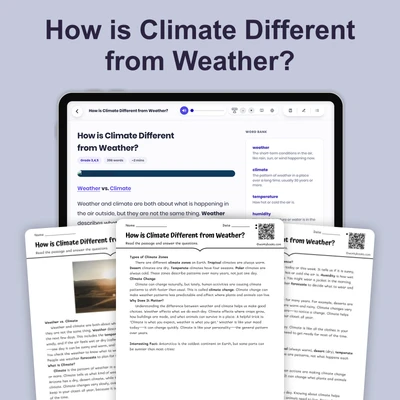
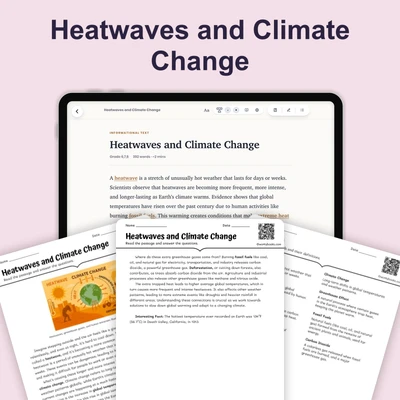
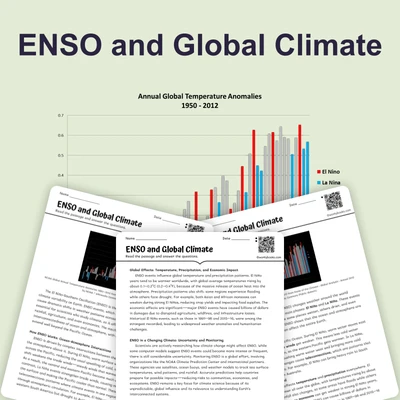
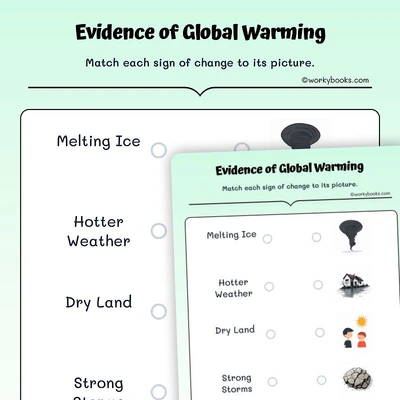
What Is The Difference Between Global Warming And Climate Change? preview and details
About this printable What Is The Difference Between Global Warming And Climate Change? science reading passage, NGSS-aligned (Grade 6)
Sample passage and quiz from What Is The Difference Between Global Warming And Climate Change?
Reading passage and comprehension quiz preview
What Is The Difference Between Global Warming And Climate Change?
Have you ever heard people talk about global warming and climate change? While they are related, they aren't exactly the same thing. Understanding the difference is important for understanding our planet's future.
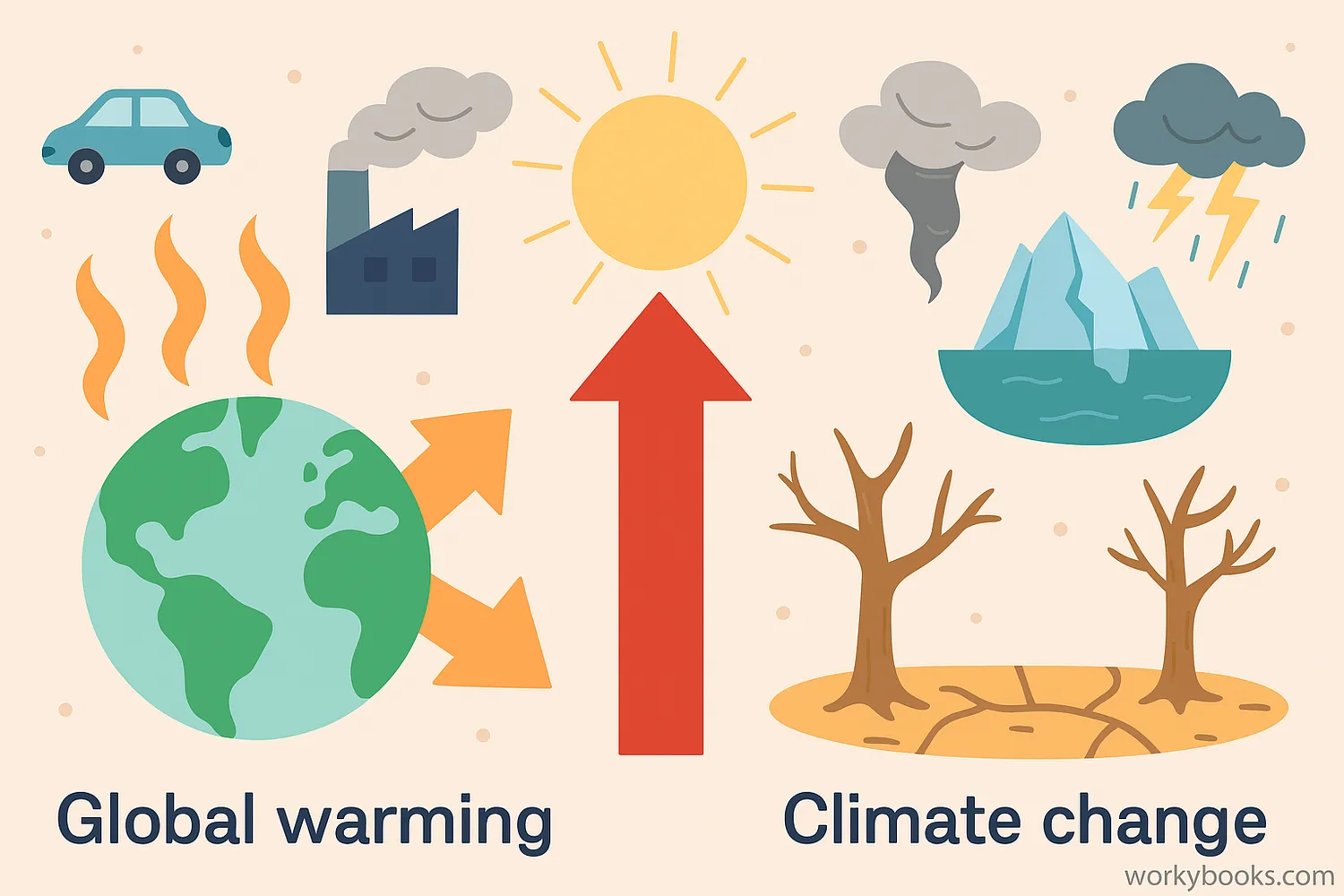
Global warming refers to the long-term heating of Earth's climate system observed since the pre-industrial period (between 1850 and 1900) due to human activities, primarily fossil fuel burning, which increases heat-trapping greenhouse gas levels in Earth's atmosphere. Think of it like a fever for the planet. When you have a fever, your body's overall temperature is higher than normal. Similarly, global warming means the Earth's average temperature is increasing. This increase is mainly caused by us, humans, releasing too many greenhouse gases like carbon dioxide into the air. These gases act like a blanket, trapping heat from the sun and making the Earth warmer.
Climate change is a broader term that describes long-term shifts in temperatures and weather patterns. These shifts may be natural, but since the 1800s, human activities have been the main driver of climate change, primarily due to burning fossil fuels (like coal, oil, and gas) that produce heat-trapping gases. So, while global warming is about the rising temperature, climate change includes all the other big changes happening to our weather. This can mean more extreme weather events, like stronger storms, longer droughts, or heavier rainfall. It also includes things like melting glaciers and rising sea levels. Global warming is one very important part of climate change.
So, to put it simply: global warming is the *cause* – the overall increase in Earth's temperature. Climate change is the *effect* – all the various changes in weather patterns and Earth systems that result from that warming. Both are critical environmental issues that affect our planet. Scientists study these changes to help us understand what's happening and how we can work to protect our Earth. Learning about the greenhouse effect and how it contributes to these changes is a crucial step.
Interesting Fact: The Earth's average temperature has risen about 1.8 degrees Fahrenheit (1 degree Celsius) since the late 19th century, a change driven largely by increased carbon dioxide emissions into the atmosphere and other human activities.
Comprehension quiz (10 questions)
1. What is the primary cause of global warming?
2. Which of these is a greenhouse gas?
3. Global warming is best described as a fever for the planet. True or False?
4. Which term describes long-term shifts in temperatures?
5. How do greenhouse gases affect Earth's heat?
6. What is an example of an extreme weather event?
7. Which is a consequence of climate change?
8. What does burning fossil fuels release?
9. If a city usually has mild winters but now experiences very harsh, snowy winters consistently, which term best describes this change?
10. If a new invention could remove all extra carbon dioxide from the atmosphere, what issue would it most directly help to reverse?
Perfect for the way you teach
- Build comprehension skills
- Auto-graded quiz
- Differentiated reading
- Read together at home
- Improve fluency
- Quiet reading time
- Reading curriculum support
- Independent practice
- Track Lexile growth