How Climate Change Affects Food Security — Reading Comprehension
Rate this
Premium Resource
Present
Present in classroom. No work saved
Assign
Classroom with student accounts, Track progress
Quick Play
No student accounts, assign with a link
Grades
6
7
8
PRINT+DIGITAL RESOURCE
This learning resource is available in interactive and printable formats. The interactive worksheet can be played online and assigned to students. The Printable PDF version can be downloaded and printed for completion by hand.
This grade 6-8 science passage, aligned with the NGSS standards, explores how climate change affects food security around the world. Students will learn about key scientific concepts related to climate change, such as greenhouse gases, drought, and extreme weather, and how these factors impact crop yields and access to food. The passage defines important science vocabulary terms and uses real-world examples to make the information relevant and understandable. Activities include a multiple-choice quiz and writing prompts that help students make connections between science and daily life. The passage and activities are designed to build critical thinking and literacy skills, and the resource includes audio integration for accessibility. Keywords such as climate change, food security, crops, and NGSS make it easy for educators and students to find and use this valuable learning tool.
CONTENT PREVIEW
Expand content preview
Help fight climate change by supporting local farmers.
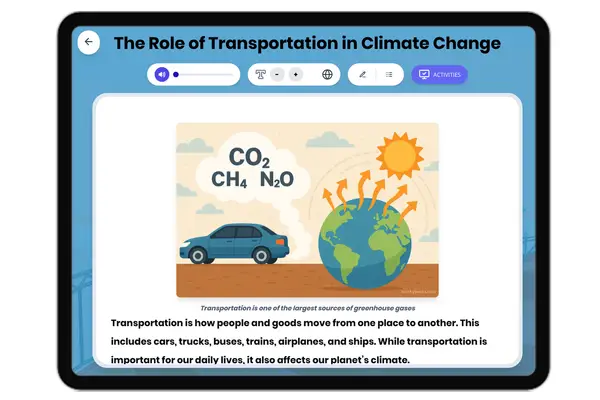
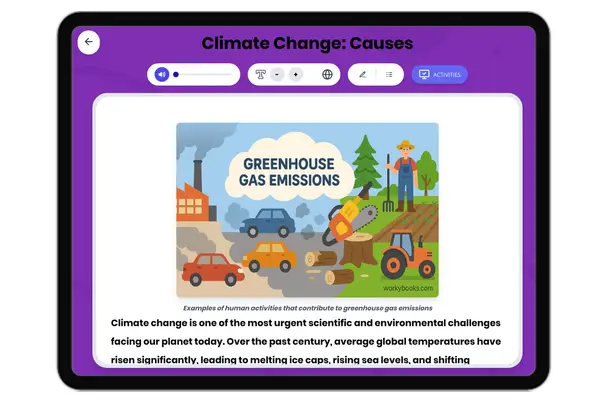
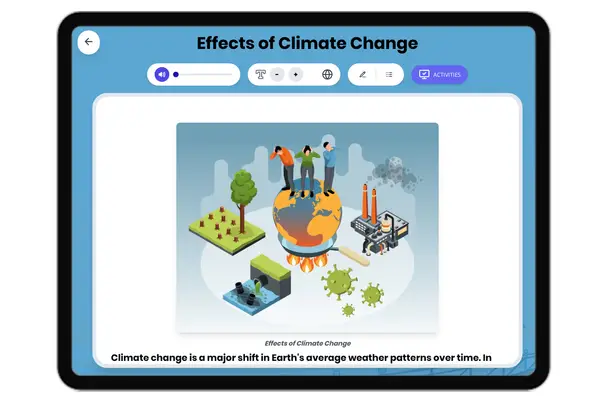
Climate change is the long-term shift in Earth's weather patterns. This happens because of an increase in greenhouse gases like carbon dioxide, which trap heat in the atmosphere. As the planet gets warmer, it affects many parts of our lives, including how we grow and access food.
Food security means having regular access to enough safe and nutritious food to live a healthy life. Climate change can make food security harder to achieve for millions of people around the world.
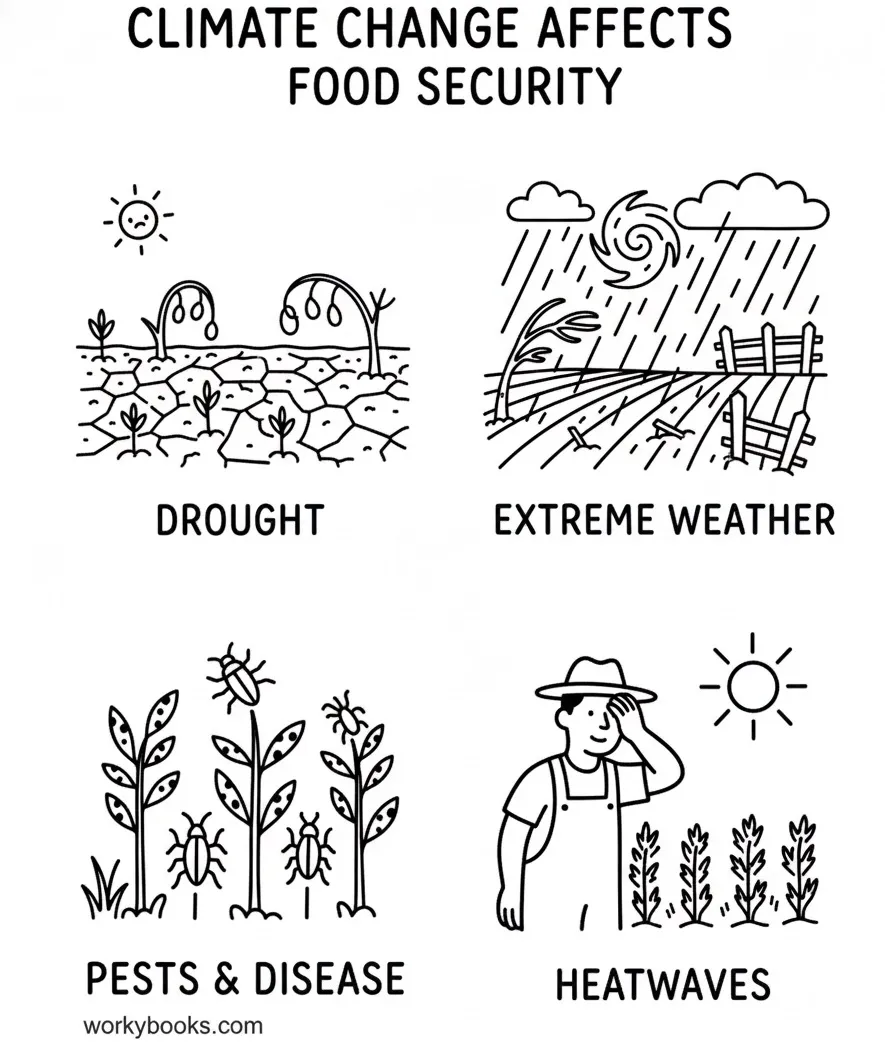
One major way climate change affects food security is through drought. When there is less rainfall, the soil dries up and crops like wheat, rice, and corn cannot grow well. This leads to smaller harvests and less food to eat or sell. For example, in some parts of Africa and Asia, long periods without rain have caused crop failures, making it difficult for families to get enough food.
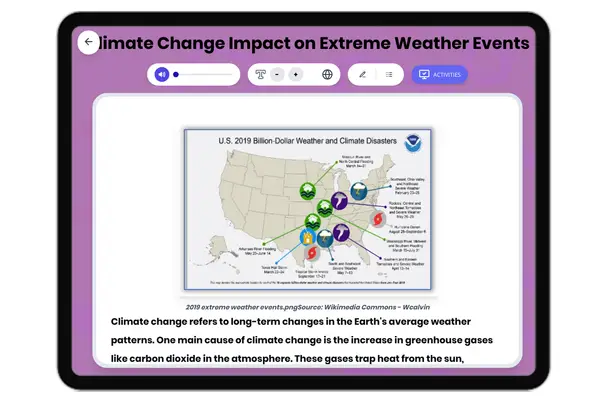
Another problem is extreme weather events, such as floods, hurricanes, and heatwaves. These disasters can destroy fields, wash away seeds, or kill animals. When this happens, farmers lose their income and communities may face food shortages. In the United States, for instance, hurricanes have damaged large areas of farmland, causing prices for some foods to rise.
Pests and plant diseases are also made worse by climate change. Warmer temperatures allow pests like insects and fungi to spread to new areas. These pests can eat crops or make them unsafe to eat, which reduces the amount of food available.
Farmers are working to adapt to these changes. Some use irrigation systems to water crops during dry seasons, while others plant drought-resistant crops that can survive with less water. Scientists are also helping by developing new plant varieties that can grow in harsher conditions.
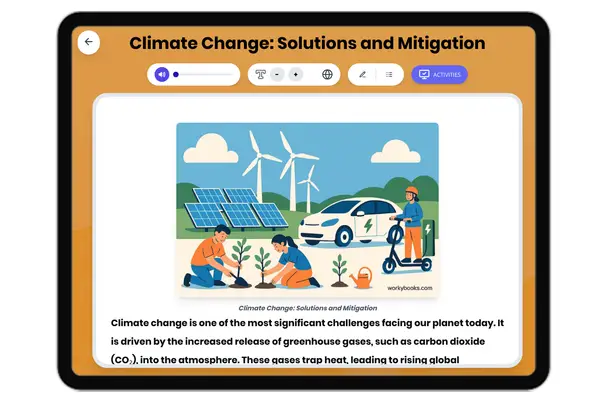
Everyone can help fight climate change by reducing energy use, recycling, and supporting local farmers. These actions can lower the amount of greenhouse gases released into the air and help protect our food supply.
Interesting Fact: Scientists estimate that by 2050, climate change could reduce crop yields by up to 25% in some regions, making food security an even greater challenge.
What is food security?
Having enough safe, healthy foodHaving lots of moneyOwning a big farmEating only fast food